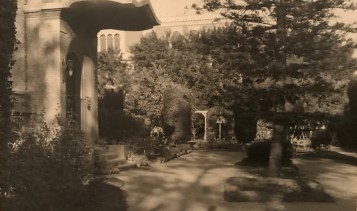
#TBT Alexandria, 1956

I’ve blogged before about Suez, because it’s when my mother wrote her first book. This week, Nadia, a character from my next novel, gives her own take on 1956.

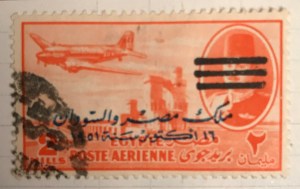
It began on July 26, when I was ten and a half years old, or, as I preferred to say, nearly eleven. The whole affair was about a canal and a dam.

Here’s the crucial thing: President Gamal Abdel Nasser was most interested in canals and dams.

Nasser was a very big man, with a strong jaw and huge teeth that he displayed whenever he smiled. That night in 1956 was the anniversary of the revolution, so the president celebrated by giving a long speech, right here in Alexandria, in Mansheya Square, where there’s a massive statue of Mohammed Ali Pasha, wearing a turban and brandishing his sword, sitting atop his horse.

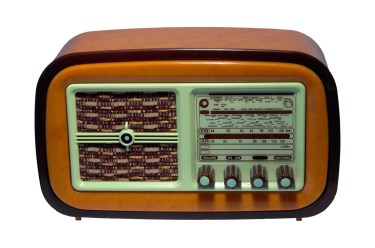
As usual when anything interesting happened, I had been sent to bed instead of being allowed to stay up. My parents told me about the speech the next day, which is hardly the same thing. I relished the idea of Nasser brandishing his words like a sword, and I was especially sorry to miss the firemen dispersing the crowds. FreeImages.com/AntonioJimenezAlonsoAlthough I had no real opinions on politics, I liked listening to the president on the radio. Unlike a lot of important men who like to make themselves sound clever by speaking in a formal version of Arabic, Nasser spoke a colloquial language that every Egyptian could understand, even a child of nearly eleven. That, I thought, was much cleverer.

The day after that big speech, my sister Simone and I sat in the upstairs living room right by the air conditioning, which was on at full blast as it was sweltering. Father and Mother explained to us that the Suez Canal was now going to belong to Egypt instead of France or Britain. As a result, it would raise lots of money for Egypt, and would pay to build a High Dam at Aswan.

Mother actually put down her embroidery during this conversation, so it must have been significant. Quite how significant, I did not wholly grasp. The main thing was that the Suez Canal had been nationalized. That was a good thing, wasn’t it? Unless you happened to be British or French, like some of my friends from school.

In October, a few countries turned out not to be so happy about Egypt having the Suez Canal. Our parents did not explain that very clearly. Meanwhile, our nanny Rashida lit more candles than ever to the Virgin Mary and to St Anthony.

Even when she wasn’t praying, Rashida went about muttering to herself. I thought I heard her say that things had been much better under King Farouk, but, when I asked her to repeat herself, she flatly refused.

It got a lot clearer when France, Britain, and Israel all ganged together to declare war on Egypt. Every night there were air-raid sirens and anti-aircraft guns. Victor, my pain of a cousin, kept going on about it. With our schools shut, he was unfortunately at our house more often than ever. According to him, the guns were as close as Smouha, barely a few kilometres from us. I pretended to be unconcerned.

Every bedtime, Mother told Simone and me that things would turn out all right. We had blackout paper on all the windows now. It was all going to be fine, Mother said. 

It did however change things for many of my friends, and for my teddy bears, at least one of whom was British.

You may also like How My Mother Wrote Her First Book

Four Hours in the Eye Surgery Day Unit

On looking back, the signs had been there for years. First, Nadia had trouble at night from the glare. Then reading got harder, especially the day she picked up an Egyptian newspaper in Paddington. Arabic, with its tiny script and its proliferation of vital dots above and below the letters, is the least appropriate language for someone with poor vision.

She wonders why she’d got cataracts by the age of 55. Probably to do with a stupid game they used to play at the beach in Alexandria.  She, Zeinab, Chou-Chou, and of course her sister Simone all dared one another to look straight into the sun for as long as they could. Nadia still has the memory of the after-burn. How was she to know, until Simone told her, that her school friends all cheated by shutting their eyes when she wasn’t looking at them?

“The Nile has cataracts too,” says Chou-Chou. She is still stupid despite being middle-aged now.

“They’re not the same thing,” Nadia replies loftily, even though she is unsure of the difference.

Nobody gets a bed on this day surgery unit. They get an armchair, but only if there’s one free at the appointed time. There isn’t. Along with three other patients, Nadia sits in the corridor. Waiting in corridors is normal in the NHS. It was never like this in Egypt, if you could afford bakshish.

An Iranian nurse and two Irish nurses seem to run the place. Each of them asks Nadia if she is diabetic.

“I’m not diabetic.”

In a nearby office, a doctor sits with the door open. Nadia can hear her complain about the computer system. Doctors always do this.

Once Nadia is installed in her allocated chair, an Irish nurse comes in to put drops into her left eye. “Are you diabetic?”

“No.”

After two lots of eye drops, her vision is so blurred that she can no longer decipher the stream of bile about immigrants, shameless young people, and disgraced celebrities in the newspaper someone discarded.

A young doctor comes to explain the op, reeling off a long list of potential complications. “There’s a one in 1,000 chance of losing all the sight in that eye.”

Nadia recalls a handsome man at Montazah who wore tiny briefs and an eyepatch. He liked to say he’d lost an eye in a duel, though, as her sister told her later, it was really a cataract operation gone wrong. She signs the consent form, sure that things have moved on and that it won’t happen to her.

The surgery is under local while her surgeon hums snatches of an aria and asks about her family.

“There’s nobody left.” Still, Nadia cradles the hope that improved vision will help her find her lost sister.

Everything is bright with a watery blue light. A machine buzzes, and the lens fragments are washed out before a new lens is put into place. She feels nothing.

Soon he says, “All done,” and peels the plastic drape off.

“You can sit up now,” says someone else.

So many voices she doesn’t know, and her head swims when she sits up.

Once back on the ward, a nurse offers her tea and asks again if she is diabetic.

Nadia checks in the mirror that she always keeps in her handbag. There she is, a plastic shield over one eye, with two long strips of tape holding it down.

The nurse returns with tea and instructions: eye drops for the next four weeks, eye shield on at night for a week, sunglasses for a few days, and no hair-washing for five days.

Of course Nadia will wear sunglasses! If her hair is going to be filthy, she doesn’t want anyone recognizing her.

The next day, she removes the eye shield for the first time. Everything is so bright. She can see every leaf on the trees, every speck of dust on the windowsill, every wrinkle on her face. They don’t make mirrors like they used to, that’s for sure.

***

Nadia is a character from my next novel, which is set in Alexandria and London.

If you’d like to know more about cataracts, try this link from Moorfields Eye Hospital.

You may also enjoy Six Lessons from the Eye Clinic.

#TBT Being Eligible: the Marriage Market back in the Old Days

Many readers have enjoyed my mother’s writing, especially about the bygone world of cosmopolitan Alexandria. Today I bring you another extract. As ever, Jacqueline uses humour to write about serious topics. This time, it’s about  finding a husband. 

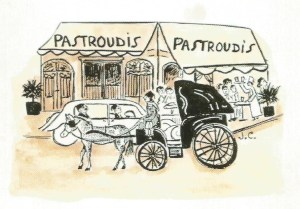
Pastroudis

In backward areas like Europe and the United States, where they don’t understand the first thing about women – or the Middle East or anything else – when a girl finishes school or college, she looks around for a job, starts agitating for equal pay with men, and then proceeds to make a thorough nuisance of herself.

But in the East, where men are men, and not mice, and they know how to treat women, men don’t stand for this sort of nonsense. As a matter of fact, they don’t often stand for a woman at all. It is she who stands up for the man, if she knows what’s good for her. The only man who would make a woman walk in front of him would be walking in a minefield.

Every Oriental, even an idiot, knows instinctively what a woman should and should not do, and she should not do anything but wait on him. He knows that Western women are too free, and that freedom for women is very bad indeed for men. The only career a woman should have is looking after her husband. Sometimes, if she’s lucky, he may call in up to three more women to help her do this, so that she won’t get tired.

Instead of going down on bended knee and being grateful that we lived in the East, where they are so considerate towards women, my friends and I had visions of launching ourselves into the world on our own feet and having careers.

It was the fault of the British. With our heads pumped full of the English Girls’ College’s nonsense about women getting jobs, we Alexandrian girls had overlooked the fact that we had a special mission in life. One that was the most hazardous, most exciting of all callings. It was known as Being Eligible, and what you had to do was sit back with some nice bit of embroidery and catch a husband.

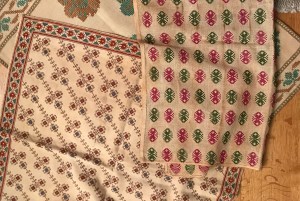
Petit point

After a varying amount of needlework, the good obedient girls who did as their parents bade them were rewarded by finding husbands who provided large houses, children, and security.  Some of these girls were very happy, especially if during a man shortage they had caught someone else’s husband.

Others were whisked out of school before the end of term, when they had barely started on their embroidery, to marry someone they hadn’t so much as set eyes on. Perhaps it was just as well. Anyway, they had the whole of their lives to get a good look at him. Sometimes, the bridegroom was a little older than the bride – twenty-odd years or more. Sometimes, instead of twice her age, he was twice her size, and sometimes, unfortunately, he was both.

You may also enjoy: How my Mother Wrote Her First Book

The Worst Books of All Time

It’s the time of year when many bloggers list their favourite books of the past 12 months. On the other hand, some of them name the titles they liked least. Here I must follow suit because, when I look back at my shelves, some books stand out as the very worst of any year. So, in the spirit of utter meanness, I offer you this diverse list of five awful reads. One or two are classics, or may be your favourites, for which I can only apologize. Horses for courses, and all that.

Lecture Notes on Pathology by AD Thomson and RE Cotton

What they say: Of value to undergraduate medical students studying for their final examination and to postgraduate students preparing for higher qualifications.

What I say: The print is tiny, there is no plot whatsoever, and the book reads like a telephone directory. Having committed almost all of the 1,100 pages to memory (I didn’t bother with the index), I can still recite chunks of it by heart decades later, although nobody wants to hear them. But I suppose I shouldn’t bear a grudge, especially as the cover survived many late-night revision sessions, along with the inevitable spilt coffee.

The Trouble with Goats and Sheep by Joanna Cannon 

What they say: Quirky novel set in the East Midlands during the heatwave of 1976. Ten-year olds Grace and Tilly set out to find out what happened to their neighbour Mrs Creasy, who has disappeared. ‘An utter delight, etc.’

What I say: An utter delight, etc – if you’re a reader, that is. Terrible book if you are an author. Every paragraph is a reminder that you can’t actually write novels for toffee, or at least nothing like as well as the peerless Joanna Cannon. This book commits the crime of being too damn good.

Slow Horses by Mick Herron  

What they say: Banished to Slough House from the ranks of achievers at Regent’s Park for various crimes of drugs and drunkenness, lechery and failure, politics and betrayal, this misfit crew of highly trained joes don’t run ops any more; they push paper.

But not one of them joined the Intelligence Service to be a ‘slow horse’.

A boy is kidnapped and held hostage. His beheading is scheduled for live broadcast on the net.

And whatever the instructions of the Service, the slow horses aren’t going to just sit quiet and watch …

‘Funny, stylish, satirical, gripping, etc’

What I say: Decapitations apart, this tale is not suitable for bedtime reading. It has more pace than a Merseyside Derby, and just as many characters. OK, so it’s set in London and has nothing to do with football (apart from that disembodied head), but a moment’s inattention and you’ve missed some vital action.  Full attention is needed to fully savour this unusual spy novel. 

Please Don’t Eat the Daisies by Jean Kerr

What they say: Now out of print, this is a witty collection of pieces by US playwright Jean Kerr about work and family life, as she tries to write at home while praying that her four irrepressible sons will behave for once.

What I say: I thoroughly enjoyed this book while growing up, and read it several times. However, I made the error of dipping into it again after recent gall bladder surgery. It is the worst book anyone could choose after an abdominal operation. If you don’t bust your stitches, you’ll feel as if you have.

Dictionnaire Larousse

What they say: 60,000 mots, définitions et exemples. Très utile.

What I say: I haven’t brought myself to use this dictionary again since the day one of my classmates, also aged 11, borrowed it then returned it to me after adding, in Magic Marker, no less, some choice four-letter words that the publishers of le Larousse had not thought to include in a children’s dictionary.  And he didn’t even put them into the correct places in the alphabet (I checked). I eventually bought a new copy, as you can see.

So, who’s in your bad books?

Whether you agree with my choices or not, happy reading in 2018. With over 130 million books in print and a slew of new titles on the way, there’s something to suit everyone. Except maybe POTUS.


How My Mother Wrote Her First Book

In her own words, this is how my mother came to write her first book.

Il a nationalisé le canal!” my father said again with disbelief. “Nasser read the decree right here in Alexandria, this evening. He told the USA to choke to death on its fury!”

We were staying with my parents in Alexandria, and, as it turned out, I was only allowed out of the house at certain hours of the day. It was a sort of house arrest (résidence forcée).

There was nothing much to do in autumn 1956. It was October, a lovely month in Egypt, when summer’s heat and humidity are over, and it is pleasant to be out of doors.

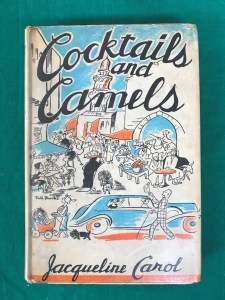
One morning, I sat down under the mimosa tree, with the sound of white doves cooing in the dovecote, and began to write my first book, Cocktails and Camels. I never thought of any other title.

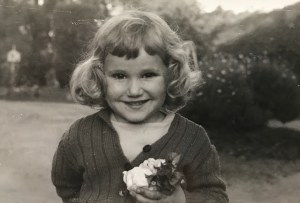
Apart from school essays and letters, I had never written anything before. I wrote in pencil, painstakingly, while my young daughter Carol picked daisies on the lawn. As I searched for the right words, they popped up like magic. I was elated. 

Writing my first book had nothing to do with my wanting to be ‘a writer’. It just happened because the circumstances and my state of mind were attuned. Although the country was at war, Gamal Abdel Nasser was on a nationalization spree, and the future looked uncertain, I felt peaceful and content. Maybe that is what writing does for you.

The writing did not always come easily. Every line was written and rewritten a dozen times or more. I did not mind. Every time I corrected a sentence, I could see it getting better. Writing was a challenge, and I enjoyed it. I’d walk around the garden, mulling things over. Sometimes I’d laugh aloud at what I’d written.

“I’m going to write a book too!” Carol piped up.

Friends came to visit and have tea. I told them I was writing a book, and that it would be called Cocktails and Camels.

“You are writing a book?” Then, in French, “Mais pourquoi? Why don’t you learn to play bridge?”

Je déteste le bridge!” We always spoke like that in Alexandria, switching from one language to another all the time. Anyone who did not was not a true Alexandrian.

Annoyed that I always refused to play bridge, they were soon asking if I was planning to mention them in my book.

“Of course.” How could I not include them? They were such characters. But I would do it with humour, and make up names to disguise their identities.

“Will you say that I am the best dressed woman in Alexandria?” asked Yvette who wore a different outfit every day. We laughed.

“You’ll have to be patient and wait until the book is published.”

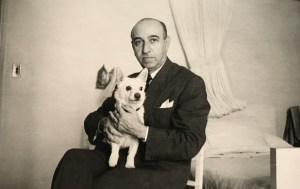
My father, who for more than thirty years had been the respected President of La Bourse de Contrats en Egypte, had published an excellent and much acclaimed book on the Bourse. I thought he would be pleased to hear that I too wanted to write a book.

One evening, with Carol asleep in her cot, I told my parents that I was working on a light-hearted autobiography called Cocktails and Camels. Their reaction was not what I had expected.

Quoi?” Father cried. “Un livre? Des cocktails?”

“Quelle idée! Nous finirons en prison!” Mother said. “Why can’t you be like everyone else, comme tout le monde?”

“I’ll take a pen name,” I cried, annoyed. “And all the names of the people will be changed. It won’t be published in Egypt, anyway.”

There had been censorship in Egypt for years, and one was careful what one wrote in letters and newspapers, let alone books. Sometimes, foreign magazines were sold with articles missing, cut out by the censors. To be on the safe side, I changed not only the names of friends and relatives, but, to be sure no one recognized the family, I wrote that I had two sisters instead of a sister and a brother. My brother Théo was never mentioned in Cocktails and Camels. As for a pen name, I would be Jacqueline Carol, using my own first name and my daughter’s first name as a surname.

“You can’t afford to publish a book,” Father then said.

“I am not planning to pay for its publication! The publisher will pay me.”

Mother’s blue eyes looked infinitely sad. “Please be careful, chérie. Nice girls don’t write books.”

“Who cares about nice girls?” I howled as I stormed out of the room.

Cocktails and Camels was published in New York in 1960. Now sadly out of print, it portrays Egypt in an earlier time – الزمن الجميل – and is still one of the funniest books I have ever read. Not that I’m at all biased.

Carol


Peeking Inside the Book Blogger’s Bag

This week, I take an exclusive peek inside one of the most creative and fun book blogs I’ve come across – Jessie Cahalin’s Books in My Handbag

Part of Jessie’s Handbag Gallery

By now, we’ve all heard of Books Are my Bag, but blogger and author Jessie Cahalin takes books and bags a step further with Books in My Handbag, including Handbag Adventures and a beautiful Handbag Gallery that now features over 130 books. Jessie, what first made you think of pairing books with handbags?

Jessie: Once upon a time, my shelves were groaning with the weight of a lifetime of purchases. We didn’t have the money to move, so I had to take the books to the charity shop. Several weeks later, after many car trips, I realised I was throwing away all the voices that had influenced me over the years – but then Mr Kindle came to the rescue. All the narrative voices are in my handbag – result! 

I decided to share the influential books, located on the Kindle in my handbag, via a blog and that is how Books in my Handbag was created.  I shared ten book reviews on my blog, and was overwhelmed with requests from authors wanting to put their books in my handbag. Authors tweeted me with comments about my handbag and their favourite handbags. 

I came up with the idea of authors showcasing their books in their handbags.  The Handbag Gallery was an instant success.  Every single composition sets the scene and tells a story, and each photo is linked to Amazon or the author’s website. 

Some of the guests on Books in My Handbag

Me: Your delightful settings and the entertaining stories you weave are as much a part of the interview as the questions you ask. I love the one in which you share a special tea with one author.

Jessie: In preparation for this interview with Annabel Fielding, I visited Bath Market to collect some tea.  I drank the tea at home and imagined a shortbread to compliment the tea.  I have written a blog post about selecting the various teas, but haven’t posted it yet. 

Me: How do you get your inspiration for the interview settings?

Jessie: Sometimes, I choose a setting based on what the author says in the interview. Jenn Bregman told me she is an adventurer, so it seemed obvious that we climb Pen Y Fan, in the Brecon Beacons. There are occasions when I get inspiration when I am visiting a place. For instance, I suggested we meet in Cardiff Bay, as I heard some medical students chatting on their graduation day thus it seemed serendipitous to discuss Hampstead Fever there.

Adrienne Vaughan quoted Churchill in her interview: ‘‘Never, never, never give up!’ I was due to visit Chartwell House, so took time to snap some appropriate shots and plan the meeting. 

Karl Holton, crime writer, mentioned Agatha Christie in his interview so we had to set the interview in the library. I set the interview searching for the body, but he enhanced the interview with a brilliant, dramatic opening.
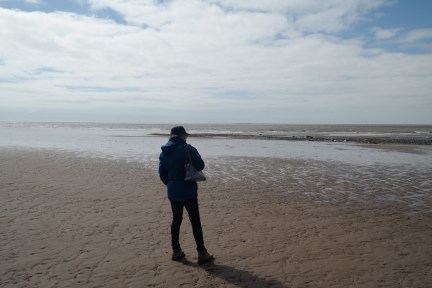
Jessie in her own setting

Me: What is your favourite setting?

Jessie: As a Yorkshire lass, I have to say York is my favourite setting in the UK.  John Jackson, historical novelist, lives in York and it was a delight to visit.  John’s book is based on his ancestors, and I enjoyed teasing out the history of his scoundrel ancestors in the town. 

Me: What settings have caused you the most trouble?

Jessie: Collecting the photos for the interviews and the blog is an adventure, but it has got me into trouble. Recently, I was told in no uncertain terms not to place my handbag on the fireplace of a stately home.  I have been chased away from an antique shop for photographing but not buying. When preparing for Ally Bunbury’s interview, I had to find a photo of glamorous hotel for the interview.  Once I had found the hotel in Brighton, I persuaded the porters to help me to set up an original shot. 

I am mischievous by nature and get carried away in creative challenges. All the interviews are stories, and I must bring them to life with the flow of dialogue and original photos.

Me: How much research do you put into each of your interviews?

Jessie: The author’s comments are my starting point, but I always research the author’s books, website, Facebook pages and Twitter.  This helps me to get a sense of how the author represents themselves and their work; sometimes I grab a couple of additional pictures from their Facebook Page. I constantly research new settings online, and grab photos of places I visit.  I always have a notebook and phone in my handbag to capture any ideas.

Me: You often feature book extracts. Which type do you think works best, eg dialogue, first few paragraphs?  

Jessie: Extracts with tension, comedy or conflict seem to work the best.  It is better if the extract is original and not from the one on Amazon.  The 250-word limit challenges the author to be selective, and think of framing their book. It does not matter if the extract is dialogue or prose, but the extract must work in isolation.

Me: What are the ingredients of a really good author interview?

Jessie: The author is the key ingredient in all the interviews.  It is my role to host the author and find a way to let their personality shine through.  I suggest a setting for the interview, but the author decides on the dress code and the food and drink.  Once the author feels comfortable, we can develop the conversation and enjoy the interaction.

Me: How do you keep up the pace of blogging, reviewing and interviewing as well as writing books?

Jessie: I work from 7am until I go to sleep. I live, eat, and breathe the blog and writing. I try to dedicate most of my day to editing my book, but get distracted with interviews, extracts etc. Initially, I started blogging to share my reading and make connections with other readers and authors. I am very lucky that my husband looks after the IT side of the blog and is happy to translate my latest idea onto the blog.

My diary of events has become very full. I ordered a great big diary for Christmas, but have realised that it won’t fit in my handbag.  I am always looking for an opportunity to buy another handbag.

My day is punctuated with social media activity and supporting authors.  One of the indie authors I have worked with recommended an editor to me, and this process has opened my eyes.  I have been re-working my book during the last couple of months and a new edition will be out soon. 

Me: Can you please give us a flavour of your own book?

Jessie: You Can’t Go It Alone is contemporary women’s fiction.  The novel explores the impact secrets can have on relationships and pursuit of happiness.

Set in a Welsh village during the noughties, You Can’t Go It Alone reveals the contrast in attitudes and opportunities between different generations. Rosa, the leading lady of the Olive Tree Café, must face issues in her marriage. Sophie, a teacher, helps others to communicate but struggles to communicate with her husband, Jack, about their IVF journey. Olivia, who is coming of age, struggles with the pressures of fame. As they confront their secrets and fears, they discover surprising things about themselves and their relationships.

This feel-good book has many twists and turns in the plot, but it also deals with the harsh realities of life.  The reader is invited to laugh and cry with the characters, and consider how to find joy in the simple things in life.

Thanks, Jessie, for being the interviewee this time round.

You can find Jessie Cahalin on her blog, website, Facebook, and Twitter.
 

Breaking Up with a Little Help from Oasis

Journalist Harriet and charity worker Sanjay are two characters from my novel Hampstead Fever. Here’s what happened one afternoon.

“I’ve been thinking,” said Sanjay.

Another bad sign. Harriet already knew something was wrong before he came up to the flat. He normally looked full-on at the camera in the entryphone and gave a cheery wave or said, ‘I’m here with a friend. Can we interest you in a copy of The Watchtower?’ 

Today he’d ducked. He never ducked.

She buzzed him in. Then he sat next to her on the sofa, had the cup of tea she’d made him, and told her he’d been thinking. All the while, Be Here Now was playing. It had been one of her favourite albums for over fifteen years, but from now on she would always hate the Gallagher brothers and their grating Mancunian accents.

“Why, Sanjay?” It was the only thing she could think of. FreeImages.com/Thiago Felipe Festa

At first he stared at his feet. “Look. When we met, I thought I was a goner. Now I’ve got my life back, and… Well, I guess I want to be single for a bit.”

“I knew it!”  She’d even told him so about two years ago, as she reminded him. “We should have talked.”

He had the decency to look upset. “Yes, we should have. But we can’t seem to talk the way we used to.”

“Have we even tried?”

“I don’t know.”

Until October 25, you can get the kindle version of Hampstead Fever for just 99p/$1.30 right here. Or even right now.

Did a break-up ever put you up a particular piece of music? I’d love to hear from you.

Surviving a Social Media Detox

Something strange has happened to me lately. Even as a young child, I could concentrate for hours. But, as an adult, which I should be quite good at being, what with the length of time I’ve had to get it right, I can’t focus on any one thing for more than a few minutes. And then I promptly forget it. In short, I have the attention span of a gnat. A rather undisciplined gnat, at that.

Would a social media detox help my powers of concentration?

FreeImages.com/CanBerkol

I’ve talked to a lot of people who’ve taken a break from social media, like fellow author Helena Halme who had a two-week holiday from her online world last year. My conclusion is that, freed from the constant babble of digital life, most people seem to feel a lot sharper and more refreshed afterwards.

So I’m planning to detox too. A short period of time without constantly checking social media, or dropping everything when I get a notification, will, I hope, help me focus on the things that really matter.

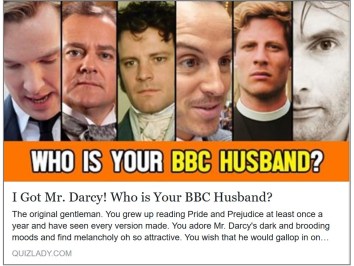
I won’t miss Facebook. Yes, it’s nice to post my photos, keep up other people’s news, and be part of some groups. But, while I enjoy the occasional dictation of pictures of babies or kittens, I don’t need time-sapping quizzes like Who is Your BBC Husband?

Besides, Grantchester is an ITV programme.

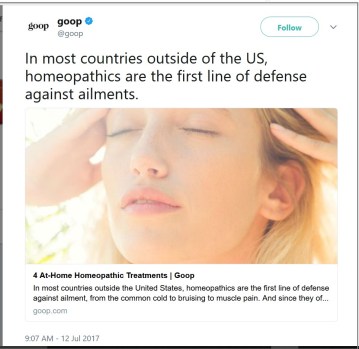
And I can do without exhaustive posts about strange symptoms which doctors haven’t been able to cure in a decade or more. Yes, there may be a need to share the frustration of having unexplained problems, but (call me biased) I can’t see how asking a bunch of non-medical people for their opinions will help, especially when most of them have never even met you.

Living without Facebook Messenger may prove tricky for me, though.  It’s my main means of communicating with one of my sons. Remember when mobile phones only did phone calls? Well, that’s what my son still has. His beloved mobile is so retro that it doesn’t do texts, photos, or even voicemail. Which would be fine, if he actually answered my calls. Hence Messenger.

A detox will also mean dispensing with WhatsApp, which is the principal way my two other sons and I keep in touch. Here’s the kind of vital communication they will be missing.

I may yearn for Instagram too. What will my day be like if I can’t post photos from my iPhone, or share my progress in Jenn Ashworth’s challenge of #100daysofwriting?   I won’t be able to see the Colour File’s fabulous daily posts, or pictures of eye-popping holiday destinations (talking about you, Deborah Cicurel). On the plus side, I may actually do some writing.

My blood pressure would probably improve without Twitter. It’s not just the constant unspoken drive for likes, retweets, comments, and follows, or the fact that it’s tough to be nuanced in 140 characters. It’s drivel like this.

Without social media, there’ll be more chance to live in the moment, as per Marcus Aurelius’s dicta. I will be able to dwell on the beauty of life without the immediate need to post a photo of it.

You never know, I may even reconnect with simple pleasures: smelling roses, pressing flowers, that kind of thing. My husband and I might even have an actual conversation. Once free of the pressure to share every moment, however insignificant, I hope that my brain will recover, and that I will become more productive.

That’s the idea, anyway. But I’m not looking forward to those three hours without my mobile.

Have you taken a deliberate break from social media? And what did you miss most? I’d love to hear.

Seven Deadly Sins of Newbie Writers

When I first blogged about the eight mistakes of newbie writers, I knew I couldn’t cover the whole subject in a few hundred words. Since then, fellow author Keith Dixon and other colleagues have pointed out several more pitfalls that would-be novelists really should avoid. That made it high time for this follow-up.

1 Beginning before the beginning

Many novice writers launch their story with a wordy description of the main character, or a biography beginning with that person’s existence long before the action in the book – sometimes even back to their birth.  The danger is that, unless you’re Dostoevsky, readers will ditch your prose in favour of a novel where something is actually happening.

bookshop

2 Using complicated variations of ‘he said’/’she said’

You might think ‘he said’ and ‘she said’ are too dull to bear repetition, but the truth is that these basic dialogue tags tend to melt into the background, and readers barely notice them. On the other hand, they’ll certainly notice (and not in a good way) a regurgitated thesaurus such as this.

OK,” he agreed.

“That’s settled then,” she responded. “We’ll hit the road first thing.”

“Not first thing,” he protested.

“And what’s wrong with an early start?” she remonstrated.

“I wanted a lie-in,” he whined.

“Lazy sod!” she admonished.

“Not as lazy as you,” he muttered.

“I bloody heard that!” she expostulated.

3 Using too many adverbs

How many is too many? It’s a matter of opinion, but I’d say most adverbs are unnecessary, as here.

Shan’t!” the toddler said petulantly.

If you find you use a lot of adverbs, work on livelier and more concise ways to convey what you mean.

4 Letting characters prattle on

Once you’ve got an ear for dialogue, it’s tempting to fill acres of space with it, to the detriment of action, pace, conflict, and plot. Remember that every scene has to move the story on, so don’t get side-tracked.

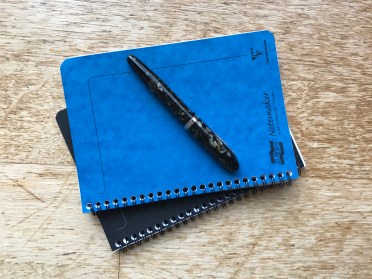
notebooks and pen

5 Giving overly precise accounts of what characters are doing

Moving people in and out of rooms is a real problem for some would-be authors, as one of my fictional characters, a journalist called Harriet, discovers when she sets out to write a novel.

Suzi pulled the dress down over her distended belly and they all went into the living room.

Whether they walked or sashayed, they surely couldn’t all go through the door at the same time. The setting was only a 1930s semi, not a stately home.  And what were they going to do once they got to the living room?

Suzi sat herself by the window where she could enjoy the last rays of the sun and spy on her mysterious neighbour at the same time.

That was all very well, but if Harriet didn’t mention Theo, Martha, and Greg, wouldn’t the reader wonder whether they were all still standing around like lemons, while Suzi was the only one sitting down?

Theo and Martha shared the sofa, while Greg leant against the wall and puffed on his cigarette as if there was no such thing as a smoking ban.

The guy was a dick to smoke when there was a pregnant woman in the room. Harriet scratched her head. Fiction was ridiculously involved.

6 Using the passive voice

When the children had been tucked up in bed, the laundry done, and the dustbins put out, Trevor stretched out on the sofa and allowed himself to be lulled to sleep.

Yep, the reader might doze off too. Active verbs are far more compelling, and often shorter and more precise to boot. The passive voice has its uses, as in scientific papers (This formula is considered an acceptable way of estimating a child’s weight). It’s a turnoff in fiction, though, as with everything, there are exceptions.

It is a truth universally acknowledged that a single man in possession of a good fortune must be in want of a wife.

7 Overusing semicolons

By this I mean using lots of them; you know, just because you can.

I believe there is a special place in hell for this sin. Semicolons are for connecting two independent clauses, each of which could stand grammatically on its own. It follows that you could, of course, use a full stop instead. Like this one.

Do let me know if you have any other Don’ts for new writers. Meanwhile, happy writing.

pencils in sixties mug

***

You may also like:

How to Write a Book Review

What You Can Learn on a Creative Writing Course


Psst! Want to Hear about my Secret Project?

If you’ve been anywhere near social media in the last year or so, you must have noticed many writers announcing their secret projects.

Or maybe it’s a tweet like

“Forthcoming news about the Secret Project – watch this space!”

“Celebratory champagne is on its way for my secret book news….”

Such mentions are most often found on Facebook and Twitter, but these days even LinkedIn profiles boast of secret projects.

While the words may differ, the meaning is the same, whether it’s a secret collaboration or a new project the person can’t possibly tell you about just yet. Of course, you’ll get further instalments designed to generate excitement.

“I can tell you very soon – you won’t need to be patient much longer.”

Unfortunately, by the time the word is out, the excitement may have gone, washed away by further waves of secret projects from dozens of other authors.  

It is a kind of fakery no better than those TV shows where there’s an overly long pause to heighten the drama before one of the contestants is thrown off the dancefloor or chucked out of the kitchen.

Does it even work? I have my doubts.

But writing is a strange profession. It can be lonely and isolating. The internet is the obvious place to go when you need to communicate with someone other than your overburdened family, or the characters in your book.

To tell or not to tell? It’s obviously different for every writer.

Sometimes spilling the beans is forbidden, as when something is not yet signed and sealed. And, even when the ink on an agreement is dry, there may be contractual reasons for keeping it all under wraps. But, in that case, why not just treat it like an embargoed story and say nothing?

Keeping shtum about one’s writing is a time-honoured tradition. Even when there aren’t commercial pressures to keep quiet, there’s the widespread feeling that talking about a work in progress can bring all manner of disasters. It’s best to keep the authorial powder dry and save energy for writing rather than risk sabotaging the whole thing.

Hemingway famously maintained it was bad luck to talk about writing. He didn’t just shy away from discussing his WIP. It extended to saying anything about writing because, as he put it, that takes off “whatever butterflies have on their wings and the arrangement of hawk’s feathers if you show it or talk about it.” Eventually, though, he gave in and wrote a whole book about it, though I’m not convinced he talked about his books before he wrote them.

The rise of social media brings constant pressure to share things. I get that. But there are other things to post. The mere existence of a secret project whets my appetite a lot less than a photo of a sandwich, and is far less engaging than a kitten video.

You’re working on a secret project? Shut up already.

***

You may like:  How to Stop Watching Kitten Videos