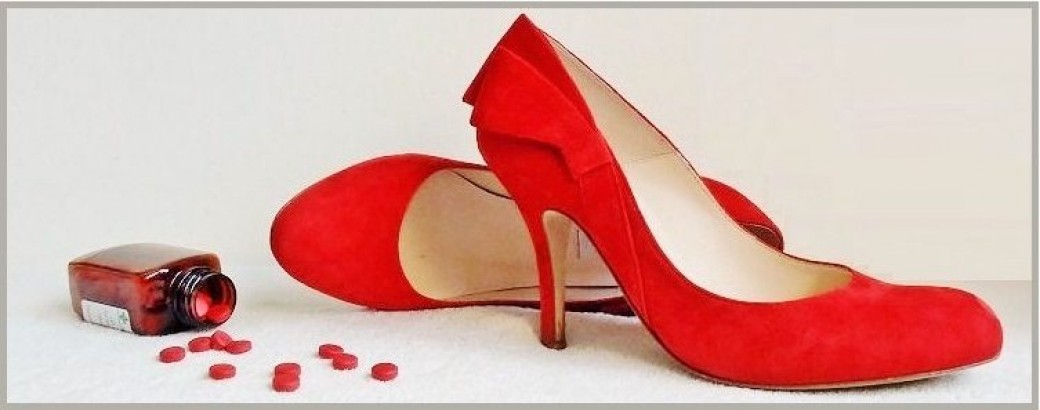
Now and again I like to remember how much progress medicine has made in just two centuries or so. Times past were fairly primitive, even if they made for some terrific artwork. Antibiotics hadn’t been discovered, barbers did the blood-letting, and festering sores were common. Nowadays, we have antibiotics galore, barbers are a lot more careful, and most of the festering sores are political.
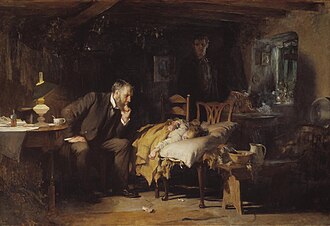
Diagnostics were rudimentary until quite recently. It was 1816 when French physician René Laennec (1781–1826) invented the stethoscope. The very first version looked like a cylinder of rolled up paper, which is exactly what it was. Binaural stethoscope models came later. Pronounced La Neck, René’s surname was to become an important clue as to where medics should wear their instrument when not in use.
There wasn’t even a clinical thermometer until 1866. X-rays only came along in 1895. Doctors did not always examine their patients closely because it was considered rude, but they did scrutinize their excreta, which was apparently not rude. In 2026, doctors have a vast array of diagnostic tools and no longer have to dabble in their patients’ bodily waste. They despatch it to some hapless lab technician instead.

Both boon and bane, the computer only made its impact on medicine this century. In 1826, English mathematician Charles Babbage (1791–1871) published work that was pivotal to computing and actuarial science. Mathematician Ada Lovelace (1815–1852) was only ten at the time, but she later collaborated with Babbage and produced the first algorithm. Today, IT has completely changed the face of medical practice. It is now possible for a doctor to avoid looking at the patient at all, even when they are in the same room, and spend the entire consultation fixated on the screen.

Women doctors were non-existent until the 19th century. In 1865, Elizabeth Garrett Anderson (1836–1917) became the first woman to qualify as a doctor in Britain. However, one James Barry (1789–1865) had qualified in 1812 and practised as a British army surgeon for over 40 years. Only after he died did anyone discover that he had been she all along. So much for the thoroughness of the army medical.
The fairer sex could develop either brains or ovaries, but not both, declared one authority in 1874. On the whole, it was a woman’s job to reproduce, not go to medical school.
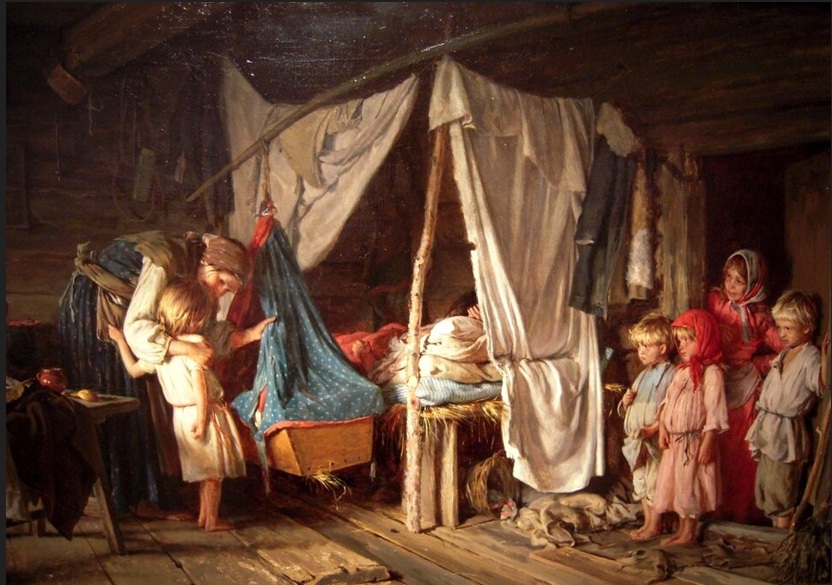
Alas, reproduction was not always straightforward. Midwifery was in its infancy, so to speak, and women had unpleasant low-tech births. A mother-to-be preferred to deliver at home, so, while she laboured, the other children could play nearby, and someone would be sent to boil lots and lots of water, possibly to make tea. No woman wanted to deliver in hospital anyway for fear of catching deadly puerperal fever. Nowadays, unpleasant high-tech births are the norm and many women still favour delivering at home. With puerperal fever now a thing of history books, doctors cannot understand why women shun maternity wards, and interested parties still debate whether birth is safer at home than in hospital.
Some of the most dramatic advances have been in surgery. It was a gruesome business until general anaesthesia came along around the mid-19th century. Those that survived their procedure then faced the risk of deadly infections. Surgeons did not wear rubber gloves until much later that century, and the use of masks did not take off until the 1920s. Bacteria had a field day.

However, while human endeavour has advanced healthcare, microorganisms have made progress too, ever adapting and mutating to resist new treatments. French legend Louis Pasteur (1822–1895) did not use the term superbugs or antimicrobial resistance, but he did say “Messieurs, it is microbes that will have the last word.”
The paperback of The History of Medicine in Twelve Objects will be out on August 20. You can pre-order it here, or get the hardback, ebook, or audiobook right now.


