‘Who’d Have Thought It?’

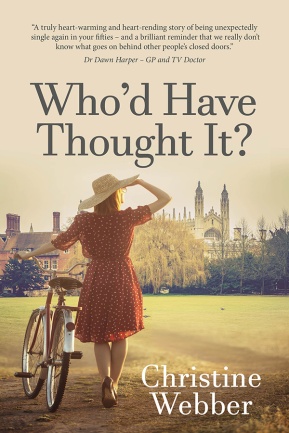
My posts normally have less ambiguous titles, but today’s contribution is from my fellow author and journalist Christine Webber whose forthcoming novel is called exactly that, and, as you’ll see, the name is just right. Over to Christine.

After 30 years of being conventionally published, Who’d Have Thought It? is my first independent venture. The novel sees my return to fiction after 29 years (doesn’t time fly!) of penning self-help books.
A lot of the knowledge I’ve acquired as a health writer, and as a psychotherapist, has crept into these pages. I’ve had tremendous fun fictionalising situations that I see all around me.
But my main reason for writing this book is that I find mid-life much busier and more unsettled than I had anticipated. Most people I speak to – who are also of ‘a certain age’ – say the same thing.  That sentiment underpins the story of Who’d Have Thought It?  
Here’s a brief extract from a chapter well into the novel, when my main character, Annie, has been persuaded by her best friend Janey to try internet dating.

FreeImages.com/Doru Lupeanu

She pushed open the door of the all-day bar and saw him immediately. As he had promised, he was sitting near the mock fire in the middle of the room. He had highly-polished shoes, a blazer and a cravat. A cravat! Dear God, she thought, I didn’t know you could still buy those.  

His eyes lit up when he saw her. He jumped up and lurched forwards, apparently eager to plant a kiss on her cheek. Quickly, she held out a hand to be shaken.

‘I think,’ he said. ‘Not that I’m used to this kind thing, but the form is that, on a first meeting, each participant gets his or her own refreshment.’

‘Fine by me,’ she smiled.

As she waited for the noisy coffee machine to steam her milk to a high enough temperature, Annie was able to view Roger in a mirror above the bar. He was about sixty. Dapper. A little tubby. Not overly tall. Perfectly respectable-looking – but her heart was not in this outing, and she wondered how soon she might decently leave without seeming rude.

‘Ah, not a drinker, then,’ he said with evident disappointment as she returned, carrying her cappuccino.

‘Bit early for me,’ she murmured. 

FreeImages.com/Carien van Hest

He raised his eyebrows. ‘Ah well, once you retire, there seems no reason not to drink whenever you want to. And the excellent thing here is that mid-afternoon, you get a deal – steak and kidney pie and a pint. Had my grub earlier. Very fine!’

She stirred her coffee, stifling an urge to giggle.

‘And they do two-for-one meals on Monday, which is really top value. You couldn’t get a better meal anywhere. And, if I say so myself, I do travel a lot, so I know what I’m talking about.’ He paused to take a deep gulp of his ale.

‘Last month, for example, I accompanied a young lady to the continent for a long weekend. Very luckily, I got a cut-price deal on the overnight ferry crossing. And if you make sure you’re one of the first on board, you can get good reclining seats so you don’t need a cabin. Of course, with the ferries taking care of two nights, you only need to shell out for one night in a hotel. And I found a pretty decent B and B …’

‘And are you still seeing that “young lady”?’ Annie asked innocently.

He took a swig of beer. ‘No! She rang me after we returned to say she’d gone back to her husband. I was bloody annoyed because I had rather pushed the boat out on her account.’

‘That would be the ferry boat, would it?’ Annie murmured, gazing at her rapidly disappearing coffee. ‘Yes, I suppose some women can be awfully ungrateful.’

‘You can say that again,’ he remarked before he launched into a story about another young lady who had let him down.

Surreptitiously, she glanced at her watch. Janey had said she might ring to see if she was coping. 

Fortunately, a couple of minutes later, her friend obliged.

 ‘So sorry,’ she explained to Roger, ‘I have to get this…’ Then ignoring Janey’s whispered question about how things were going, she spoke loudly into the phone: ‘Darling … Oh no! No, of course. I’ll come right away…’

‘Trouble?’ Roger’s brown eyes – which had, up until now, twinkled with a benign expression – gazed somewhat angrily at her.

‘I’m afraid so. My daughter’s having a crisis at the moment. And I have to go. That’s what mums are for.’ She stood up. ‘I would thank you for the coffee, but since I bought my own I won’t bother. Good bye.’

He harrumphed: ‘Well, I must say … Still, maybe another time.’

She was halfway to the door. ‘Probably not,’ she said over her shoulder.
Who'd Have Thought It?

Who’d Have Thought It? is out on June 10 in paperback and as an ebook.

A Self-Publishing Pioneer in the Family

Authors who began self-publishing in 2010 are often called ‘early adopters‘, but one Jacqueline Cooper was at it way back in 1994, when many of today’s indie authors were still at primary school. I make no apology for blogging again about my mother, because, at 5’1” and in her seventies, she was a feisty self-publishing pioneer.

Here’s her story, adapted from the Courier magazine, September 2000.

It’s simple. All you need is a little money you can afford to lose if your book doesn’t sell, and a lot of energy to do the marketing.

When I lived in the USA, well-known publishers produced two of my books. They took 18 months to appear in bookstores, and, although there were royalties and excellent reviews, they did not make me a fortune.

Angus and the Mona Lisa

I moved to Geneva in 1990 as a retraitée (retired person), only sending the occasional story to a magazine or to the BBC. But in 1994 my old school, the English Girls’ College in Alexandria, was having its first ever reunion of Old Girls in London. What with revolutions, wars, marriages, births, we had lost touch and were scattered across the globe. One Old Girl had found us all, even the Japanese sisters we thought had perished at Hiroshima.

Here was a ready market, filled with nostalgia.

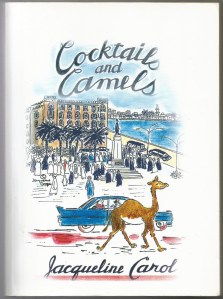
I still had vivid memories not included in my first book Cocktails and Camels. I was galvanized into action. Cocktails & Camels, by Jacqueline Cooper

I approached a printer who had done work for the American International Women’s Club of Geneva (AIWC), and asked for an estimate. If I wanted 1,000 copies with a few black and white illustrations, how much would it cost? I bargained. I was sure this book, Tales from Alexandria, would sell. And I would have no commission to pay.

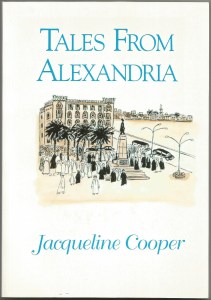
I kept track of what was going on. ‘Just passing by,’ I’d say, even though the printer was on the other side of town. I’m glad I did. Margins were uneven, illustrations either too dark, too light, or lopsided, and, when the books were finally delivered, page 66 was blank and the quotation at the top of Chapter Four was missing. I howled. The books were reprinted, the cost reduced, and the edition sold hand over fist. Tales from Alexandria by Jacqueline Cooper

At first I hadn’t planned to deal with bookstores. But why not sell Tales from Alexandria at Harrods? So I did. I then contacted two Geneva bookstores, Payot and ELM. Commission was high at 35-40%, except for ELM, our friendly bookstore.

In 1997, unable to find anything for children on Geneva’s famous Escalade of 1602, I decided to do my own book. I knew about children’s picture books, as I’d worked with the art director in New York on my Angus and the Mona Lisa. This time I went to the printer who produce the AIWC’s Courier magazine. He had no idea about picture books, but was keen to learn.

Toby and the Escalade by Jacqueline Cooper

Toby and the Escalade is a bilingual English-French book with pictures on every page. It was expensive to produce. Although I knew what a page should look like, I had little idea of page layout, so I asked a friend to help. The book sold well. We went into a second edition that still sold well many years later.

You have to wait to make a profit from self-publishing.

At first, I loved marketing. I contacted the managers of a dozen Geneva bookshops in person, and out-of-town retailers by phone and with cards I’d made of the book cover. I offered them a copy of my book. I spoke to pupils at the International School, and was interviewed on a couple of radio stations.

I made posters which I sent to bookstores along with their order.

When I walked into Payot one day, there was my Toby and the Escalade poster hanging at the top of the stairs with the phrase ‘Vient de paraître!(Just in!)

I made only two press contacts, but newspapers contacted me because the book was selling, as the Tribune de Genève put it, ‘comme des petits pains’ (hot cakes to you and me). Then Naville bookstores called me from Lausanne, asking me urgently for copies.

Two department stores, Globus and Placette, refused to stock Toby and the Escalade. Globus only took books through distributors. But Placette changed their mind two years later when the buyer changed.

The same printer produced my next two books, Cat Day and William Tell. All three books were bilingual, which probably helped sales.

William Tell by Jacqueline Cooper

But even with my good printer there were problems with the illustrations for William Tell. The pictures were anaemic and bore little resemblance to the originals.

In the end, though, it all worked out, by which time I was a nervous wreck.

When I injured my back and could no longer run all over town with books, I contacted a big distributor used by Globus. He liked Toby and the Escalade and wanted to sell it for CHF 25 instead of CHF 20. He would take 50% of sales. I agreed to a contract. But when I read it carefully, I did not like the clause that said he would distribute every book I would ever write. When I asked if that clause could be removed, he angrily broke off the contract.

Marketing is a lot of work, and so is distributing: keeping track of orders, enclosing an invoice with each consignment, packaging and mailing heavy parcels.

The post office can come and collect them, but it is very expensive. There are bills to make out, phone calls to reluctant payers, and dealing with orders that keep coming in. I got small orders for one, two, or three books, and I had to make another invoice, another parcel, another trip to the post office – and then keep an eye on everything. For me the novelty has worn off. A bookstore in Nyon has owed me the princely sum of CHF39 for over six months. The other day, Payot faxed me at 7.30am for one copy of Cat Day.

Self-publishing has been fun, and it worked for me at first. But now I’m sick of it and don’t plan to do another book.

Though, come to think of it, a brilliant idea just popped into my head…

Le Crazy Cat Saloon

Why Your Mother Was Right All Along

It’s been a while since I presented my mother with sticky home-made cards that shed macaroni and glitter. With three offspring of my own, these days Mother’s Day is more about me. From this great vantage point, I now realize my mother was right all along. What’s more, I’ll bet yours was, too.

Here are some things mothers say that are right on the money.

“Don’t sit out in the sun all day long.”

She may have droned on about getting heatstroke and prickly heat. But she was also protecting you against sunburn, skin cancer, cataracts, and premature wrinkles.

That’s what mothers do. They protect their young.

FreeImages.com/ryan shull

“Pick up your clothes.”

Your mum thought it was slovenly and untidy, but you had to learn for yourself, didn’t you? Maybe you couldn’t find your wallet, you tripped arse over tit on a pile of shirts, or the cat threw up on your best jeans. You get around to using hangers eventually. 

“You’re wearing far too much make-up.”

The stuff you applied with a trowel didn’t look nearly as good in real life as it did in your bedroom mirror. But it’s even less flattering when you’re 50. Your mum just wanted you to ditch the panda eyes before you looked totally ridiculous.

“Wash your hands.”

Hands look a lot better when they’re clean, but that’s not the real point. Washing your mitts often is the single best thing you can do to prevent common infections like colds and even flu. 

FreeImages.com/Deborah Krusemark

“Remember to say Please and Thank you.”

Kids who mind their manners reflect well on their parents, but that’s not the whole story. They also become adults that people like being around – whether it’s at work or socially – and like doing things for. 

“No TV till you finish your homework.”

That was so unfair, as no doubt you pointed out. But your mum wanted you to learn a few more important life skills, like concentration, perseverance, and becoming a completer-finisher. Polish TVMore on Belbin team roles here

“Sit up straight.”

You were determined to slouch like the archetypal sullen adolescent. But your mother hoped you’d reap the benefits of good posture:

  • Less stress on vertebrae and ligaments, so less back pain
  • Spine less likely to become fixed in the wrong position
  • Better breathing
  • Looking younger and slimmer.

There’s more info from BackCare

“Turn down that noise.”

Maybe she was just after a bit of peace and quiet, but it was the best advice for your ears too. Noise exposure is a major cause of permanent hearing loss. Noise-induced hearing loss is often gradual, and it’s cumulative. That ringing in your ears after a gig? It means the hair cells of your cochlea are already damaged. 

So go on. If you’ve got a mother, make a fuss of her on Mother’s Day, and, while you’re at it, throw in the rest of the year as well. She won’t be around forever.

mum and me

ooOoo

Note for US readers: In the UK, Mother’s Day is today, March 6, and its correct name is Mothering Sunday.  And falling arse over tit is a very common expression.

I’m taking a little break to edit my novel, so this blog will be back in a couple in a couple of weeks. See you then.

What Was Valentine’s Day All About?

First of all, a shedload of money. According to one estimate, the UK spends around £1bn a year on gifts and going out on Valentine’s Day.

FreeImages.com/Linnell Esler

You could be forgiven for thinking that St Valentine is the patron saint of the gullible.  But here are a few other things this day is for.

1 A chance to show someone you’re interested, without giving too much away. Sending a valentine is like saying you love someone then putting a smiley at the end to show you didn’t really mean it 😉

But choose your message wisely, especially if you think size matters. This is what it said on the back of one such card.

Valentine card warning

2 A time for charities to remind you that few things are as loveable as a ball of fluff or a cold wet nose. And that there are other ways to spend your money than on long-stemmed red roses and other such fripperies.

Here’s a cute little video from the Mayhew Animal Home, which regular readers of this blog will have seen mentioned before.

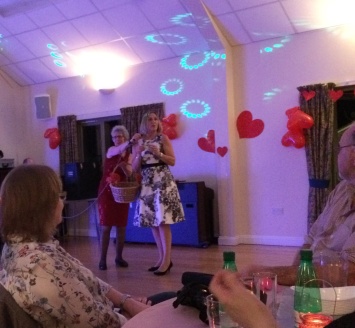
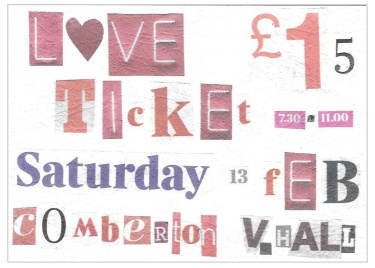
3 A dance in the village hall plastered with red hearts, like the one I went to last night. Not just a disco, but also live music, a quiz, and endless helpings of chili con carne, all bound to warm the cockles of your heart on a cold winter’s night. The scene is replicated in village halls all over the land, where raffles and dad dancing take place. Whether it’s to raise funds for upkeep of the rec, or to support some local club, it’s the community getting together in a good cause.

comberton

Perhaps that should be the true meaning of Valentine’s Day.

Invitation

Next Stop for Gene Editing: Designer Parents

Gene editing has been all over the news these past few days. 

While the technique is still experimental, it holds the hope of bypassing defects that lead to life-threatening conditions.  I suspect the level of interest has a lot to do with the universal desire for a baby that’s perfect in every way.

FreeImages.com/S S

But, with tongue now travelling towards cheek, I wonder: what’s the point of a perfect baby, if the parents happen to be deeply flawed?

In gene editing, enzymes are used as molecular scissors to snip out certain sequences of DNA and replace them. If I were making a template for a designer parent, here’s what I’d cut out:

FreeImages.com/Jean Scheijen

1 Violence

Should be excised from a parent’s repertoire. It’s not even OK to give the little terror a taste of his own medicine. If he kicks you and you kick back, you’re only saying that aggression is acceptable.

2 Swearing

Oh, all right. So Go the Fuck to Sleep was hilarious, momentarily. On the other hand, I’ll never forget the woman who brought her three-year old to speech and language therapy because he knew so few words. But he was fluent at saying, ‘Bugger off’.

3 Impatience

watch with red strap

I’m guessing you too have felt the urge to yank your toddler’s arm out of its socket when he dawdles. Unfortunately, kids learn by example. How do you want to be treated when you’re in your dotage? Enough said.

4 Constant criticism

Yep, even when it’s slick and sarcastic and makes you feel bloody clever, a critical drip-drip-drip of erodes a child’s self-esteem.  Check out Dorothy Lawe Nolte’s poem Children Learn What They Live. 

5 Selfishness

icon

Only a better-than-average saint could put someone else’s needs first all the time, but that’s roughly what parents have to do. Obviously, it would help if gene editing could also do away with the need for sleep, privacy, quiet, and going to work.

6 Overindulgence

Here I’m thinking of overindulging the child, which is almost as bad as neglect. Growing up without rules or limits doesn’t make for a happy person who knows his place in the world. But, while they’re at it, some parents could also cut down on drink and drugs.

So those are my thoughts on being a designer parent. Sorry if I failed to mention Gucci, Prada, and Tom Ford until the end.

FreeImages.com/Jenny W

Are you a parent, or perhaps a keen observer of family life? What do you think?

Goodbye and Good Riddance, Dry January

If, like a sizeable proportion of the UK population, you signed up for a ‘Dry January’, you’re probably just about to grab the barman’s attention and celebrate the end of a month of abstinence.

red wineI won’t miss this January one little bit. But it’s not giving up booze that made it hard.  The bits of Dry January I can’t handle are:

1 People imagining that one month off the sauce will magically cancel out 11 months of serious abuse. The prevailing belief is that it doesn’t matter what you do to your liver before or after January. Anything goes because it gets annulled like a Catholic marriage. Yes, all you folks that didn’t have a sober half hour in the whole of December – I’m talking about you. And no, it wasn’t really that smart to finish off every single bottle in the house before New Year’s Day, just to avoid temptation.

white-wine crop

2 People seeking sponsorship for their abstinence. It’s only one month! It’s barely long enough for your liver enzymes to return to normal (if they’re seriously raised, you should be looking at 6-8 weeks or longer, like life).  Is there no such thing as self-control unless you can get some dosh out of it?  No? OK, so the next time I give up chocolate for three years, I’ll make a Just Giving page and ask everyone I know for serious money.

3 Pious facial expressions when ordering ‘just an elderflower’. Because, obviously, giving up the hard stuff for a small fraction of the year, while remaining self-indulgent on every other front, really turns someone into a saint.

IMG_2985

4 Ever-longer lists of ‘mocktails’, almost as expensive in restaurants as the alcoholic versions. Along with a hefty helping of calories, some also come with twee names like ‘Nojito’ and ‘Abstinence on the Beach’.

5 Hilarious signs about Dry January. You know the kind of thing, often found outside pubs or on Facebook. pub sign dry January

6 Intense conversations about alcohol, mostly around its history or cultural aspects, and not all of it correct:

“In the middle ages, ale was safer to drink than water.”

“Even children drank beer and it was much stronger than it is today.”

“Arabs don’t even have a word for booze.”*

So long, Dry January. Welcome, Dry February.

ooOoo

*Oh yes, they do. There are even words for wine and beer. In fact ‘alcohol’ comes from the Arabic.

More on fatty liver disease and liver enzymes: When and how to evaluate mildly elevated liver enzymes in apparently healthy patients.


Can I Please Be a Man for a Change?

“Cazza,” a friend asked me in all seriousness. “Would you like to be a man?”

Of course not. It was a ridiculous idea. I’ve had plenty of time to get used to being a woman, and I enjoy it. A lot.

Why would I want to be a bloke, with all the disadvantages like obtrusive pipework, higher car insurance, and the chore of daily face-scraping? A no-brainer.

But fast forward a few weeks, and I’ve seen The Danish Girl, I’ve done some thinking about gender, and I may have changed my mind. While I wouldn’t resort to surgery, it might be nice to have a magic wand and painlessly turn into a fella, just for a bit.  FreeImages.com/Cecile Graat

Here are just some of the things you can do when you’re a man, even in 2016:

1 You get acres of space on a tube train just by spreading your legs apart.

2 There’s no need to queue up for a pee. 

3 You can take part in conversations about asbestos removal, carburettors, or the offside rule without someone saying it’s a bit technical for you. 

FreeImages.com/bugdog

4 Interrupting isn’t rude. It’s decisive. And you’re never bossy. It’s called ‘being a leader’.  

5 You can rearrange your scrotum at leisure under the guise of thinking.

6 A fart machine can keep you entertained for hours. 

fart machine

7 There are no periods or hot flushes, and you can pile on weight without people asking when it’s due.

FreeImages.com/Mathias Gelinski

8 You can irritate the crap out of someone, then say, “You’re so gorgeous when you’re angry.”

9 If you clean the house or look after the children, your other half is deemed to be very lucky, and you’re hailed as a saint. 

FreeImages.com/Martin Abegglen

10 You’re a good sport, even when women make fun of you.  

Rushed off Your Paws at Christmas

You don’t need telling that it’s a busy and stressful time of year, especially if you have family to look after.

No wonder so many of us will be rushed off our feet. Or indeed our paws. 

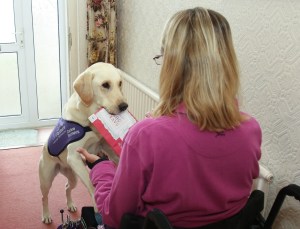
I’m thinking of dogs like the lovely May here whose duties include opening and shutting doors, unloading the washing machine, picking up dropped items, pressing buttons and switches, and if need be getting help in an emergency.  

There’s the Christmas shopping to attend to, and that requires money. Here’s May using the ATM.

assistance dog using cash machine

photo by Canine Partners

All the food to buy.

assistance dog shopping in supermarket

photo by Canine Partners

Not to mention sorting out the Christmas post.

assistance dog with post

photo by Canine Partners

Canine Partners like May are trained to do a range of different tasks, but they’re intelligent and can adapt to the person’s lifestyle. In a survey, over a third of their humans say they rely on them to tidy toys away. Some dogs even let the cat in and out. And in and out again.

FreeImages.com/Robert Bak

And they do all this without a murmur of complaint, which can’t be said of most humans.

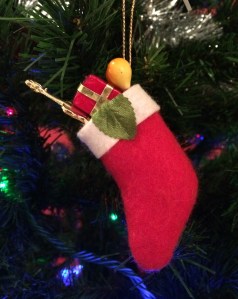
I don’t know about you, but I think May deserves something in her Christmas stocking.

Christmas stocking

If you don’t need an assistance dog yourself, you can still adopt one. Might even make a good last minute Christmas present for someone.

Have a merry Christmas, one and all.  

holly garland

You may like to know…

Canine Partners assists people with a range of disabilities to enjoy a greater independence and quality of life through the provision of specially trained dogs.

For example, the charity works in partnership with Help for Heroes, aiming to train dogs to meet the needs of people with even the most complex disabilities.  These life-transforming dogs also provide practical, physiological, psychological and social benefits including increased independence and confidence as well as increased motivation and self-esteem.

Canine Partners is a registered charity and receives no government funding. It depends wholly on public donations and legacies.

That’ll be you and me.

angel tree decoration


Easy tweet: “Christmas stress? Some busy feet barely touch the ground via @DrCarolCooper & help from @canine_partners”

The Dreaded Christmas Newsletter

The Christmas cards are fluttering in through the letter box, and so are the round robin letters, lovingly composed to bring you up to date with all the people you no longer remember. This may be my favourite so far.

holly garland

Dear friends


My, doesn’t time fly! I supposed that’s what happens when you’re our age. 2015 has been a very special year for us although, as John likes to points out, it hasn’t quite ended yet.

Our exciting year kicked off with damp-proof treatment to our lounge. The builders got plaster dust literally everywhere, including in my beloved knitting basket. After the re-plastering, we re-decorated. We spent many an evening debating the relative merits of Magnolia versus Almond White. John got the Almond White he wanted. Well, he is the Man of the House.

Here is where I usually include some of the best photos of our year. Our 2014 Christmas letter featured an xray of my new hip, so this one, taken in our garden, is rather different.

tree

Not, alas, the much anticipated bumper crop of berries on our pyracanthus, because John had a bit of a go with the pruning shears right after his latest parking ticket.  At least this time he didn’t punch the traffic warden, which you will agree is a good thing if you recall our Christmas letter 2013.

Since John and I have long retired, the most interesting career developments are the children’s. I am excited to tell you that daughter Tabitha has finally decided what she wants to do, and is now a tattoo artist’s model.

FreeImages.com/Rokla

Our son Graham, who takes more after me, has found his knitting business has really taken off. To complement his range of egg-cosies, he now offers knitted ties, and he has sold three of them in just four months!

In March I had another bout of shingles, and John had an attack of gout. However this did not stop us from enjoying foreign travel. John and I went to Scotland in April. The weather was not as sunny as we had hoped, but we got to play a lot of gin rummy.

FreeImages.com/liensca

Six months ago, I joined a book club which seems quite fun. We do not yet have a Book of the Month. There are however a number of wine labels that are required reading.

The rest of our year was taken up with the replacement of my hip replacement. Here I must thank all our medical friends who got in touch just after receiving our 2014 Christmas letter and pointed out that the stem of the prosthesis was incorrectly positioned. 

FreeImages.com/Ali Taylor

Wishing you and yours all the blessings of the Christmas season, and a wonderful new year to come with peace and prosperity to all (with the exception of ISIL, as John wants me to point out).

Love from

Judy and John


holly garland

How to Save a Life Using Just Your Hands

At 8am on Tuesday morning, junior hospital doctors were due to take industrial action. Just for one day, they’d only treat emergencies. 

FreeImages.com/Carlos Paes

That’s now off, pending further talks. But does the average Joe know what an emergency is? I can’t help speculating. My experience of working in A & E suggests otherwise. Yes, there are heart attacks, car crashes, and fractured femurs galore.

Alas, there’s also no shortage of folks who pitch up for a second opinion on a runny nose, or who demand to know, at 4am, why they’ve had hiccups for two years.

Tragically, the reverse is also true: “I thought she was just sleeping.”

FreeImages.com/Johan Graterol POSED BY MODEL

If it’s that hard for the man in the street to recognize an emergency for what it is, it’s even more challenging to deal with it.

Forgive me for going all serious today, but research for St John Ambulance shows that almost four fifths of parents (79%) wouldn’t know what to do if their baby was choking to death. That’s despite it being a major fear for 58% of parents. In fact no less than 40% have witnessed choking. 

So kudos to those who’ve learned what to do, like the two people who saved a tot’s life in Hampstead a few weeks ago.

As you can imagine, the toddler’s mother is incredibly grateful to the passers-by who leapt in and did CPR. They’re unusual, because most people, as the research showed, wouldn’t have a clue.

We hear a lot about defibrillators in public places. Of course they’re a great idea. But while defibrillators help save adult lives, they’re not that useful for a baby or child. That’s because most little ones have breathing emergencies, not cardiac ones.

The good news is that their lives can be saved with nothing more than your hands, once you know how.

FreeImages.com/Helmut Gevert

So I wonder why basic life support isn’t taught more in schools.  And why parents and carers don’t often bother to learn how to save their own child’s life.

About five years ago, I was involved in Tesco’s BabySafe campaign. There were free sessions around the country designed to teach parents, carers, and others the basics of dealing with common but serious emergencies like choking and burns. People left with basic skills and the confidence to use them.

You can learn to save a baby or child’s life from the British Red Cross or St John Ambulance

These organizations have online information too, but it’s so much better to do a hands-on course if you can.

FreeImages.com/Denise Docherty