What Was Valentine’s Day All About?

First of all, a shedload of money. According to one estimate, the UK spends around £1bn a year on gifts and going out on Valentine’s Day.

FreeImages.com/Linnell Esler

You could be forgiven for thinking that St Valentine is the patron saint of the gullible.  But here are a few other things this day is for.

1 A chance to show someone you’re interested, without giving too much away. Sending a valentine is like saying you love someone then putting a smiley at the end to show you didn’t really mean it 😉

But choose your message wisely, especially if you think size matters. This is what it said on the back of one such card.

Valentine card warning

2 A time for charities to remind you that few things are as loveable as a ball of fluff or a cold wet nose. And that there are other ways to spend your money than on long-stemmed red roses and other such fripperies.

Here’s a cute little video from the Mayhew Animal Home, which regular readers of this blog will have seen mentioned before.

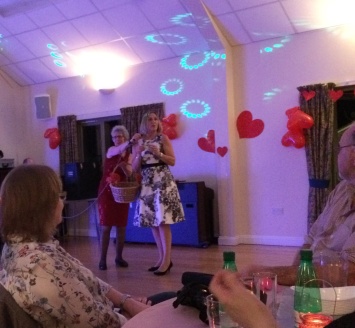
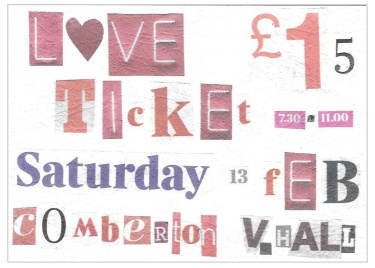
3 A dance in the village hall plastered with red hearts, like the one I went to last night. Not just a disco, but also live music, a quiz, and endless helpings of chili con carne, all bound to warm the cockles of your heart on a cold winter’s night. The scene is replicated in village halls all over the land, where raffles and dad dancing take place. Whether it’s to raise funds for upkeep of the rec, or to support some local club, it’s the community getting together in a good cause.

comberton

Perhaps that should be the true meaning of Valentine’s Day.

Invitation

Next Stop for Gene Editing: Designer Parents

Gene editing has been all over the news these past few days. 

While the technique is still experimental, it holds the hope of bypassing defects that lead to life-threatening conditions.  I suspect the level of interest has a lot to do with the universal desire for a baby that’s perfect in every way.

FreeImages.com/S S

But, with tongue now travelling towards cheek, I wonder: what’s the point of a perfect baby, if the parents happen to be deeply flawed?

In gene editing, enzymes are used as molecular scissors to snip out certain sequences of DNA and replace them. If I were making a template for a designer parent, here’s what I’d cut out:

FreeImages.com/Jean Scheijen

1 Violence

Should be excised from a parent’s repertoire. It’s not even OK to give the little terror a taste of his own medicine. If he kicks you and you kick back, you’re only saying that aggression is acceptable.

2 Swearing

Oh, all right. So Go the Fuck to Sleep was hilarious, momentarily. On the other hand, I’ll never forget the woman who brought her three-year old to speech and language therapy because he knew so few words. But he was fluent at saying, ‘Bugger off’.

3 Impatience

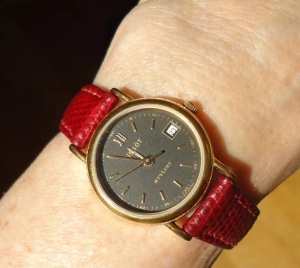
watch with red strap

I’m guessing you too have felt the urge to yank your toddler’s arm out of its socket when he dawdles. Unfortunately, kids learn by example. How do you want to be treated when you’re in your dotage? Enough said.

4 Constant criticism

Yep, even when it’s slick and sarcastic and makes you feel bloody clever, a critical drip-drip-drip of erodes a child’s self-esteem.  Check out Dorothy Lawe Nolte’s poem Children Learn What They Live. 

5 Selfishness

icon

Only a better-than-average saint could put someone else’s needs first all the time, but that’s roughly what parents have to do. Obviously, it would help if gene editing could also do away with the need for sleep, privacy, quiet, and going to work.

6 Overindulgence

Here I’m thinking of overindulging the child, which is almost as bad as neglect. Growing up without rules or limits doesn’t make for a happy person who knows his place in the world. But, while they’re at it, some parents could also cut down on drink and drugs.

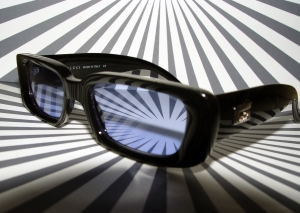
So those are my thoughts on being a designer parent. Sorry if I failed to mention Gucci, Prada, and Tom Ford until the end.

FreeImages.com/Jenny W

Are you a parent, or perhaps a keen observer of family life? What do you think?

Goodbye and Good Riddance, Dry January

If, like a sizeable proportion of the UK population, you signed up for a ‘Dry January’, you’re probably just about to grab the barman’s attention and celebrate the end of a month of abstinence.

red wineI won’t miss this January one little bit. But it’s not giving up booze that made it hard.  The bits of Dry January I can’t handle are:

1 People imagining that one month off the sauce will magically cancel out 11 months of serious abuse. The prevailing belief is that it doesn’t matter what you do to your liver before or after January. Anything goes because it gets annulled like a Catholic marriage. Yes, all you folks that didn’t have a sober half hour in the whole of December – I’m talking about you. And no, it wasn’t really that smart to finish off every single bottle in the house before New Year’s Day, just to avoid temptation.

white-wine crop

2 People seeking sponsorship for their abstinence. It’s only one month! It’s barely long enough for your liver enzymes to return to normal (if they’re seriously raised, you should be looking at 6-8 weeks or longer, like life).  Is there no such thing as self-control unless you can get some dosh out of it?  No? OK, so the next time I give up chocolate for three years, I’ll make a Just Giving page and ask everyone I know for serious money.

3 Pious facial expressions when ordering ‘just an elderflower’. Because, obviously, giving up the hard stuff for a small fraction of the year, while remaining self-indulgent on every other front, really turns someone into a saint.

IMG_2985

4 Ever-longer lists of ‘mocktails’, almost as expensive in restaurants as the alcoholic versions. Along with a hefty helping of calories, some also come with twee names like ‘Nojito’ and ‘Abstinence on the Beach’.

5 Hilarious signs about Dry January. You know the kind of thing, often found outside pubs or on Facebook. pub sign dry January

6 Intense conversations about alcohol, mostly around its history or cultural aspects, and not all of it correct:

“In the middle ages, ale was safer to drink than water.”

“Even children drank beer and it was much stronger than it is today.”

“Arabs don’t even have a word for booze.”*

So long, Dry January. Welcome, Dry February.

ooOoo

*Oh yes, they do. There are even words for wine and beer. In fact ‘alcohol’ comes from the Arabic.

More on fatty liver disease and liver enzymes: When and how to evaluate mildly elevated liver enzymes in apparently healthy patients.


Can I Please Be a Man for a Change?

“Cazza,” a friend asked me in all seriousness. “Would you like to be a man?”

Of course not. It was a ridiculous idea. I’ve had plenty of time to get used to being a woman, and I enjoy it. A lot.

Why would I want to be a bloke, with all the disadvantages like obtrusive pipework, higher car insurance, and the chore of daily face-scraping? A no-brainer.

But fast forward a few weeks, and I’ve seen The Danish Girl, I’ve done some thinking about gender, and I may have changed my mind. While I wouldn’t resort to surgery, it might be nice to have a magic wand and painlessly turn into a fella, just for a bit.  FreeImages.com/Cecile Graat

Here are just some of the things you can do when you’re a man, even in 2016:

1 You get acres of space on a tube train just by spreading your legs apart.

2 There’s no need to queue up for a pee. 

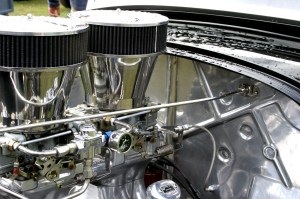
3 You can take part in conversations about asbestos removal, carburettors, or the offside rule without someone saying it’s a bit technical for you. 

FreeImages.com/bugdog

4 Interrupting isn’t rude. It’s decisive. And you’re never bossy. It’s called ‘being a leader’.  

5 You can rearrange your scrotum at leisure under the guise of thinking.

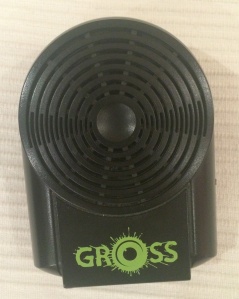
6 A fart machine can keep you entertained for hours. 

fart machine

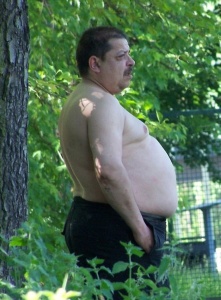
7 There are no periods or hot flushes, and you can pile on weight without people asking when it’s due.

FreeImages.com/Mathias Gelinski

8 You can irritate the crap out of someone, then say, “You’re so gorgeous when you’re angry.”

9 If you clean the house or look after the children, your other half is deemed to be very lucky, and you’re hailed as a saint. 

FreeImages.com/Martin Abegglen

10 You’re a good sport, even when women make fun of you.  

Why Writers Live in Suffolk

Not all writers live in Suffolk, but plenty do, or did. Eric Arthur Blair was so impressed with the county that he named himself after the River Orwell.  And it’s not just writers. Suffolk is a big draw for all kinds of creatives.

I can’t blame a single one of them, I concluded after a recent couple of days in Aldeburgh.

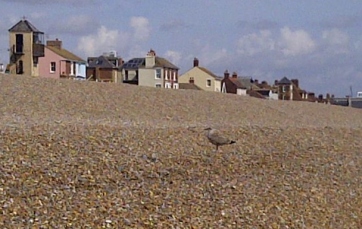
Aldeburgh beach

By any standards, Suffolk is attractive.

No wonder crime writer PD James bought herself a home across the market square in Southwold. The other Queen of Crime, Ruth Rendell, was also based in Suffolk.

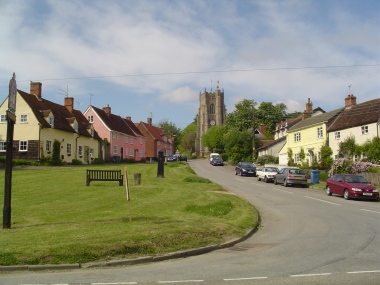
Even villages that aren’t chocolate-box pretty are picturesque. 

FreeImages.com/Peter Day

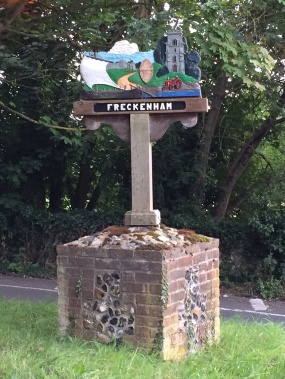
An estimated 375 of them have ornate village signs. That’s more than any other county (except Norfolk).

Freckenham, Suffolk

It’s not a through-route to anywhere, unless you’re heading out to sea. Maybe that’s why it’s resistant to motorways and vapid trends. Walk through any Suffolk town and you’ll find a retro vibe.  Policemen know everyone, tractors roam the streets, and small shops still do a busy trade.

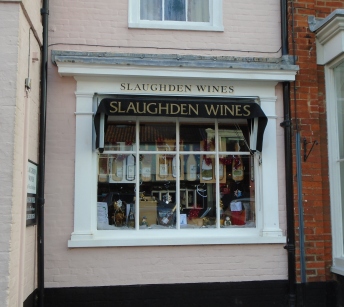
Wine shop, Suffolk

But it’s not Hicksville. It’s a hive of culture. Check out Snape Maltings and the Aldeburgh Festival, founded by Benjamin Britten. 

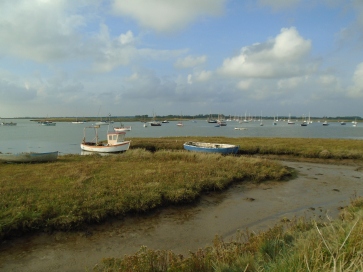
The light is amazing, as artists soon discover. Even if you don’t paint or sketch, it’s uplifting to be outside. I can’t do the sky justice, so here’s a photo taken by a river estuary.

River Alde

It’s easy to clear your head because the air is so bracing. For most of the winter, the wind blows in straight from the Urals. 

Stroll along the beach, and you might find it comforting to watch fishermen sitting patiently on the shingle in the rain. Especially if you have somewhere warm to go back to.

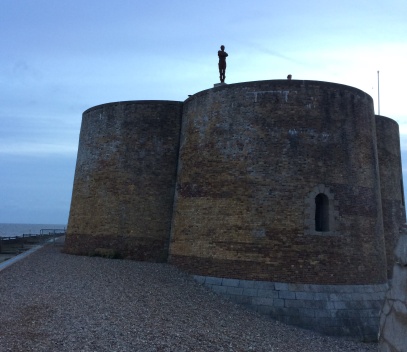
Writing fiction? There’s plenty of inspiration for intrigue, from the Martello towers dotted along the coast to the nuclear reactor at Sizewell.

Martello tower, Aldeburgh

See the guy at the top? This isn’t someone about to go over the edge. It’s an Antony Gormley statue. 

But what if, despite the odds, you have writer’s block in the middle of your magnum opus? 

Just compose a limerick about Suffolk instead.

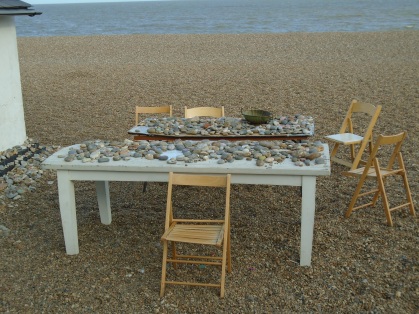
Tables on the beach at Aldeburgh

How to Conjure up a Title for a Book

Newsflash for TS Eliot: it’s not just the naming of cats that’s a difficult matter. Books are equally tricky.old-books1

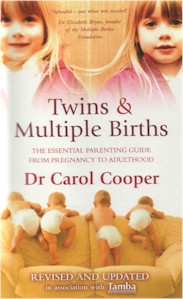
If you’re traditionally published, you may not need to give it much thought. One of my books was born with the zingy title of Twins and Multiple Births with barely any input from me.  I can’t really complain. It may be low on pizzazz but it’s a fair description of the contents.

Twins & Multiple Births book

But now that I am nearing the end of my second novel, and the cover design is imminent, I’ve come to the conclusion that Camden Passage isn’t after all right for a racy story about dating in London. Camden Passage is in Islington, not in Camden. It’s a stylish destination for shopping and eating out, but still, could the address confuse non-Londoners?

lighting shop in Camden Passage

For American readers, the potential for confusion is far greater. Camden, New Jersey, is often cited as one of the poorest and most violent cities in the USA. It was no doubt an ideal venue for President Obama to announce his new police initiative last year, but it’s about as far from a classy location as you can get.

Now I’ve abandoned Camden Passage, I’m left with various techniques for finding a new title for my novel.

1 Book title generators like Fantasy Name Generators, Adazing’s book title generator, and a fun blog post by Tara Sparling.

2 Asking friends and family.

3 Talking to other authors.

4 Polling readers of existing books. There’s the title bracket system described by Nathan Roten in his blog post for ALLi.

5 Going to a quiet bar and staying till the barman comes up with a suggestion.

6 Aiming a dart at the dictionary.

7 Subverting well-known titles.

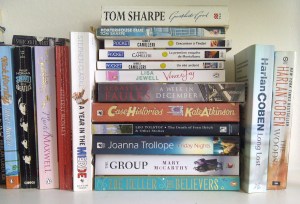
bookshelf crop

I’ve already tried some of these methods. With a dry January, number 5 won’t fly, and I didn’t quite gel with If Clouds Could Steal, suggested by one of the title generators, but polling writer friends and readers remains an idea.

As a journalist, I think bending well-known titles appeals to me more, and that might inject just the right note to hint at the wit within the pages.

The reading world already has Aberystwyth Mon Amour and A Year in Cricklewood.  On that basis, Much Ado about Something Quite Serious makes perfect sense to me.

I can also foresee shelf space for gems like The Ice Triplets, Bonfire of the VAT Receipts, Breakfast at Lidl’s and Great Expectorations (set in a TB hospital in the 1950s).

Hampstead is the scene for much of the action in my novel. Might Hampstead for Dummies work?

FreeImages.com/Grant Kennedy

Hmm. Not convinced. But I rather like Hampstead Handyman which conveys a certain amount of action. Unfortunately it’s unlikely to fulfil its promise unless, as a friend suggested, I actually write a handyman into the story.

Those who can’t decide on a single name for their baby sometimes string all their favourites together as middle names for their little darling. You know the type: the newborn son or daughter saddled with the names of the entire football squad.

That may explain how Tom Wolfe got the Kandy-Kolored Tangerine Flake Streamline Baby. Though strictly speaking this was a car, not a baby.

So here I am at the start of the year and the end of my novel, my head spinning with title possibilities, all of them still wide of the mark. 

FreeImages.com/baronsboy

If you’re an author, how do you choose your book titles? I’d love to hear from you.

Rushed off Your Paws at Christmas

You don’t need telling that it’s a busy and stressful time of year, especially if you have family to look after.

No wonder so many of us will be rushed off our feet. Or indeed our paws. 

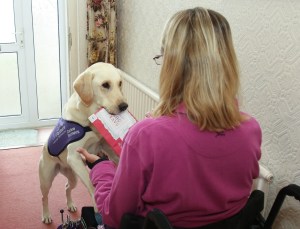
I’m thinking of dogs like the lovely May here whose duties include opening and shutting doors, unloading the washing machine, picking up dropped items, pressing buttons and switches, and if need be getting help in an emergency.  

There’s the Christmas shopping to attend to, and that requires money. Here’s May using the ATM.

assistance dog using cash machine

photo by Canine Partners

All the food to buy.

assistance dog shopping in supermarket

photo by Canine Partners

Not to mention sorting out the Christmas post.

assistance dog with post

photo by Canine Partners

Canine Partners like May are trained to do a range of different tasks, but they’re intelligent and can adapt to the person’s lifestyle. In a survey, over a third of their humans say they rely on them to tidy toys away. Some dogs even let the cat in and out. And in and out again.

FreeImages.com/Robert Bak

And they do all this without a murmur of complaint, which can’t be said of most humans.

I don’t know about you, but I think May deserves something in her Christmas stocking.

Christmas stocking

If you don’t need an assistance dog yourself, you can still adopt one. Might even make a good last minute Christmas present for someone.

Have a merry Christmas, one and all.  

holly garland

You may like to know…

Canine Partners assists people with a range of disabilities to enjoy a greater independence and quality of life through the provision of specially trained dogs.

For example, the charity works in partnership with Help for Heroes, aiming to train dogs to meet the needs of people with even the most complex disabilities.  These life-transforming dogs also provide practical, physiological, psychological and social benefits including increased independence and confidence as well as increased motivation and self-esteem.

Canine Partners is a registered charity and receives no government funding. It depends wholly on public donations and legacies.

That’ll be you and me.

angel tree decoration


Easy tweet: “Christmas stress? Some busy feet barely touch the ground via @DrCarolCooper & help from @canine_partners”

The Dreaded Christmas Newsletter

The Christmas cards are fluttering in through the letter box, and so are the round robin letters, lovingly composed to bring you up to date with all the people you no longer remember. This may be my favourite so far.

holly garland

Dear friends


My, doesn’t time fly! I supposed that’s what happens when you’re our age. 2015 has been a very special year for us although, as John likes to points out, it hasn’t quite ended yet.

Our exciting year kicked off with damp-proof treatment to our lounge. The builders got plaster dust literally everywhere, including in my beloved knitting basket. After the re-plastering, we re-decorated. We spent many an evening debating the relative merits of Magnolia versus Almond White. John got the Almond White he wanted. Well, he is the Man of the House.

Here is where I usually include some of the best photos of our year. Our 2014 Christmas letter featured an xray of my new hip, so this one, taken in our garden, is rather different.

tree

Not, alas, the much anticipated bumper crop of berries on our pyracanthus, because John had a bit of a go with the pruning shears right after his latest parking ticket.  At least this time he didn’t punch the traffic warden, which you will agree is a good thing if you recall our Christmas letter 2013.

Since John and I have long retired, the most interesting career developments are the children’s. I am excited to tell you that daughter Tabitha has finally decided what she wants to do, and is now a tattoo artist’s model.

FreeImages.com/Rokla

Our son Graham, who takes more after me, has found his knitting business has really taken off. To complement his range of egg-cosies, he now offers knitted ties, and he has sold three of them in just four months!

In March I had another bout of shingles, and John had an attack of gout. However this did not stop us from enjoying foreign travel. John and I went to Scotland in April. The weather was not as sunny as we had hoped, but we got to play a lot of gin rummy.

FreeImages.com/liensca

Six months ago, I joined a book club which seems quite fun. We do not yet have a Book of the Month. There are however a number of wine labels that are required reading.

The rest of our year was taken up with the replacement of my hip replacement. Here I must thank all our medical friends who got in touch just after receiving our 2014 Christmas letter and pointed out that the stem of the prosthesis was incorrectly positioned. 

FreeImages.com/Ali Taylor

Wishing you and yours all the blessings of the Christmas season, and a wonderful new year to come with peace and prosperity to all (with the exception of ISIL, as John wants me to point out).

Love from

Judy and John


holly garland

How to Save a Life Using Just Your Hands

At 8am on Tuesday morning, junior hospital doctors were due to take industrial action. Just for one day, they’d only treat emergencies. 

FreeImages.com/Carlos Paes

That’s now off, pending further talks. But does the average Joe know what an emergency is? I can’t help speculating. My experience of working in A & E suggests otherwise. Yes, there are heart attacks, car crashes, and fractured femurs galore.

Alas, there’s also no shortage of folks who pitch up for a second opinion on a runny nose, or who demand to know, at 4am, why they’ve had hiccups for two years.

Tragically, the reverse is also true: “I thought she was just sleeping.”

FreeImages.com/Johan Graterol POSED BY MODEL

If it’s that hard for the man in the street to recognize an emergency for what it is, it’s even more challenging to deal with it.

Forgive me for going all serious today, but research for St John Ambulance shows that almost four fifths of parents (79%) wouldn’t know what to do if their baby was choking to death. That’s despite it being a major fear for 58% of parents. In fact no less than 40% have witnessed choking. 

So kudos to those who’ve learned what to do, like the two people who saved a tot’s life in Hampstead a few weeks ago.

As you can imagine, the toddler’s mother is incredibly grateful to the passers-by who leapt in and did CPR. They’re unusual, because most people, as the research showed, wouldn’t have a clue.

We hear a lot about defibrillators in public places. Of course they’re a great idea. But while defibrillators help save adult lives, they’re not that useful for a baby or child. That’s because most little ones have breathing emergencies, not cardiac ones.

The good news is that their lives can be saved with nothing more than your hands, once you know how.

FreeImages.com/Helmut Gevert

So I wonder why basic life support isn’t taught more in schools.  And why parents and carers don’t often bother to learn how to save their own child’s life.

About five years ago, I was involved in Tesco’s BabySafe campaign. There were free sessions around the country designed to teach parents, carers, and others the basics of dealing with common but serious emergencies like choking and burns. People left with basic skills and the confidence to use them.

You can learn to save a baby or child’s life from the British Red Cross or St John Ambulance

These organizations have online information too, but it’s so much better to do a hands-on course if you can.

FreeImages.com/Denise Docherty


Why Does Car Insurance Cost So Much?

Go on, guess.

My high premiums aren’t because I prang my car a lot, or make other people have accidents. Though there was that crash I caused in 1975 or so, when I collided with a Morris Traveller van and managed to remove some of its wooden trim. The owner glued it back on. Total cost of the repair: £1.50.

I don’t indulge in James Bond-esque 200 mph jaunts the wrong way up dual carriageways, let alone launch my car off the tops of buildings. So it’s a mystery to me why Sheila’s Wheels wants to relieve me of huge wodges of money on an annual basis.

But now I can thank a certain coach driver for leading me to the explanation as to why car insurance costs so much.

On a blisteringly hot August afternoon, said coach opts to use the offside lane of the A41 and hits my car from the side.

The lucky thing is that only my wing mirror is damaged, though the cat, imprisoned in a basket on the passenger seat, seems a bit miffed at the delay as the coach driver and I stop to exchange details.
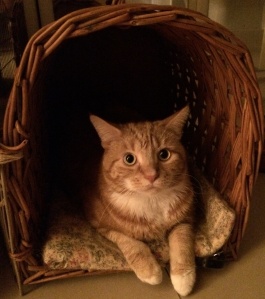
cat in travel basket

It seems pretty clear-cut. The other guy has wandered far enough into my lane to break something off my car.

Yet this minor damage then takes three months to sort out.

The driver tells me he works for United Busways. That’s the first problem, because he doesn’t. He used to work for them, but, after a couple of phone calls, I learn he’s now with National Express, despite what it said on his bus.
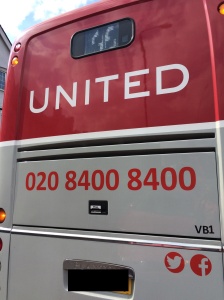
back view of coach

I can only find 0871 phone numbers for National Express, but, after one long expensive call, someone refers me to a depot in Hertfordshire. Two more calls later, nobody seems that interested, though one of the people I speak to lets slip the name of the bus company’s insurer, Gallagher Bassett.

Now I am on to something. I speak to Gallagher Bassett and learn that the driver has logged a report of the accident. There will be CCTV footage too, to be examined in the next few days.

I have spent over an hour on the phone to six different people, but it sounds like a resolution is in sight.

But I was wrong. If you want to cut to the chase, it’s in bold near the bottom of this post.

Someone from a branch of theirs called CAA promises to arrange an inspection at a time convenient to me.  “It’s only a wing mirror,” I say, and offer to email a photo of the damage, but apparently an engineer must inspect it in person.

Nothing happens. Six days later, I chase the insurance company. Apologies for the delay and all that, they say. There’s no sign of the CCTV yet, so they will chase the bus company as well as CAA and get back to me.

That’s another 15 minutes on the phone.

Rebecca from CAA does get in touch, and tells me that someone from Hoopers Engineers in Liverpool will come to inspect my car. “It’s only a wing mirror,” I point out again.

VW Golf wing mirror

Michelle from Hoopers does arrange an inspection, which isn’t ideal as I end up missing a lunch appointment, but I want my new wing mirror sometime soon.

The engineer from Hoopers spends around 20 minutes or more studying my car thoroughly, including its mileage, chassis number, and the height of the mirror above the ground.

The days later still nothing, so I ring the insurer. The next half a dozen phone calls over a period of a few weeks are much the same and by now I know the claims reference number by heart. Yes, the CCTV footage still is awaited. They will chase the bus company again. Yes it can take a while, but no, it doesn’t usually take this long. They’ll contact them today and get back to me.

On September 22, six weeks from the accident, there is a breakthrough. I’m told the CCTV is “being sent out” and would I please give them a couple more days. One detail bothers me. Aren’t all video recordings digitized?  Apparently not.

A week later, still nothing. Four further calls in the next week or so establish that the CCTV recording failed. It was never “being sent out.” However, on the basis that the damage was not substantial, the insurance company offers to settle the claim.

I can confirm that as a result of the failed CCTV we would be happy to settle your claim on a Without Prejudice Basis as per our repair team CAA’s quoted estimate of £360.”  

I still have to go through their approved repairer rather than my local VW garage which happens to be within walking distance, but no matter. No further estimate will be needed, and I will soon be driving around with a mirror that isn’t held on with parcel tape.
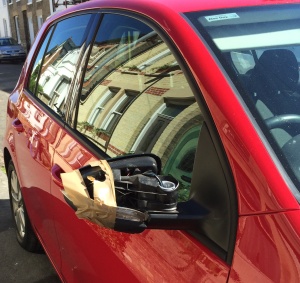
wing mirror held on with parcel tape

Unfortunately the approved repairer insists on drawing up their own estimate anyway, despite the previous estimate and my mantra “It’s only a wing mirror.”

It takes two goes to get the estimator here, then he doesn’t turn up when he said he would because he has a hospital appointment that morning.  When he finally arrives in the afternoon, he studies the car and the chassis number again.

The repair is booked for November 5. I consider setting off fireworks to celebrate.

About two hours after the appointed time on the day, Matt from Fix Auto arrives to collect my car. I had imagined two guys in a car, one of whom would drive my car back to the garage.

This is what Matt shows up in, complete with flashing lights.
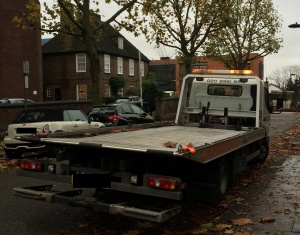
recovery vehicle

It seems a bit over-the-top. As I point out to Matt, it is only a wing mirror.

My car did not return the same day as promised, but the next day, again with Matt and his recovery vehicle.

To sum up, getting the broken wing mirror replaced took twelve weeks and cost around £250 for the repair, plus 24 phone calls, two estimates, and two trips in a recovery truck. If you assume that each call costs a modest £25 for each of the participants in the call, the estimators’ visits come in at £100 each, and the recovery truck costs £80 per round trip, it comes to a total of over £1,800. That’s a very restrained guesstimate and the true cost could be much higher because there are so many different people who add little value but still cost money.  

It was only a frigging wing mirror!   Just imagine the figures had whiplash or another injury been part of the claim.

But the madness doesn’t stop there. Driver Matt told me that a coach had hit him on the way over to me, damaging the side of his truck…

Wonder why I pursued this claim myself? It’s because when my previous car was broken into, the insurance company insisted on recording it as ‘your accident.’ I tried explaining that I wasn’t even there at the time, that a petty thief who breaks into a locked garage and then smashes a windscreen doesn’t do this accidentally. It is pretty much on purpose, I’d say. But I used the company to make a claim, so they recorded it as my accident. Besides, I thought this claim would be easy to sort out. After all, only a bloody wing mirror.

But a very expensive one.