What’s Sauce for the Goose is Sauce for the Gander

I’m all in favour of egalitarian relationships, as I’m sure you are. Last week I blogged about how to annoy the hell out of your husband, so this week it’s only fair to cover the ways in which your other half can drive you round the bend.

If you dished it out, you’ve got to take it – right? So woman up and let your husband (partner, boyfriend, lover, whoever) do his worst. Here are some of his methods.

leaving the loo seat up

1 Battles in the bathroom. And no, leaving the toilet seat up doesn’t count. It’s just too predictable. Blokes can do far more infuriating things in bathrooms. Like locking the door and singing along to the radio at full volume, so he doesn’t hear you bashing with all your might, pleading to be let in before your bladder bursts.

Like leaving the bath-tap in the ‘shower’ position, so you get an impromptu soaking when you next try to run a bath.

Like using up the last of your megabucks-a-bottle sodium-free shampoo on his own barnet – and later refilling the bottle with the ordinary stuff. The kind that works like paint-stripper on your expensively Brazilian-straightened hair. 

sodium chloride free shampoo

2 Reveal that he’s much younger than you. There’s no going back with this one, because it’s the kind of thing people remember. Then, even if he’s barely a year or so younger, he’s forever known as your toy boy. For added impact, he may even tell people you’re older when it isn’t true.

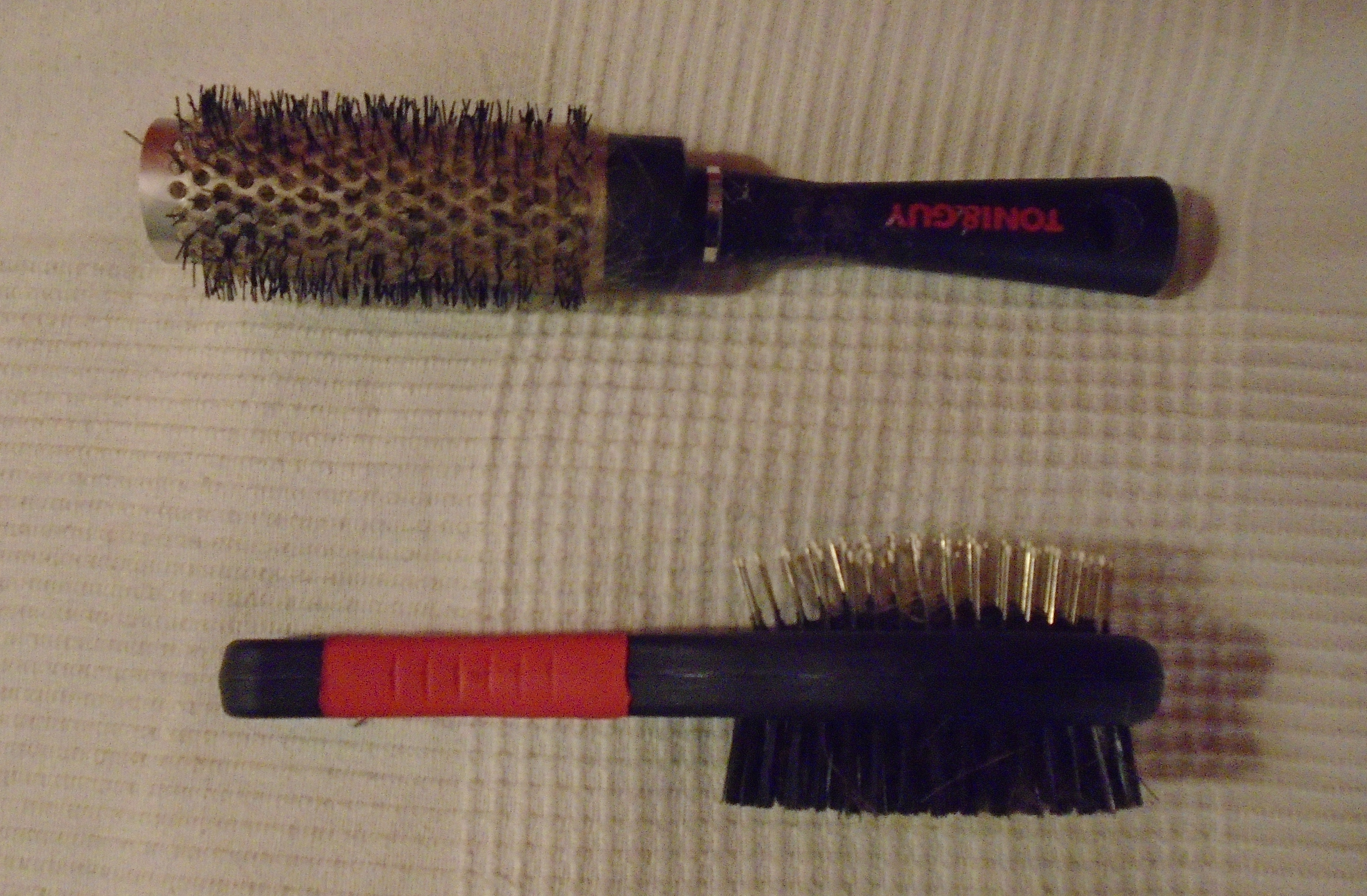
3 Playing dumb. Poor lamb, he does get confused between your hairbrush and the cat’s.
brushes

As you can see, they look nothing like each other. Not to begin with, anyway.

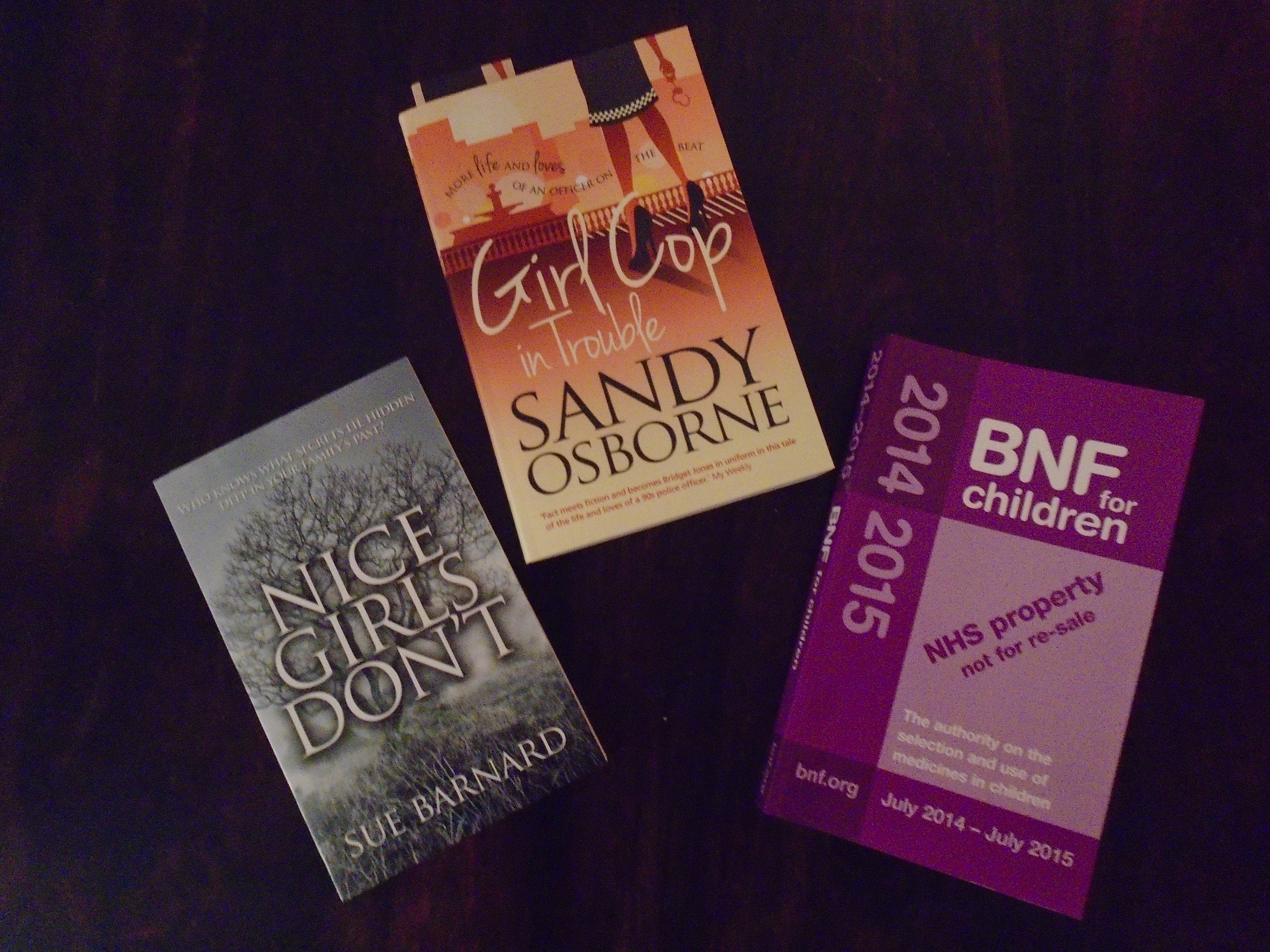
He may also fail to distinguish between coasters and your favourite books. This one’s really challenging, since both are vaguely rectangular and can be found on tables.

coasters
coasters

not coasters

not coasters

Then he makes it tough to get angry because he wears an innocent face that plainly says, “I’m only a man. What do I know?”

4 Cooking fabulous meals. Which means using every single pan in the house, and leaving it in the sink. “I’ll do it later.” Course he will. Three days later.

5 Doing the laundry. This includes washing your cashmere socks in the machine. In case this hasn’t happened to you yet, I’ll tell you that this shrinks them to the size of baby socks and makes them as soft as a kitchen scourer.  There’s no option but to buy another pair. Which your other half will also put in the washing machine. “Just being helpful, darling.”

6 Being a duvet bandit. Like marriage, it all starts off equal, but come morning you’re hypothermic and sleep-deprived. Your side of the bed ends up like this.  

your side of the bed

I tried to photograph the other side, but I tripped over in two acres of duvet and sprained my ankle before I got a decent shot.

7 The final one, the ne plus ultra, without which no programme of annoyance would be complete, and frankly you may as well stick a couple of fingers down your throat.

He does this: totally amazes all your friends. Maybe he cooks them all a fabulous dinner (AND clears up afterwards). Then he sings YOUR praises to the skies, declaring that you’re prettier than Claudia Schiffer, smarter than Stephen Hawking, and funnier than Omid Djalili.

It’s totally sick-making, of course. But it reminds you that, despite the fact that he’s driven you round the twist, he’s a keeper. 

goose

Are You Ready to Venture Outside the Box?

Meet a cast of characters you’ll never forget:

A woman accused of killing her tyrannical father.

A young woman fleeing from the shadow of her infamous mother.

A bereaved biographer who goes to war-ravaged Croatia to research the life of a celebrity artist.

A gifted musician forced by injury to stop playing the piano.

A prima ballerina who turns to prostitution to support her daughter.

A journalist who must choose between an easy life and a bumpy road that could lead to happiness.

The wife of a drug lord who tries to relinquish her lust for blood to raise a respectable son.

And here’s the best bit: you can get to know them all without leaving your warm and cosy home.

Apologies for the advert. I don’t normally have a whole post about a book, but I can’t resist because I’m so proud to be part of this project. In fact, grinning from ear to ear.  Women-Writing-Women-Box-Set-Cover_finalJPEG (1)Besides, it’s much more than one book. Outside the Box: Women Writing Women brings all these unlikely heroines together in a limited edition box-set of seven novels. It’ll be published in e-book format on February 20 and available for just 90 days.

Why mention it today? Because you can pre-order it from Amazon now (other outlets to follow).

Some have seen the anthology already. Dan Holloway, columnist for the Guardian books pages and publisher, says

The authors of these books are at the forefront of a strong cohort of ground-breaking, boundary-pushing women writing and self-publishing literary fiction. I cannot recommend this collection highly enough.”

The project is the brain-child of Jessica Bell, Australian novelist, singer/songwriter and Publishing Editor of Vine Leaves Literary Journal. There’s no one genre in this set. Each full-length book is a page-turner. 

Blue Mercy by Orna Ross

OrnaWill you identify with mother or with daughter? When Mercy Mulcahy was 40 years old, she was accused of killing her tyrannical father. Now, at the end of her life, she has written a book about what really happened that fateful night of Christmas Eve 1989 – and she desperately needs her daughter to read it.

Orna Ross is founder-director of The Alliance of Independent Authors. The Bookseller calls her one of the 100 most influential people in publishing.

Crazy for Trying by Joni Rodgers

joniIn 1970s Montana, a female voice on the radio is unheard of, but seeking to escape the shadow of her infamous mother – a radical lesbian poet who is larger than life, even in death – bookish Tulsa Bitters heads west, determined to reinvent herself as a late-night DJ.

Joni Rodgers lives in Houston, Texas and is the New York Times bestselling author/co-author of over a dozen books, including book club favourite Bald in the Land of Big Hair.

My Memories of a Future Life by Roz Morris

RozIf you were somebody’s past life, what echoes would you leave in their soul? Could they be the answers you need now? When concert pianist Carol is forced by injury to stop playing, she fears her life may be over. Enter her soul-mate Andreq. Is he her future incarnation or a psychological figment? And can he help her discover how to live now?

As a ghost-writer, Roz Morris sold over four million books writing the novels of other people. She is a writers’ mentor and a radio show host, and teaches writing masterclasses for The Guardian newspaper.

The Centauress by Kathleen Jones

KathleenBereaved biographer Alex Forbes goes to war-ravaged Croatia to research the life of celebrity artist Zenobia de Braganza and finds herself at the centre of a family conflict over a disputed inheritance. She discovers a mutilated photograph, stolen letters and a story of indeterminate gender, passion and betrayal. But can she believe what she is being told?

Kathleen Jones is a Royal Literary Fund Fellow. She is best known for her award-winning biographies, and has also written extensively for the BBC.

An Unchoreographed Life by Jane Davis

JaneBallerina Alison Brabbage turns to prostitution when pregnancy and motherhood forced her into retirement. Struggling from day-to-day, the ultimatums she sets herself slip by. But there is one time-bomb she can’t ignore. Her daughter Belinda is growing up. Soon she will be able to work out who Alison is – and what she does for a living.

Jane Davis won the Daily Mail Award for her first novel, which secured her a publishing contract. She has now gone on to self-publish four other novels and isn’t afraid to tackle the trickiest subjects.

White Lady by Jessica Bell

JessicaSonia Shâd, the wife of Melbourne’s leading drug lord, yearns for sharp objects and blood. But now that she’s separated from her husband and rehabilitating herself as a “normal” mother and mathematics teacher, it’s time to stop dreaming about slicing people’s throats and raise a respectable son. Easier said than done. Especially when she discovers her husband is back in town.

Jessica Bell is an Australian novelist, poet, singer/ songwriter /guitarist who lives in Athens, Greece. She is Publishing Editor of Vine Leaves Literary Journal and author of the bestselling Writing in a Nutshell series. 

One Night at the Jacaranda by Carol Cooper

Carol CooperOn a hope-fuelled night in London, lives intersect as a motley group of singletons meet in their quest for someone special. Undercover journalist Harriet is after a by-line, not a boyfriend, but soon she has to choose between the comfortable life she knows and a bumpy road that might lead to happiness.  

Me, you already know. I’ve only produced this one novel so far, so I’m honoured to have it included in such stellar company.

There’s more about the books, the authors, and the swag on Outside the Box: Women Writing Women.

Happy reading!

WWW head shot banner

Related post :

Self-Published Authors, eh? What Are They LIKE?

Easy tweet:

“7 genre-busting ‪#‎novels in a limited edition box-set OUTSIDE THE BOX. Avail just 90 days! http://goo.gl/D1fyqW #WomenWritingWomen”


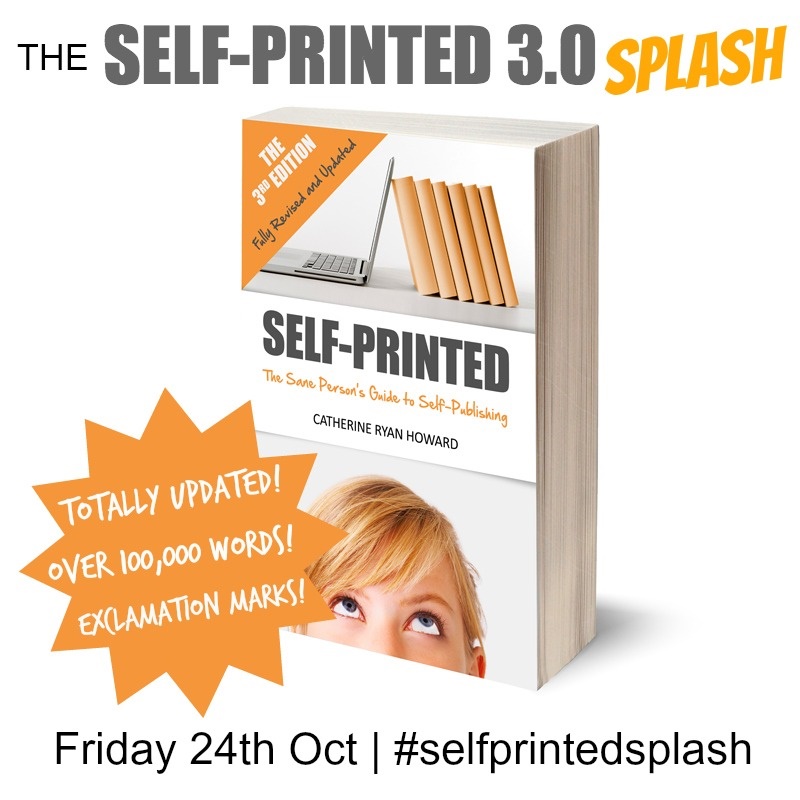
The Self-Printed 3.0 Splash!

If you don’t know the wonderful Catherine Ryan Howard, you should do, especially if you’re self-published or thinking of self-publishing.  This week I asked her my burning question:  “As a self-published author, what do you consider the most important measure of success?”

And she said: 
That is a very personal question and I think the answer is different for each and every self-published author. For some, it will be money – either readers being willing to fork out their hard-earned cash in exchange for book they wrote, or being able to keep the lights on and food in the cupboard purely from doing what they love. For others, it will be acclaim – five star reviews and a home atop the bestseller lists. And some self-publishers will be pleased as punch just to hold a copy of their book in their hands. 
For me I have to say that what I love most about self-publishing – and what I consider to be a measure of my success – is that I can do something about my writing career other than wait by the phone. I’m in control of what I achieve in my career in the next month, year, five years, etc. – at least to a degree. Prior to self-publishing if someone else didn’t say “yes”, I had no career. Now I’ve plenty to be getting on while I chase other dreams and there’s a great sense of personal achievement when I look back at all I’ve managed to do by myself.

Self-publishing success is measured differently by everyone – and that’s a good thing. It should be a personal goal that will make YOU happy when you reach it. So I have to say I think the most important measure of success as a self-published author is how happy I feel about being a self-published author and how my self-publishing adventures are going. That’s enough of a yardstick for me!

______________________
 selfprintedsplashbadge
Catherine Ryan Howard is a writer, self-publisher and caffeine enthusiast from Cork, Ireland. SELF-PRINTED: THE SANE PERSON’S GUIDE TO SELF-PUBLISHING (3rd edition) is out now in paperback and e-book and available from Amazon. Follow the #selfprintedsplash on Twitter today (Friday 24th) and/or visit www.catherineryanhoward.com for chance to win an amazing prize that will get your self-publishing adventure started!


“SELF-PRINTED is my self-publishing bible. It taught me how to format, create and upload my e-books and print-on-demand paperbacks. It showed me practical things such as how to build a website/blog and how to promote my books. More importantly, it taught me how to compete with the professionals. Just look at the results – The Estate Series has sold nearly 100,000 copies and following that I got a traditional book deal with Thomas & Mercer too, so I’m now a hybrid author. Jam-packed full of hints and tips all in one place, I’m always referring back to it. In a word, it’s priceless.” – Mel Sherratt, author of The Estate Series and DS Allie Shenton Series 

What Happens When Writers Meet?

Writing is a solitary life. It’s just you and the page, though, all being well, some words eventually show up. If you write novels, you may fashion some wonderful characters, but you still don’t see other people.

Going out in public once in a while is a good idea but it takes an effort. It might even mean getting dressed and putting a set of teeth in.

It’s totally worth it because, as you know, everyone’s fascinated.  Mention you’re a writer and people invariably say “How interesting.”

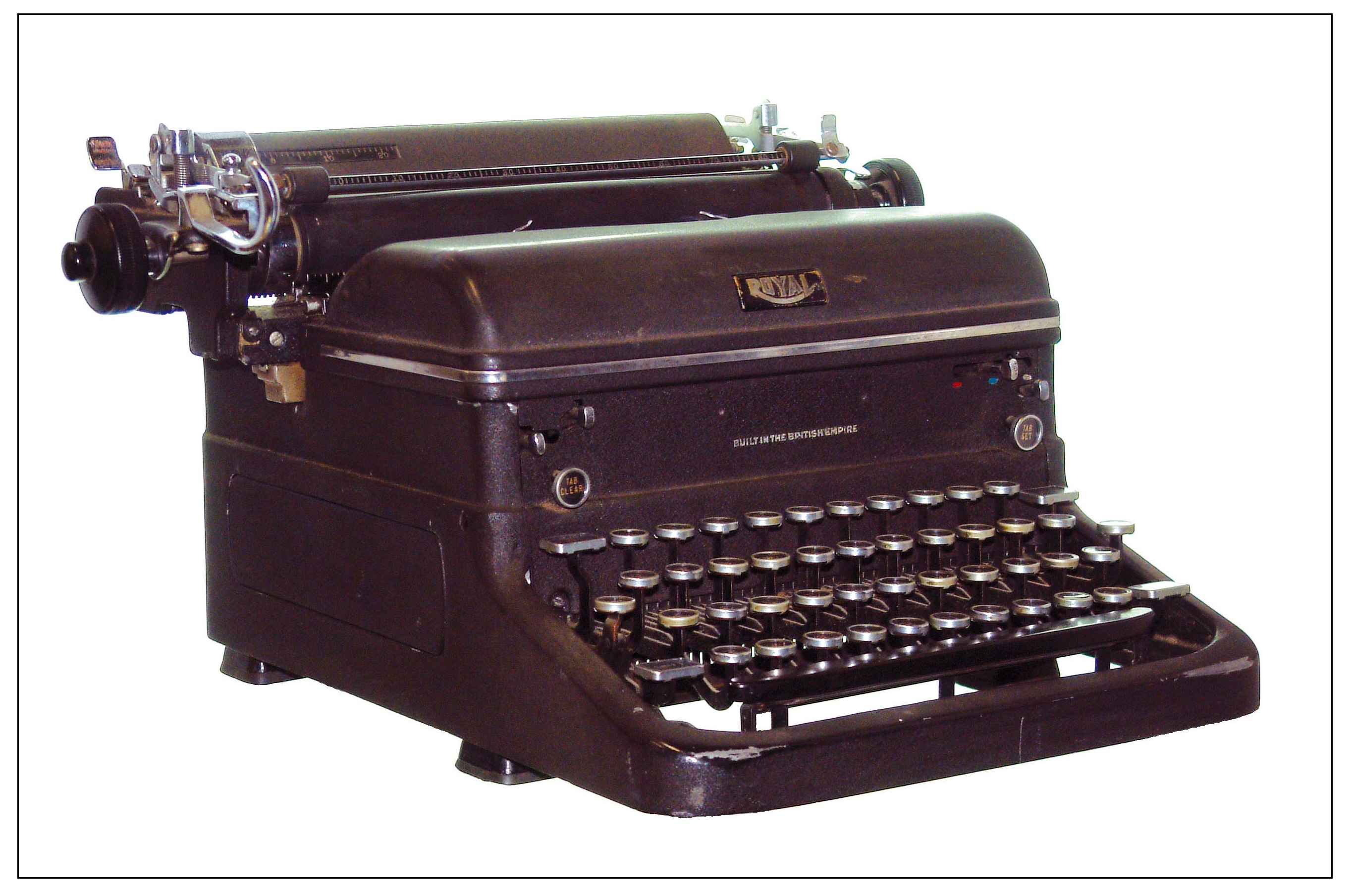
Royal typewriter

Sadly, the interest rarely lasts. Those same people want to tell you all about the novel they have inside them (it’s often the one that shouldn’t get out). But all a writer really wants to do is talk about their own work. After a while, few can put up with us because we either bore them to death about our books flying off the shelves at the speed of light, or bore them to death because our masterpieces are Superglued to the bottom of the Amazon rankings.

It’s sometimes the same with significant others, so the writer skulks off to the shed or spare room to keep out of the way. At this point SO usually gives a look that suggests you’re engaging in solo activities of an adolescent nature.

But it’s good to get out. A sedentary lifestyle is linked with back pain, constipation, low mood and worse: obesity, type 2 diabetes, heart disease, osteoporosis, and even breast and bowel cancer. It’s estimated that globally lack of exercise causes 5.3m deaths a year, which is roughly the same as smoking. 

There’s a lot to be gained by meeting other authors. It’s really not the same as communicating online, as fellow indie author Kevin Booth points out in a recent blog post.  When we meet, we can learn a lot from each other, in a casual, friendly and effective way.  

We’re not all introverts. Writers are often outgoing. As Kevin says

There’s a particular chemistry that seems to engage when a group of writers get together over a glass of something. If people find it difficult to stay on-topic, it’s because they are sparking creatively off each other and raising new questions that they hadn’t previously considered. I don’t think the online experience has yet been able to replicate this.

Some like meeting to critique, but other authors hate talking about their work in progress. I sometimes worry about Schrödinger’s novel. Let even a chink of light in, and the book dies. While it’s still safely in the dark box of the mind, it could be either alive or dead.

Schrödinger’s cat, you’ll recall, is based on quantum physics. Until the box is opened, the cat could be either alive or dead, or indeed, a touch of both. 

Personally, I don’t have many doubts about the cat. If you can’t hear it inside the box, scrabbling to get out, then it’s probably dead. Cats may like boxes, but they want to choose their own. Nobody should ever put a cat into a container without food, water, ventilation, and a clean kitty litter tray.

cat in box

But back to meeting other authors. Do writers bitch and argue when they meet? Hardly ever. Apart from the fact that we’re a nice bunch of people, or so I like to think, we’re also mighty relieved to find like-minded company. We enjoy each other’s books and don’t mind saying so. And, when someone is super-successful, it’s inspiring to remember that it can happen to people not so very different from ourselves. We can celebrate other writers’ triumphs, just as we commiserate over setbacks like paltry advances or poor sales.

There’s no place for petty jealousy. Out there are many millions of readers. No one author, not even one several times as prolific as Barbara Cartland, could produce enough books to keep the whole world happy.

If you write but don’t have a writing group nearby, why not start one? Self-published authors might like to join the Alliance of Independent Authors.author-member ALLi

ALLi (pronounced ‘ally’, appropriately) is a global non-profit association of author-publishers. They offer connection and collaboration, advice and education, and, importantly, also campaign to further the interests of self-publishing writers everywhere.

I come back from local ALLi meetings with a spring in my step. Here’s more of what Kevin Booth has to say on the ALLi blog about face-to-face meetings.

Every reason for getting up from your desk, then.

Some of my Favourite People are Books (part two)

It’s usual for a list of great novels to include

  • an inscrutable foreign masterpiece from the present-day
  • one Jane Austen title (choice depends on intellectual criteria, such as which film hero was most fanciable)
  • an angst novel (Philip Roth often fits the bill)
  • To Kill a Mockingbird
  • Catch-22
  • and *drum roll* Anna Karenina.

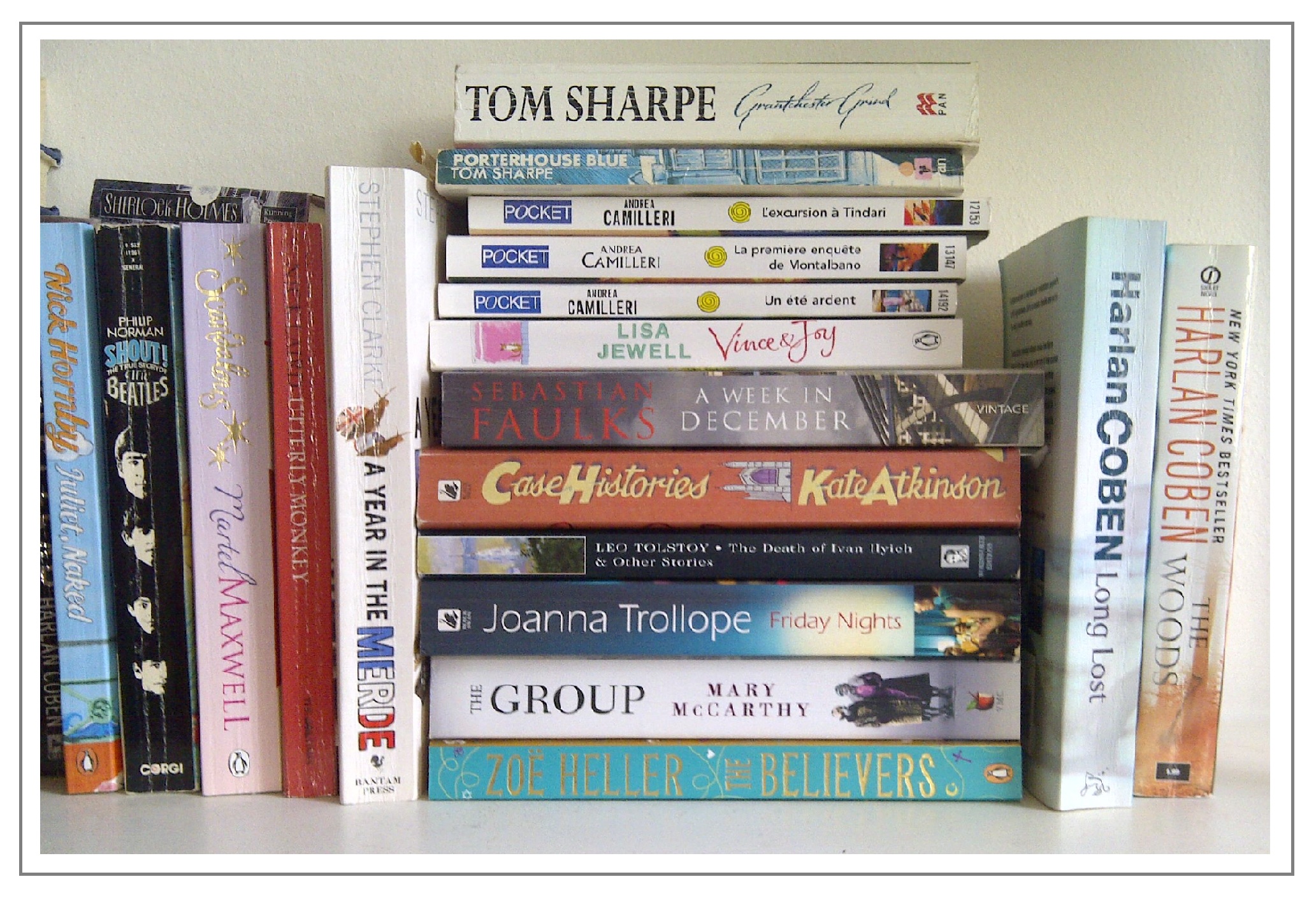
bookshelf

Maybe you’re waiting with bated breath for Rosamund Bartlett’s new translation? Her Anna Karenina, due to be published in August, is already ranked about two millionth on Amazon (how does that happen? Tolstoy pulling rank again?).

Sorry to disappoint, but my choice of Russian blockbuster is by Boris Pasternak. When I first read it, I was neither a medic nor a writer, whereas Yuri Zhivago was both.

It snowed and snowed, the whole world over,

Snow swept the world from end to end.

A candle burned on the table;

A candle burned.

I loved Doctor Zhivago for its action, its setting, its characters, its lyricism (and Omar Sharif). I even studied Russian and tried to write poetry. Then I figured out the real lesson: to avoid becoming as self-absorbed as Pasternak’s hero. Also, not to turn into a bloke, especially not one with a frosted tache and a balalaika.

Dr Zhivago

Catch-22 may not be on this list, but I treasure another novel that gave rise to a very current phrase. Yes, the past is a foreign country in L P Hartley’s The Go-Between. Twelve-year old Leo figures out the facts of life. He also figures he’s being used.

“Well,” he said, “let’s make a bargain. I’ll tell you all about spooning, but on one condition.”

I knew what he was going to say, but for form’s sake I asked: “What is it?”

“That you’ll go on being our postman.”

While the lad was naïve by today’s standards, the book is still fresh for 1953 and nicely captures Leo’s post-traumatic stress. By comparison The Shrimp and the Anemone is rather dull. Which is to say that I don’t recall any spooning.

My choice of modern foreign masterpiece is the perfectly scrutable The Yacoubian Building. If you haven’t read it, it’s a lively ensemble novel peopled by a doorman, his family, a gay newspaper editor, Islamists, and the other motley inhabitants of the building on Suleiman Basha Street. Here’s a passage about the womanizing aristo Zaki Bey.

From Lady Kamla (she of the inexorable appetite) he learned how to start and when to desist and how to ask for the most abandoned sexual positions in extremely refined French. Zaki Bey has also slept with women of all classes – oriental dancers, foreigners, society ladies and the wives of the eminent and distinguished, university and secondary school students, even fallen women, peasant women, and housemaids. Every one had her special flavor, and he would often laughingly compare the bedding of Lady Kamla with its rules of protocol and that of the beggar woman he picked up one night when drunk in his Buick and took back to his apartment in Baehler Passage, and who he discovered, when he went into the bathroom with her to wash her body himself, to be so poor that she made her underwear out of empty cement sacks. *

The story may seem a bit ‘told’ for some, but that’s probably the nature of Arabic literature. The book has special resonance for me as I’ve lived in Cairo, although Al-Aswany doesn’t describe anything as atmospheric as my first terrifying day at school when I screamed so much that I threw up onto the teacher’s shoes.

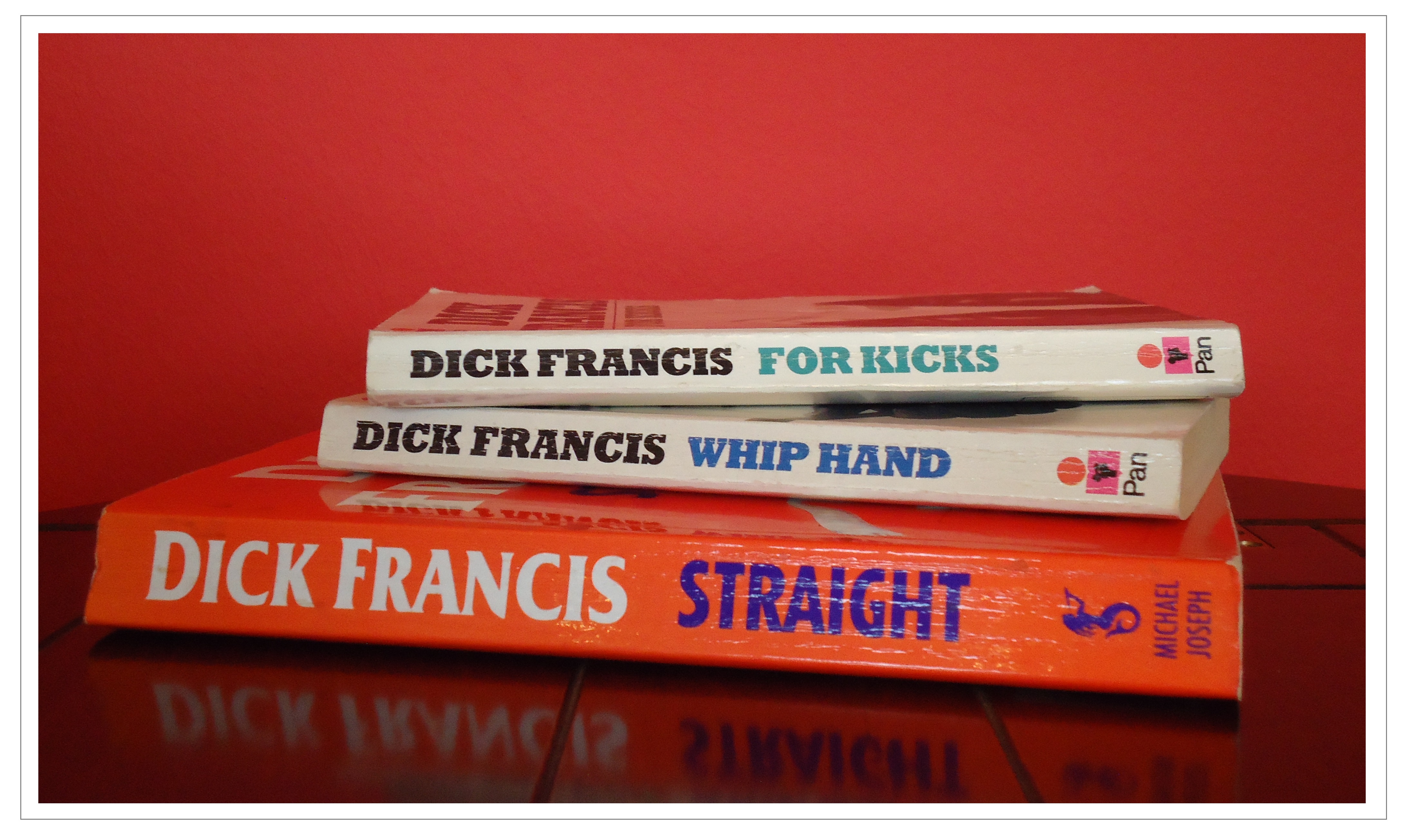
For a tale that moves at breakneck speed and grips like a novice on a rearing stallion, look no further than Dick Francis. Low-brow? Maybe. Formulaic? Sometimes. But brilliant all the same, right from the off. This is from For Kicks.

The Earl of October drove into my life in a pale blue Holden that had seen better days, and danger and death tagged along for the ride.

I’m not the only fan of his opening style. Here’s what writer and blogger Emma Darwin has to say in Straight proof: what any of us can learn from Dick Francis.

Dick Francis

After brooding Russians, a traumatized adolescence, Egyptian neighbours and skulduggery in the stables, what could I possibly have left out? Chick-lit, that’s what. If you’ve read Me Before You by JoJo Moyes, you’ll know that Will has a life-changing motorbike crash.

“So, Patrick,” Will said, perhaps sensing my discomfort. “Louisa tells me you’re a personal trainer. What does that involve?”

I so wished he hadn’t asked. Patrick launched into his sales spiel, all about personal motivation and how a fit body made for a healthy mind. Then he segued into his training schedule for the Xtreme Viking – the temperature of the North Sea, the body fat ratios needed for marathon running, the best times in each discipline. I normally tuned out at this point, but all I could think of now, with Will beside me, was how inappropriate it was.

 What have all these books got in common?

A cracking story. Lots of conflict. Great dialogue. Wit, of course. I’m pretty sure there’s something else too, but it’s hard to analyse when you’re in awe so I’m damned if I know. Ask me again when I’ve got more of my own books onto other people’s shelves of favourites.


 *I had to correct the grammar in the English translation by Humphrey Davies. Sloppy editing, HarperCollins.


Some of my Favourite People are Books (part one)

How do you choose a favourite book? It’s almost indecent, like whispering the name of your favourite child (kids: if you’re reading this, I love all three of you the same).

All the same, the evidence is on my shelves. It’s no surprise that I like novels. Preferably as real books. While Kindle has a place, usually in my carry-on luggage, only a physical book has pages that smell, that hide things only to fall out years later: the label from a dress, a map of Sorrento, a shopping list, a few pressed petals.

bougainvillea pressed

Unlike real friends, books don’t send you jokey emails, forget to call you, or tell you you’ve gained weight. So here are five of my BFFs.

You’re expecting The Group? Well here it is, my first Best Fiction Forever. Mary McCarthy’s iconic novel shocked a lot of people when it first appeared but it also taught readers about relationships. And recipes. Margaret Drabble claims the book taught her to cook. Here’s a passage about playwright Harald.

His specialities were Italian spaghetti, which any beginner could learn, and those minced sea clams – terribly good – they had the other night, and meat balls cooked in salt in a hot skillet (no fat), and a quick and easy meat loaf his mother had taught him: one part beef, one part pork, one part veal; add sliced onions, pour over it a can of Campbell’s tomato soup and bake in the oven.

But sex and food are not enough. I need laughter too. Enter Tom Sharpe. If only he’d made Porterhouse Blue a tad more outrageous, it would have evoked my own undergraduate days. It’s still fun though sadly it now seems very old-fashioned, especially when it’s in tiny print on yellowed pages.

There was a hangdog look about the Porter that caused the Dean to wonder if it wasn’t time he was put down before recalling that Skullion was after all a human being and that he had been misled by the metaphor.

Also in my BFF list is Coming From Behind. If you think Cambridge is riotous, wait till you get to the Polytechnic, Wrottesley, as described by Howard Jacobson. Here’s what the staff are up to.

Sefton Goldberg, on all fours above her, his knees and elbows glued with the perspiration of effort and anxiety to the polytechnic linoleum, as naked as Noah but for the academic gown and hood which Mrs Shorthall insists he wears, it being degree day, hopes to God he has remembered to lock his door.

I can’t leave out master storyteller Harlan Coben. So he isn’t exactly Tolstoy, but then his protagonist isn’t Vronsky, as any fool can see. The opening of Darkest Fear is a real doozy, as Myron Bolitar might put it.

An hour before his world exploded like a ripe tomato under a stiletto heel, Myron bit into a fresh pastry that tasted suspiciously like urinal cake.

“Well?” Mom prompted.

Myron battled his throat, won a costly victory, swallowed. “Not bad.”

Brave man. But how would the Jersey Boy fare against Jackson Brodie, Kate Atkinson’s erratic empathic detective? Her books are to me an irresistible mix of crime story and emotional drama though people can’t always agree on a definition. The quote on the front of One Good Turn calls it a literary novel, while according to a review on the back, the same book is a ‘detective novel that is better than a whole shelf full of literary fiction.’

Did I mention Brodie is also hapless?

He had never been in a jail cell before. He had put people in them, and taken people out of them, but he had never actually been locked in one himself. Nor had he journeyed from a holding cell to a sheriff court in the back of a Black Maria, which was like travelling in a cross between a public convenience and what he imagined a horsebox would be like.

No, One Good Turn may not be literary fiction, but it’s pacy and witty. I love her use of multiple viewpoints, which I believe allows more plot intricacies and development of lesser characters. No great coincidence that I chose to write One Night at the Jacaranda from more than one point of view.

old books

Are these some of your best friends too? In part two, I’ll reveal a few more of my favourite companions.


10 Ingredients for a Perfect Funeral

I don’t like funerals.  They mean the loss of family, friends, or patients, none of which I welcome.  But sometimes a send-off works out really well.  Here’s how we did it.

1. Great weather helps.  Rain is all very well for cemeteries in TV thrillers, but in real life you don’t want frizzy hair, steamed-up glasses, or trench foot while standing at the graveside.  Result # 1: the weather turned out to be amazingly sunny for the end of winter.

2. Black is drearily Victorian, and charcoal is frankly a cop-out. When in black, I look so bad I may as well be dead already, so I was only too pleased to comply with my mother’s wishes: wear bright colours.

3. A good turn-out.  Funerals are frankly dismal when it’s just five people rattling around a crematorium.  I’m so pleased I went through her entire address book.

address book

4. The major coup?  Getting a good spot in the cemetery.  Not just near the parking and the tap, but a prime plot right next to Granny’s grave!  I was bursting to share the news with my mother, who was sure to be as excited as me. Unfortunately it was a little late for that.

5. A smidgeon of ceremony.  In this case, two bearded priests with what looked like saucepans on their heads, plus a bit of incense, a lot of chanting, and the sign of the cross made from right to left.  It was all Greek to me. Still, that’s what you get in a Greek Orthodox church.icon

6. An uplifting venue.  Outside, it looked a nuclear bunker.  Inside, the walls were covered in icons.

7. A personal touch, in this case The Grandmother Tree, a moving poem written and recited by one of her grandsons.

8. A hint of altruism.  What’s the point of a mountain of blooms or the word MUM spelled out in white chrysanths?  Whether it’s in a newspaper announcement or an email to friends, it’s getting more common to ask for charitable donations in lieu of flowers.

9. Peace.  Memorable punch-ups sometimes break out at weddings, but funerals should be more decorous.  I’m especially grateful to my husband and ex-husband who hadn’t met until the day itself, and were both charm personified.

10. Light refreshments at home afterwards, surrounded by all the things that illustrated my mother’s life: the books she had written, photos of her grandsons, and above all her exuberant paintings of cats and dogs, hanging in haphazard fashion on the walls of the flat where nothing matched.  She had meant to rehang some paintings and replace others, but no lifetime, however long, is enough to finish everything.

cats-rue-des-chats (1)

Rue des Chats

A funeral shouldn’t be an occasion of pain and regret.   It should reflect the person’s life.  I feel fortunate that my mother’s death came at the end of nearly 90 years lived well, and creatively.  How much harder it is for those who lose someone suddenly, prematurely, or violently.