Eight Things that Newbie Fiction Writers Get Wrong

I’ve lost count of the number of the people who’ve told me they’re writing a novel. I’ve also met more than my share of successful novelists. Let’s just say that first group of people is a lot larger than the second.

While there are many ways in which a newbie can go wrong, it often boils down to one or more of these common mistakes. old-books1

1 Using stock characters

The tart with a heart of gold. The tall black dude who plays basketball. The gruff schoolmaster. The academic with thick glasses. While stereotypes can occasionally be useful as shorthand, they’re only two-dimensional characters, and that’s not enough to engage readers.

2 Writing real-life dialogue

Yes, you read that right. Realistic dialogue isn’t an echo of real conversation. In everyday life, people use a huge number of filler words and meaningless sounds. Like this.

“Oh, hi, Debbie. Lovely to see you. Yeah, come in, come in. Well, no, I wasn’t really doing anything. Just the ironing, again. It’s OK, no need to take your shoes off. I’m not fussed about the carpet, honest. Right. Now. Um, how about a cup of tea? Or, er, maybe coffee? No, I mean it. I’ve literally just put the kettle on.”

At this rate your reader will be in a coma long before Debbie gets to hear about Mary’s cross-dressing husband.

Realistic dialogue, on the other hand, is a pared-down version of a word-for-word conversation. So it’s more like this.

“Come in, Debbie. Kettle’s just boiled. Look, there’s something I want to talk to you about.”

FreeImages.com/Jay Neill

3 Scenes with overlong description

These usually creep in because the author thinks the writing is so brilliant that it can’t possibly be cut.  Sometimes it’s reams of beautiful description or essential back story. If so, find other ways to get the information across. It’s best to drip details elegantly into your story rather than dump them in bucket-loads onto the reader.

4 Stretching the reader’s credulity

Your college student heroine is a virgin, and has no laptop, or indeed any device connected to the internet? In present-day USA? You’d need your reader to be as gullible as your heroine. There are always exceptions, though, as you’ll know if you read Fifty Shades.

FreeImages.com/spydermurp

5 Using clichés

Maybe your principal character laughs like a drain at her friend’s jokes, goes green with envy at her sister’s new dress, or sweats like a pig at the gym. If so, get rid of hackneyed phrases. Clichés should be avoided like the, er, plague.

6 Ignoring rules of grammar, spelling, or punctuation

Because an editor will fix it all, right? Nope. Your magnum opus may just get binned. Please don’t insult your reader by mixing tenses of verbs, or mistaking it’s for its.

7 Telling instead of showing

His pulse pounded and the words he had rehearsed stuck in his dry mouth gives readers a better feel for your character’s predicament than ‘He was scared stiff about the interview.’
FreeImages.com/Jurga R

8 Shifting points of view

Some books are written from just one character’s perspective, whether it’s in the first person or the third. Others may have two or more. The convention, which I suggest you stick to because it helps the reader no end, is to have just one point of view per scene, or per chapter. Whatever you do, don’t switch a point of view during a scene.

But none of that is a reason to give up if you’ve got a story to tell. The most worthwhile things take effort. Ask a drummer if a drum roll is easy. It is, after the first ten years.

Here’s a selection of books I’ve found useful or inspiring.

Steven King: On WritingThere’s also a blog post from Jon Morrow about it here

Dorothea Brande: Becoming a Writer 

Jessica Bell’s Writing in a Nutshell books, including Writing Workshops to Improve Your CraftShow and Tell in a Nutshell, and Adverbs and Clichés in a Nutshell.

Roz Morris: Nail Your Novel: why writers abandon books and how you can draft, fix, and finish with confidence.

Good advice or not? Please let me know.

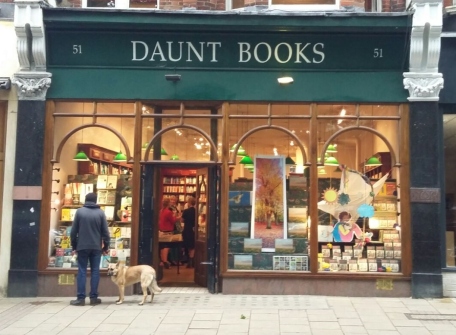
Daunt bookshop

There’s Something About Old Books

A glance at my bookshelves today reminded me of some great reads. Just look at these little beauties.

book-is-sex-necessary

Is sex necessary? I think the answer can probably be found here.

Origin of Species

I have two medical titles that are period pieces. I’m no longer using a 1951 handbook of surgery. And luckily these days no doctor believes that ‘floating’ kidneys and other organs cause disease, though plenty did in 1930.

two old medical books

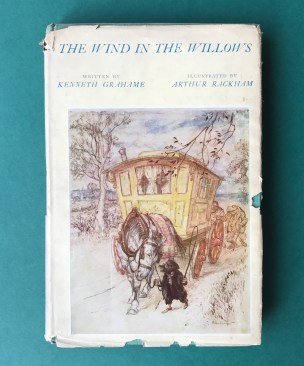
My childhood came back to me instantly with this well-loved copy of The Wind in the Willows.

The Wind in the Willows

..swiftly followed by my teen years.

2 novels

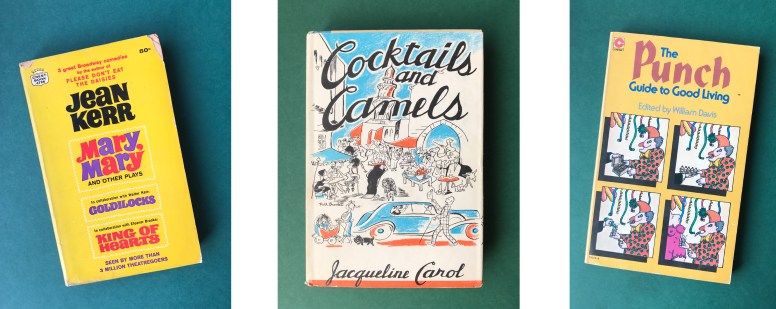
I’ve got rid of a lot of books, but kept some by the wittiest writers (including my mother).

books-3-funny

And I still like Jefferson Airplane.

The Jefferson Airplane

Why all these images in my blog post? Well, this week I find myself too busy writing books to blog as well. Besides, gazing at my bookshelves makes the perfect displacement activity.

***

Just a little reminder: until Thursday, you can get the kindle edition of One Night at the Jacaranda completely free. Click here.

Feedback Frenzy

My pocket chirrups as I descend the steps from my bank. The text message asks me to rate my recent customer experience. This happens to be one of a hundred or more perfectly routine transactions I’ve made at that bank.   

FreeImages.com/Simon Stratford

Irritated, I delete the text.

At school, there was a girl who was forever checking what people thought of her. Sadly, the answer was ‘not much’, but this didn’t stop her beaming at everyone and trying to decipher their expressions.  When she couldn’t read the emotional temperature, she would ask what we thought. I wince to report that we thought our classmate stupid. Looking back, however, she was well ahead of her time.

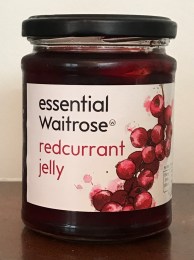
These days, Waitrose sends me emails asking how my groceries were. Would I rate and review them?

waitrose-redcurrant-jellyI get similar requests after almost every commercial interaction of the day. If not during it. A text thanks me for travelling with Addison Lee, and invites me to rate the driver. I get this message before I’ve even reached the destination.

Ditto Moonpig, who want to know how everything went with the card I ordered. It’s not even scheduled to be delivered till next week. Stop asking me!

Now an email thanks me for collecting my parcel from the Spar in Chesterton Road, and asks me how I would ‘rate the service in store’.

The bottom line? It was fine. I got my parcel. Had the guy behind the counter not found it, or handed me a damaged parcel or something entirely different like a Mars Bar or a lottery ticket, you can be sure I’d have let someone know, loud and clear.  FreeImages.com/Tony CloughFeedback can certainly be useful. Book reviews, for instance, help guide the author as well as people looking for their next read – though it’s worth noting that the most useful reviews have actual words in them, not just a star rating.

Evaluations from the students I teach can also be valuable, if they help improve the outcome for the next lot.

For feedback to be most useful to others, it pays to ask the right questions. One pension provider invites me to rate my recent dealings with them. A more pertinent point might be whether I was happy with the return on my investment.

Nowadays, detailed feedback from patients is an integral part of a doctor’s appraisal process. It’s a two-page form that demands a certain level of literacy and attention. That makes it difficult for many patients, especially those who’ve just had bad news or been sent to hospital.

Feedback from colleagues is even harder to come by. In smaller practices, family doctors may resort to asking people they haven’t worked with for years, just to make up the numbers.

National Health Service logo

Feedback shouldn’t be just about collecting all the data we can, because we can. To have any value, it needs to be more selective, and to ask the right questions at the right time.

***

If you’ve read a book you enjoyed lately, please think of leaving a review on Amazon or your favourite reading site. It doesn’t have to be long, just your overall impression and anything you’d like the author and prospective readers to know.
Here’s more detailed guidance, should you feel like it: How to write critical book reviews – and why I think you should, by Debbie Young.

bookshelf crop

A Parent Worries Forever

Seen that touching Lloyds Bank photo where the mother is hugging her ‘baby’ before he nonchalantly sets off for university? I can’t reproduce the image here, but you can check it out by clicking on Lloyds Bank.  I showed it to some of my friends, who variously remarked on the mother’s height relative to her son, the blissful smile on her face, and the flimsiness of rucksack on the son’s back. 

Those with children noticed none of these things. Their reaction was just terror.

When expecting your first child, there’s usually a golden moment during which you’re thrilled at the prospect of having a baby but haven’t yet realised you’re heading for a lifetime of worry. Well, savour it while you can.

FreeImages.com/S S

My twin boys arrived when I had one son already. In a flash, my anxiety levels trebled. The children seemed intent on working their way through the alphabet, with accidents, asthma, appendicitis, and (scariest of all) anaphylactic shock.

Some letters stand out more than others. D was for Duplo, a normally safe toy, except when you stumble face first into it. G was for golf club, as when eldest son was smacked in the face by a 5 iron at the school fete, necessitating yet another tip to A&E.

FreeImages.com/Aron Kremer

Occasional false alarms brought light relief. At eighteen months, one son was on the bus, sitting forward in his eagerness to miss nothing. When the driver braked suddenly, my son’s face collided with a metal handrail. He screamed, and bright red stuff poured copiously from his mouth. I laughed hysterically when I found he’d only been chewing on a red crayon.

FreeImages.com/Trisha Shears

In my novel Hampstead Fever, I couldn’t resist including a super-anxious new mum. It’s not just the prospect of mishaps that cranks up her worry levels. She has studied the parenting books, so she’s aware of potentially lethal conditions like sepsis, where symptoms can be minimal in the early stages yet take a child to death’s door within hours. Like many parents, Laure suspects it’s dangerous to let her guard down, because that’s when things are most likely to go wrong.

Worry can drive mums (and dads) to become over-protective, turning into helicopter parents and doing for their children things that they should be learning to do for themselves.

FreeImages.com/melodi2

For some parents, anxiety becomes hard-wired. I’ve seen them make idiots of themselves as they continue to stalk their kids on social media throughout their teens and even twenties, panicking if they haven’t posted anything in the last few hours.  

Not me, of course. I’ve finally learned to ditch unnecessary anxiety about my offspring. I’ll tell you how I did this. Not this minute, though, because first I need to text my sons to see how they’re doing without me.

Samsung mobile

Rebel with a Cause

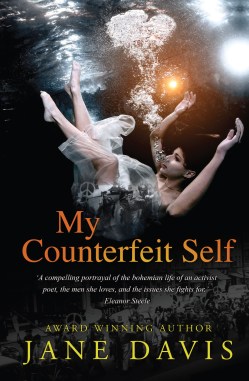
Poetry and medicine intersect in Jane Davis’s latest novel, My Counterfeit Self. I’m delighted to welcome Jane back to my blog on publication day.

JDV-MCS2016-Clays-02

The main protagonist is Lucy Forrester, a political poet and activist. Anti-establishment all her life, she’s now horrified to find herself on the New Year’s Honours list. Her inclination is to turn it down. But what if it’s an opportunity…

When researching a cause for her rebel, author Jane Davis followed a thread from the first CND march from Trafalgar Square to Aldermaston, to the plight of Britain’s forgotten Atomic Veterans. Here is what she discovered.

“It is 1958, six years after American scientists disbanded the Atomic Bomb Casualty Commission in Hiroshima, having completed their data-gathering on radiation sickness. It is a supposed time of peace. Imagine you are eighteen years old, shipped to Christmas Island on National Service. It is the furthest you have ever strayed from home.

Your job? To stand on an idyllic white sandy beach and observe as scientists detonate nuclear bombs in the Central Pacific. When the signal is given, you must turn away from the blast and cover your eyes with your hands. There is no protective clothing. As the flash goes off, you can see your veins, your skin tissue, your bones, and through it all, diamond white, a second sun. Searing heat builds inside, until you imagine that there is only one way it can end.

Around 22,000 servicemen were ordered to stand and observe. Some suffered radiation sickness immediately, and some died. For others, symptoms followed patterns seen in Hiroshima. They lost their appetites, ran high fevers, and their hair fell out in clumps. Some appeared well for decades before developing cancers and other rare diseases.

It was only over time, as dots were joined, that some veterans became convinced their illnesses and disabilities were caused by nuclear radiation. Their bid to be recognised by the European Court of Human Rights was denied in 1998, which said it had no jurisdiction in the case. Largely ignored, and dwindling in number, the veterans referred to themselves as ‘ghosts’.

Then, in 1999, researcher Sue Rabbitt Roff at the University of Dundee tracked down and surveyed 2,500 veterans and their children, reporting unusually high rates of infertility and birth defects. This was the trigger. The columnist Richard Stott (1943 – 2007) of the Sunday Mirror then launched his Justice for Nuke Vets campaign.

If I saw this reported in the news, I’m ashamed to say that I have no recollection of it. There were always more attention-grabbing headlines. But when researching my novel, it was obvious to me that this is a cause Lucy Forrester would have thrown herself behind.

The British government continued to insist on more proof. It wasn’t until 2007 that two scientific studies demonstrated clear links. They also estimated that genetic birth defects would last for 20 generations – in other words, 500 years.

As a result, 700 New Zealand and UK veterans launched a class action lawsuit against the British government claiming NZ $36 million in damages. But it had all happened 50 years ago. The Ministry of Defence countered with a statute of limitations defence.

Following a parliamentary inquiry in early 2008, the government agreed to fund new studies into veterans’ health, and to pay interim compensation of £4,000 each.

By the time I completed my research, the government had set aside £25million (£5million a year over five years) for an Aged Veterans’ Fund. But this wasn’t only for the surviving Atomic Veterans. Approximately two million veterans were qualified to apply. In addition to applications from individuals, the British Veterans’ Association (BNTVA), the premier charity representing those who have worked alongside radioactive material for the benefit of the nation, can apply for funding for projects such as respite care or counselling. Whilst any such services may benefit the families of the Atomic Veterans, once the remaining veterans die, all funding will cease. Without an admission of negligence from the MoD, there will be no help for the 20 generations.

Many Atomic Veterans are proud to have served their country. However, given that the risks of exposure to radiation were either known or reasonably foreseeable, they had every right to expect their government to take care of them if things went wrong. They couldn’t have imagined that the British government would introduce a higher burden of proof than other governments, so that their American counterparts received compensation while they did not. It should not be left to the Prime Minister of Fiji to step in and award each surviving veteran three thousand pounds, saying, ‘Fiji is not prepared to wait for Britain to do the right thing’.

With Trident firmly back in the headlines, I hope that it will rise to the surface once more.”

You can find out more about the Atomic Veterans or make a donation here

jane-facebook-profile

Jane Davis is the author of seven novels. Her debut, Half-truths and White Lies, won the Daily Mail First Novel Award, and The Bookseller featured her in their ‘One to Watch’ section. Six further novels have earned her a loyal fan base and wide-spread praise. Her 2016 novel, An Unknown Woman, won Writing Magazine’s Self-Published Book of the Year Award. Compulsion Reads describe her as ‘a phenomenal writer whose ability to create well-rounded characters that are easy to relate to feels effortless.’ Her favourite description of fiction is ‘made-up truth’.

When Jane is not writing, you may spot her disappearing up the side of a mountain with a camera in hand.

You can also find Jane Davis on Facebook, on Twitter, on Google Plus, on Pinterest, and on Goodreads, as well as on her Amazon author page

Anyone who signs up to Jane’s newsletter receives a free copy of her novel, I Stopped Time. Jane promises not to bombard subscribers with junk. She only issues a newsletter when she has something genuinely newsworthy to report.

My Counterfeit Self is published October 1, 2016, and available in paperback and ebook formats.

jd-red-tbw


How to Deal with an Overflowing Inbox

A digital detox is refreshing, but the price of being away from emails even for a few days is returning from your holiday to a bulging inbox. Even after deleting the obvious (You want sexy Russian girlfriend?), there’s usually a melange of matters that need attention. Dealing with each of them eats into valuable time just when you’re trying to clear your brain fog and get back into the here and now after your holiday.

FreeImages.com/Dario Dzimbeg

But I may have stumbled on a solution. It’s the all-purpose email response, and it goes something like this:

The premium you quote is now greater than the cost of the bicycle, so I shall not be renewing my insurance policy.  How lovely to hear from you after all this time, and to learn you have now completed your OU degree! The revised gas bill you sent me is still incorrect and I am passing this on to the Energy Ombudsman along with all previous correspondence.  I certainly do want to stop the cruel dog meat trade and intend to make a small donation as soon as I can remember my online banking details. Sorry we couldn’t make dinner last week as we were away, but what about lunch in the next month or so? I am honoured to be asked to be a trustee of the charity. Since you ask, my first tip on getting started in journalism is to learn the difference between your and you’re. I strongly object to the planning application for a two-storey rooftop extension on the house next door to me on the grounds that it is totally unsuitable for the conservation area, would be detrimental to the local streetscape, and looks crap. There was no need for you to send me four emails with exactly the same press release, nor to bombard my literary agent with phone calls as she deals only with books. Yes, Abigail has always had big bones, so I can appreciate that you may not have realized she was expecting; anyway, many congratulations on becoming a grandmother. I will not write an article for you on head lice, and the fact that you have no budget for it is not my problem.  He was a bastard and you’ll soon see you’re better off with him, but meanwhile I hope he’s keeping custody of the lizards. I regret that I may not have time to read your latest novella How to Be a Better Zombie as I am just back from holiday and have a mammoth to-read pile. Very sorry to hear you have been detained in a Nigerian prison and lost your handbag and your credit cards, but at the moment I can’t send any money as I don’t know what the hell my online banking details are.

FreeImages.com/Kerem Yucel

How to Write a Book Review

For starters, what tempts people to review books at all? If it’s for a prestigious magazine or newspaper, it could be money, though rookie reviewers are often happy to review in return for a free book and a chance to raise their profile.

bookshop

It can also be a chance to preen, to get in as many bon mots as possible, and to dazzle readers with a vertiginous vocabulary. If there’s room to slip in a lethal knife wound as well, so much the better. Will Self’s review of Julie Burchill’s Unchosen is often quoted as the epitome of this type of review:

“I can’t really dignify her latest offering with the ascription ‘book’, nor the contents therein as ‘writing’ – rather they are sophomoric, hammy effusions, wrongheaded, rancorous and pathetically self-aggrandising.”

He goes on to cite “Burchill’s repugnant gallimaufry of insults and half-baked nonsense.”

One snag is that it wasn’t a review as such. Still, it’s pugnacious stuff, and entertaining to read. Unless, perhaps, you are Julie Burchill.

Accusations are the stock-in-trade of many reviewers. In The Scotsman, Allan Massie says of Craig Raine’s oeuvre The Divine Comedy: 

“It isn’t a novel, no matter what author and publisher choose to call it. There is no real narrative interest and the characters are no more than names.” 

He goes on to give evidence for his view, leaving the public in little doubt that Allan Massie is a more riveting read than the book being dissected.

FreeImages.com/Davide Farabegoli

For a short while there was even the Hatchet Job of the Year Award. But several things have happened since then. Firstly, jokes about hatchets are a bit tasteless in a troubled world. Secondly, there are now more reviews on blogs and book review sites, far more than you’ll find in mainstream publications.

Online reviews like these are more workaday, and may serve their purpose better than the virtuoso variety. old-books1

Reviews just have two main tasks: guiding potential readers to their next book, and helping authors write what readers love most.

More readers could leave reviews, but I know that many feel inhibited from doing so. Yet the rules, such as they are, are pretty simple.

1 Short is OK, though preferably not as short as the one-word review “Book”.

2 Never include spoilers.

3 You don’t have to be a smarty-pants. In fact, it probably detracts from the value of your feedback. Just concentrate on what might help readers like yourself. 

4 Did you like the book? If so, say you did. You could also describe briefly what kind of book it is. “It’s a fantasy story about a girl who finds herself in an alternative reality which contains talking animals, strange new rules, and a lot of fun, some of it clever.” That’s not the most erudite description of Alice’s Adventures in Wonderland, but it’s enough to guide people, and it doesn’t give away the plot.

5 If you didn’t like it, don’t be rude. 

6 By all means add whether, in your opinion, the story is fast-paced, has lots of characters, is full of suspense, contains wonderful dialogue, and so on. It is your opinion, not the opinion of an English Lit professor, but it should be founded on evidence.

Your evidence should come from the contents of the book, and not depend on whether you liked the shoes on the cover, or whether Amazon delivered it to the wrong address. Here’s what one recipient wrote of a second-hand book:

“The book was in much worse condition stated, it would have been nice to have been warned about the blood stain that ran through several pages. Not happy at all as had to buy a second copy.”

7 If you feel like it, you could say which characters you liked in the book. Were they well drawn? Did their dialogue ring true? And so on.

8 Try to mention who might be the ideal reader. “Fans of cosy mysteries may enjoy this book.” It doesn’t hurt to mention other authors of books along the same lines, if any come to mind. But there’s no need to wrack your brains.

There’s a lot of really helpful advice on this blog post by top 1000 Amazon reviewer (and author) Debbie Young. If you’ve never written a review before, just come on in. The water’s lovely.

***

I still have a soft spot for this spoof review of Orwell’s 1984, by a reader called So-Crates. As feedback it’s not that useful, and you need to know something about 1984 to appreciate it, but it does show that jokes don’t have to have a butt.

“Do not buy this book if you’re expecting to find out anything at all about 1984, as this writer seems to have been living on a different planet. I was trying to do a bit of research into the influence of New Wave on cross-over dance music in the Mid-Eighties, but I found “1984” a complete waste of time… Jackson’s “Thriller”? (the soundtrack of the summer, and the biggest selling album of all-time) – not mentioned; Frankie Goes To Hollywood (their breakthrough year leading to world pop domination) – not a whisper.”  

You can probably guess what he says of The Road to Wigan Pier.

bookshelf crop

The Dangers of Learning to Walk

Bringing up a child is the most natural thing in the world, but that doesn’t mean it’s easy, as forty-year old Laure was finding.

FreeImages.com/Ana Grenz

Jack was toddling now, with a confidence far in excess of his ability to balance. To stop himself falling, he’d grab at whatever came to hand. It could be a tablecloth or a lamp. Today he got brave and weaved his way unaided across the middle of the living room, screeching with pride once he reached the little table on the other side of the room. He lifted one foot after the other off the floor, then took both hands off the table. He squealed with glee a few more times and promptly fell, mouth open, onto the edge of the table.

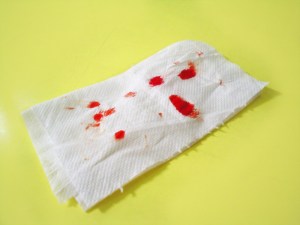
Laure rushed to gather him in her arms. The bleeding was torrential. Had he torn an artery in his mouth? Or knocked out one of his new teeth? She struggled to take a look but he screamed and wriggled and kicked and cried. Each scream pumped out scarlet blood mixed with saliva.

“Poor baby, poor baby,” she incanted as she grabbed paper towels from the kitchen. She could see a jagged wound right through his lip to the inside of his mouth. No wonder he was howling.

She felt her breathing change. Harsher at first, then faster. And her heart was beating all over the place, especially in her chest and her temples. Her hands trembled despite herself.

“There, there,” she intoned, barely audible above his screams. He had spat out the paper towel. She could smell his blood, his baby smell, her own helplessness.

Who was there to call? The health visitor was elusive after 10 a.m., and the GP was never available.  

She tried some ice. Jack didn’t like it, but the bleeding was easing off.

FreeImages.com/Cleber Bordin

Calmer now, Jack dribbled a little blood-stained saliva onto his beloved blankie.

As he was happily playing with his toys, Laure left it. She also left the bloodied paper towels on the kitchen counter as exhibits for Dan when he got in.

He breezed in from work, his kiss reeking of garlic.

She gave him a blow by blow account.

“Relax,” said Dan. “He’s learning to walk.”

“He could have really hurt himself.”

Jack chose this moment to beam at Dan and say, “Car,” as he offered him a plastic vehicle.

FreeImages.com/Raoul Snyman

“Yeah, but he didn’t. It’s only a cut.”

She frowned at him. “It’s a very deep cut. Have you actually seen all this blood?”

“It’s stopped now,” Dan pointed out.

Laure’s heart was still racing.

You can read more about Laure, Dan, and their friends in Hampstead Fever, available online and in bookstores.


How to Launch a Book

Launching a ship requires a goodly crowd and a large bottle of champagne. Exactly the same principles apply to book launches, though without all the sea-water.  

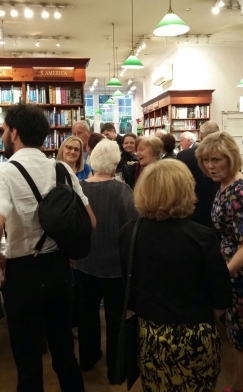
Daunt Books, Hampstead Heath

I’ll skip the question of whether you “need” a physical launch. I didn’t have a launch for any of my non-fiction books, unless you count one publisher’s lavish effort with a bowl of peanuts and about three people.  

Here’s what I learned from the launch of my novel Hampstead Fever earlier this week.

1 My best tip: share the launch with another author. But no sailing under flags of convenience.  You must like the other author and their book.

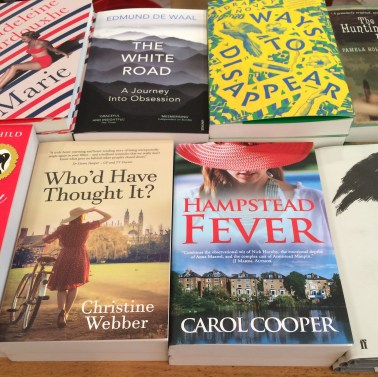
I shared Wednesday evening at Daunt Books, Hampstead Heath, with my fellow author Christine Webber. It was her second novel and my second novel, and we’d both had around 12 non-fiction books published already. While Who’d Have Thought It? isn’t much like Hampstead Fever, it’s in the same genre and both make good summer reads.  

IMG_4357

2 Invite people because you like them, not just because they’re “useful”. The second type has a disconcerting habit of finding something more interesting to do on the night. Besides, you’re celebrating your achievements, so you should enjoy the proceedings.

3 Don’t be ill.  I got this terribly wrong last week. On the plus side, some people thought it was a clever marketing ploy.  “So,” said one waggish author friend. “I suppose you’ve got Hampstead Fever?”

4 Have plenty of food and drink. Especially drink.  If you can, have someone to serve people wearing white gloves. Class.

Fron L to R: me, Orna Roass, Jane Davis

From left to right: me, Orna Ross and Jane Davis

5 Take a pen. Of course you’ve already practised your authorial signature and worked out what to write by way of dedications, but something to write with does come in useful.

6 Get someone to take photos. Even better, ask several people, just in case. Make sure they capture the really important shots, eg with your family.

Christine with some friends

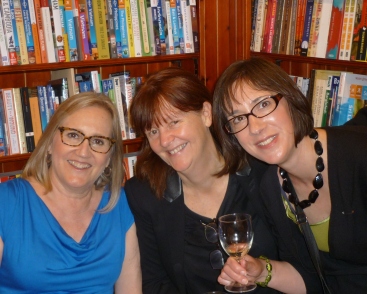
Christine Webber with some of her friends

7 Say a few words about yourself and your book.  You might mention the drawers full of unpublished masterpieces, or explain why you write instead of doing something easier, like transplant surgery. Thank key people, but remember it’s not an Oscar acceptance speech. Five to seven minutes will do, especially if more than one person speaks. Christine and I didn’t do readings, but many authors do. At a recent multiple launch, authors from the Triskele collective had others read excerpts aloud, to great effect.

7 Consider getting someone to introduce you and/or field questions from the audience. Someone might want to know how you write (“Is it true that you do your best writing in a rainy orchard with nothing on?”) or whether that scene is based on real life. On second thoughts, skip the questions.

IMG_4332

8 Consider merchandise (bookmarks, pencils and other trifles) or a draw for a book-related prize.  You could also have a slide-show or a book trailer running. The sky’s the limit, really, but it can become tacky, look desperate, or interfere with sheer enjoyment of the event.  

Concentrate on essentials like chilled fizz and plenty of copies of your book, and you’ll have a great send-off for your new title.

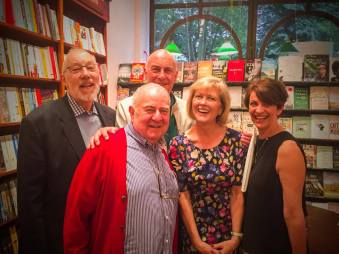
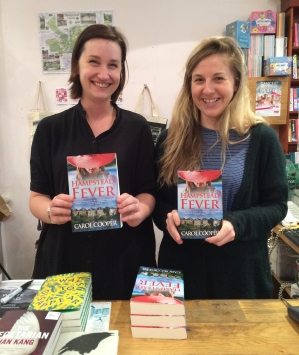
Pippa and Bethany of Daunt Books

Pippa and Bethany of Daunt Books

Don’t Use a Semi-Colon. Period.

I can’t find it in me to use semi-colons. I know they’re useful, in theory. But since when has effective writing been about theory?

With my thirteenth book about to appear, I can honestly say I have rarely felt the need for that little key just to the right of the L. 

Yes, I see you at the back, waving your arm in the air and bursting to tell me that General Practice Cases at a Glance is full of them. But I didn’t put them there. Or, as the copy-editor would have expressed it, “I know; I did not, however, put them there.” They crept in, aided and abetted by someone who knows more than I do about proper punctuation.

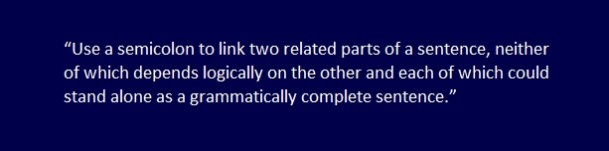
Here’s what the University of Oxford Style Guide says:

Oxford

Each could stand alone as a grammatically complete sentence? Then take off those trainer wheels and let it.

A fellow author and I were discussing punctuation recently.  We’d already exhausted the usual writerly topics such as our word count for the day, and which wine bar was nearest. I think I rashly mentioned semi-colons. Her own editor, like many others, has a fondness for these little squiggles. So, when I admitted to my friend that I try to avoid them at all costs, she asked, “What do you use instead? Colons?”

I nearly dropped my glass of Merlot. I use full stops. Period.

FreeImages.com/Ryan Gageler

I reckon that, over the years, avoiding semi-colons has saved me huge amounts of ink. The claim may be a bit infantile, rather like the school friend who once calculated that bikini briefs saved her several minutes a week, as compared with wearing full knickers. But she made us laugh.

Why use a punctuation mark that can’t decide if it’s a comma or a full stop? It’s a tasteless hybrid. Unlike mules and hybrid vehicles, however, this one breeds. Give a couple of them house room in your manuscript and you’ll soon have them on every page.

Militant semi-colon enthusiasts can get carried away, so I’m reaching for my flak jacket to say I’ve got very few uses for semi-colons. Here’s one.

winking semicolon

Project Semicolon is another.  It’s based on the premise that a semi-colon is used when an author could have ended a sentence but chose not to. As Project Semicolon says, “You are the author and the sentence is your life.”

It’s a global non-profit movement for those who are struggling with mental illness, suicide, addiction and self-injury. You may well have seen semi-colon tattoos, which echo the theme.

There are many moving testimonies on the Project Semicolon blog. Just don’t get too hung up about the grammar.

***

At long last, Hampstead Fever breaks out on Thursday. And the cover’s pretty.

Hampstead Fever MINI FINAL EBOOK COVER MINI