Six Lessons from the Eye Clinic

Today Sanjay takes his mother to her hospital appointment.

He’s a nice young man, a character from my novel One Night at the Jacaranda. Although I made Sanjay up, maybe you know someone like him?

He and his mother walk past a sign warning of the symptoms of Ebola.

Not surprising the font on the sign is massive. This is the eye clinic.

1138666_78954230 medical eye

The morning is a learning curve. They arrive at 9.30am to find there are over 40 patients there already.

Beta, I should have brought chair from home,” says Mrs Shah. Here comes Lesson One: in addition to bringing glasses (including bifocals), appointment letters, and any medication they are taking, in original containers, patients should bring something to sit on.

The only empty seat belongs to a man who’s just gone to the loo, which doesn’t flush, as he explains to all and sundry on returning to waiting-room.

A poster on the wall advises patients that clinic visits can take up to four hours. The notice on a board by the receptionist says the clinic is running 90 minutes late. Sanjay isn’t sure if this time should be added to the four hours, or whether it is already part of it. Nobody knows. Lesson Two: don’t ask stuff. Just accept it may take some time.

They stand in the corridor for a while.  A nurse emerges from somewhere and calls out, “Philip Nutmeg” or something similar. When Mr Nutmeg fails to respond, she says it again, looking meaningfully at Mrs Shah. Sanjay says helpfully, “She’s not Philip Nutmeg.”

The nurse glares at him.

Frame on eye chart

Eventually Sanjay’s mother is summoned into a little room to have her vision tested by another nurse, and to learn Lesson Three: computerised medical records do not necessarily contain any medical records. The entire hospital went computerised two months ago, this nurse says, but there are no clinical data on them. So Mrs Shah gets to recite her entire medical history. She looks over the nurse’s shoulder to make sure she writes everything down.

When they come out again, a cleaner in a hijab is here to deal with the loo. And Philip Nutmeg still hasn’t shown.

Lesson Four: nobody gives old people a seat, not even when they are rubbing their knee and looking around hopefully.  It shocks Sanjay that not one person has stood up for his poor old mother.  He considers ejecting someone forcibly, but then his mum isn’t as old or as poor as some of the others.

In the corridor there are two wheelchairs blocking doorways. In one, a woman with one leg. In the other, a man (or possibly a woman). This person has two legs, but Sanjay is not sure about the face because it’s covered with a blanket.

There’s also an old man pushing out some zeds and a younger man who reeks of alcohol. It is 10.45am.

Sanjay notices a woman with a pinched face and a jute bag bearing the name of a firm of solicitors. The doctors will love that, thinks Sanjay.

One of the doctors appears now to find out what’s wrong with the man with the blanket on his head. He insists there’s nothing wrong, but the light hurts his eyes.

Lesson Five, thinks Sanjay: bring dark glasses to the eye clinic because the lights can become unbearable once you’ve got dilating drops in your eyes. Now the man in the wheelchair is mighty pissed off because the doctor has asked him not to cover his head with the blanket. “It scares us, you see. We think something‘s wrong.”

Sanjay’s not so sure. He reckons you could die in the clinic and not be noticed.

The crowd eventually thins out and they get somewhere to sit.  Sanjay’s stomach is rumbling, and so is his mum’s. Lesson Six: bring something to eat.
989041_50471101 baguette

By the time they’ve been there three and three-quarter hours, Sanjay’s mother has had her visual fields tested and her corneal thickness measured, and her pupils look as wide as a dead cat’s. She’s also gone into the inner sanctum, where the consultant sits at a desk in front of a large cutaway diagram of an eye. This is worrying. Shouldn’t the doctor know what eyes looks like by now?

The medical verdict is not too bad. Mrs Shah’s eye pressure is fine today, and her cataracts don’t need doing yet.

Unlike a patient leaning on the front desk. There’s only one receptionist left, and this patient is pleading with her to expedite his cataract surgery because it’s very urgent. Unfortunately, the receptionist tells him he’s only on the routine waiting list.

By the time Sanjay and his mother leave, there’s just one man left in the waiting-room. Maybe it’s Philip Nutmeg.
1221586_15421511 nice eye

Ham and Eggs with Mr Turner

It was lovely to sit down for two and a half hours with my mobile turned off. On the minus side, I had to put up with caricatures that would have done Harry Enfield and Chums proud. In the lead role is an on-form Timothy Spall doing his best-ever impression of Timothy Spall’s rendition of Timothy Spall.

His gurning is magnificent, his grunts fit for a piggery at feeding time. It all helps establish JMW Turner’s origins: his father was a barber and his mother a lunatic (as it was termed in Victorian times). The artist’s inarticulacy is well portrayed, but I didn’t see the need to over-egg the pudding, turning him and his housekeeper into Wayne and Waynetta Slob

There is also much gasping, groaning, staggering and falling about, all of which sharpens the contrast between Turner and his colleagues at the Royal Academy (filmed at Wentworth Woodhouse near Rotherham, South Yorkshire). There we have John Carew, David Roberts, John Constable, John Singer Sargent, Sir John Soane and others. The more Turner grunts, the more they twirl, ponder, recoil, ponce about and generally over-act.

Then Mike Leigh takes the piss out of the Ruskin family who come across as unbearably pseud.

I can't show you a Turner. Go to the Tate Britain.

I can’t show you a Turner here. Go to the Tate Britain.

The film Mr Turner goes to huge lengths (or, as the Daily Mail puts it, ‘amazing tricks’) to make the film authentic in every detail. Doctors did house calls in those days, though I’m not sure how Leigh induces Dr Price to come to London all the way from Margate for a simple home visit, especially since, in the film, Margate has quietly slipped west to Cornwall.

Still, the stethoscope is spot on as the simple tube invented by Frenchman René Laënnec His name is pronounced ‘Le Neck’ though this isn’t where doctors wore it at the time. The binaural model used today only came into production in 1851, the year Turner died. 

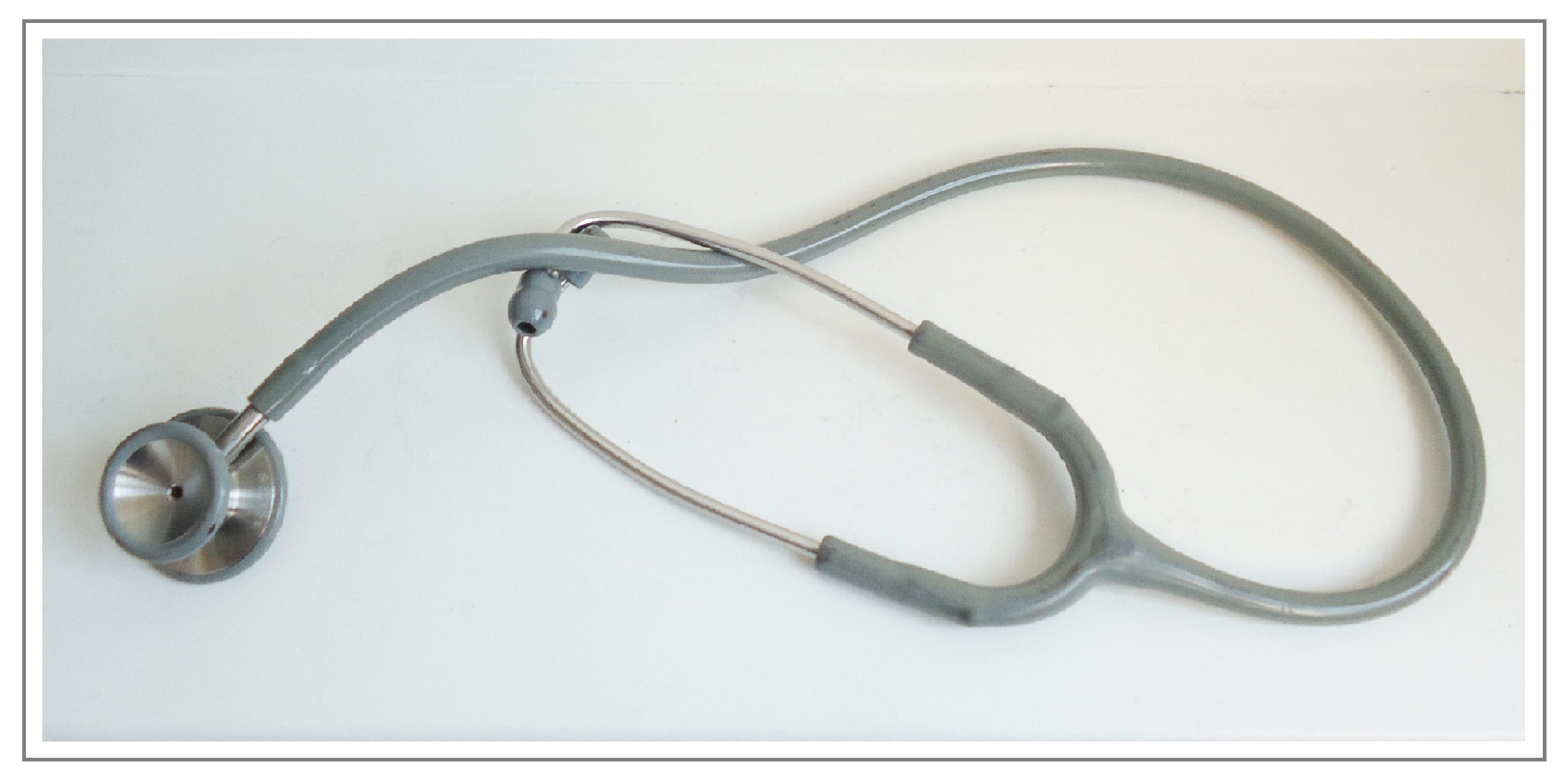
HP Rapaport Sprague stethoscope, circa 1981

HP Rapaport Sprague stethoscope, circa 1981

I liked Turner’s last mistress Mrs Booth (played by Dorothy Atkinson) who bears more than a passing resemblance to my ex-husband’s new wife. And Marion Bailey is a superb depiction of loyal housekeeper Hannah Danby, not least for the evolution of her psoriasis. First we see her scratching her neck, but later her scaly skin turns rampant. As the years pass, she becomes increasingly stooped and rigid, probably from psoriatic arthropathy which affects some 10% of people with psoriasis.

Turner’s eccentricity and talent come across well, as does the progression of his style of painting. Many of the images are genuinely beautiful. But the acting? More ham than a Bavarian market.

This is just my opinion. In no way does it represent the views of my husband (who thought we had booked to see Teenage Mutant Ninja Turtles), let alone the rest of the movie world. I’m sure everyone else will absolutely love the film to bits, darling.

Hospital Tests: Has the Doctor Got it Right?

The department is in the bowels of the hospital. Appropriate, thinks Sanjay.

Sanjay is a character from my novel. I’ve let him out today for another hospital visit. There’ve been plenty of those in the last 18 months but today he’s got hope. He’s got hope the tests will be normal, and that he’ll be out of the door again before he loses the will to live.

As usual Sanjay passes the giant pebble on his way into the hospital. It is not a pebble so much as an expensive sculpture. Today it looks as if a dog has peed up against it.

UCL pebble

This hospital is one of the very few in the country that does this special ultrasound scan, a fact which pleased Sanjay’s mother. “See, beta? Now they know you are special.”

Not so Sanjay’s father, who took it as proof that bloody doctors don’t know what they are bloody doing and are just using his son as guinea pig.

One thing puzzles Sanjay: what is this scan exactly? He always asks questions but he’s rarely any the wiser. The doctors either reply something like “We’re going to take pictures of your squidgy bits” and give a smile that suggests he’s a couple of rungs below the village idiot.

Or else they give him a jargon-filled spiel, sometimes accompanied by a scribbled diagram on the nearest scrap of paper that comes to hand. surgeon's diagram

Once it said TOMATOES MILK WINE DRY-CLEANING on the back.

“Oh God, beta. Suppose they give you needles with this scan?” says his mum.

Sanjay shrugs. He doesn’t mind needles, but he’s not too fond of tubes up the behind. He had that once, when he’d passed some bright red blood. Luckily the test turned out normal.

He trusts the doctor who referred him for today’s scan. Just like he trusted the doctor who told him his colonoscopy was normal.

But what if the doctor had been wrong? And what if it wasn’t just the beetroot?

beetroot

Maybe the junior doctor had misread the result or had looked at someone else’s notes. Then Sanjay’s bowel cancer might go untreated, while someone else would get an abdomino-perineal resection that he didn’t need.

Abdomino-perineal resection: ‘complete surgical removal of the distal colon, rectum, and anal sphincter via simultaneous anterior abdominal and perineal incisions, resulting in a permanent colostomy’

a.k.a. ‘taking away some of your squidgy bits and popping your back passage onto your tummy’

Bummer.

Lots of people could be wrong a lot of the time, thinks Sanjay as he enters the revolving door. When you consider it, there are so many different ways of getting something wrong. But only one way (or at most a small handful of ways) to get it right.

Sanjay jabs the lift button and muses on his 36 years of life.

Just a Little Prick with a Needle

Today’s tests are no biggie. Nothing like the ones Sanjay’s had in the past. Anyway, he’s feeling better than in a long time.

There’s already a queue of blood test patients waiting to be interrogated at reception. You only get a numbered ticket once the bossy boots at the desk finds out if you’re fasting.

NHS

Sanjay gets number 79. The display on the wall says 46. No wonder the place is packed. Pretty soon he’s finished reading the Metro. So he reads people.

The girl next to Sanjay isn’t fasting. She’s shedding sugar from her donut all down her ample front. Fact: nobody who eats donuts ever looks as if they need to eat. And right under the sign that says no eating, drinking or assaulting NHS staff, a man is chomping into a burger. A ketchup sachet lies at his feet.

The plastic chairs are hard. Sanjay wishes he weren’t so skinny. There’s also a bench for urgent patients. The urgent patients look terrible, as if expecting to snuff it while waiting. He was on that bench not long ago, but now he’s been promoted from living dead to living living.

It’s number 67 now. The snoozing woman in the seat next to Sanjay wakes with a start when her walking-stick falls over. Walking-sticks always do. You’d think someone would design a solution.

Some people have brought their entire family, along with their shopping, scattered in carrier bags in and around the chair legs. A toddler with a cold studies Sanjay then removes his finger from his nose and wipes it experimentally on the arm of the chair.

The phlebotomist who finally calls Sanjay isn’t just a phlebotomist. The badge says he’s a cannula technician too. He is about 5’3” and one of his spots is threatening to erupt. He only opens his mouth to ask Sanjay to confirm his name and date of birth. Blood is taken wordlessly. It’s important to make patients feel at ease in today’s patient-centred NHS.

test tubes

Out Sanjay goes, clutching a cotton wool ball to the crook of his elbow.

The imaging department is at the other end of the hospital, down a draughty corridor guaranteed to give you double pneumonia if you don’t have it already.

Nobody’s eating in x-ray. They’re too busy figuring out how to sign in. For chest x-rays it’s straightforward because you can go anytime Tuesday to Friday from 9 to 11am and from 3 till 5pm. He doesn’t like to ask what the hell they do 11-3, not to mention all day Monday.

If you have an appointment, a state-of-the-art machine scans your letter. If you don’t have an appointment, you go to the desk. There’s a third machine that dispenses numbered tickets.   A young man in a moon-boot is waiting patiently while someone tries to fix that one.

Sanjay hangs around the desk while a receptionist makes a hash of explaining a test to the patient in front of him.

Finally Sanjay is told “Take a seat and you’ll be called by your name.” He thanks his lucky stars he’s called Shah, not something like Sivaramalingham. He sits by a wall decorated with enticements to give blood, volunteer for the League of Friends’ shop, give up smoking for good, get help with your alcohol problem, report domestic violence, and donate your organs as soon as you finish with them.

There’s a lot more activity here than in blood-testing. For one thing, there are two calling systems. The staff have the knack of calling out a patient’s name at the exact same time that the automated system calls out numbers. Means nobody can hear either announcement, so patients keep getting up to ask what’s going on, then coming back to their seats, head shaking in disappointment.

One patient has got the system figured out. Now she’s giving out to all and sundry the phone number of the professor’s PA, which is, she reckons, the only way to get your x-ray done and have the results sent to your doctor in the same century.

Only the old man next to Sanjay is immobile. He’s wrapped in so many layers of woolly clothes that he has to sit bolt upright. Probably been wearing them a while, judging from the smell.

Sanjay needs the toilet but it’s out of order. This means a trek halfway round the hospital to find one that works. He could have just asked at the desk for a dozen specimen containers and filled those.

hospital gownFinally it’s his turn for x-ray.  

He is shown into a cubicle and handed a gown. Then he studies the grainy instructions on the wall.

Sanjay tries to tie it as per the picture, but fails. Ah. Two of the tapes are missing.   He goes into his x-ray bare-chested like Putin.

The radiographer tuts.

Two hours for two simple tests. Finally Sanjay breathes a sigh of relief and exits to the fresh air, rushing straight into a crowd of smokers by the revolving doors.


Next week it’s the London Book Fair. I look forward to meeting friends old and new, and reading an excerpt from my novel to fellow indie authors. I have yet to choose the passage, but you can bet Sanjay will be in it.

LEARNING TO BE SICK IN WASHINGTON, DC

When my mother went to live in Washington, DC, in the 1960s, she discovered that being ill there was not like being ill in her home town of Alexandria, Egypt, where everyone fussed over her and soon made her feel better.  Here’s one of her stories.

“When will Dr Smarts be able to come and see me?” I asked the receptionist who’d answered the phone.  His name had been given to me by a friend.

The receptionist laughed. “Come and see you?”

“I have a sore throat and a temperature, my nose is stuffed up, and I can’t taste food.”

“I have a cancellation for 3pm tomorrow. Take two aspirins, drink plenty of fluids, and we’ll see you then.”

“Doesn’t Dr Smarts make house calls?”

“Not unless you’re in your 80s.  Even then, he prefers to see patients in the hospital.”

Hospital? I shuddered.

I called the school where I taught to say I was ill and wouldn’t be in. The secretary was understanding.  “There’s a virus going round.  Drink plenty of fluids.”  What was a virus? No Alexandrian had ever mentioned the word ‘virus’.

It was a miserable day spent alone.  My friends were either at work or otherwise engaged.  The only visitor I had all day was the building engineer who came to check the air conditioning.

Polish TV

But there was American TV, to which I had quickly become addicted. Alas, the early afternoon movie was an old one, Suez, and it made me homesick for Egypt.  When I saw all that sand and all those familiar persistent flies, I burst into tears.

Where was Nagibeh, our old housekeeper, to sit in my room till I fell asleep, and my little sister’s nanny, the fat Dia with her rosary and fervent prayers? Where was my mother to read me stories? Where was the kind Greek doctor who puffed his way up the stairs and who made me feel better even as he blew smoke rings into my face?

The following morning my temperature was up.  Although it was a warm September day, I was shivery.  I wrapped up as for a polar expedition and walked the one block to Dr Smarts’ office.  How extraordinary that he did not make house calls, and me so nearby too.

Dr Smarts was unimpressed with my symptoms. So I coughed over him and exaggerated my aches and pains. I did such a good job that he decided to run some tests.  He also wanted to know the medical history of every member of my family.  He was beginning to get on my nerves.  All I probably had was a bad case of la grippe, which some nasty-tasting medicine would cure in no time.  And here he was asking me about my family.

Sick as I was, I gave him a colourful account of being ill in Egypt.  Egypt? He wasn’t quite sure where it was. I even told him about the time I was so sick with indigestion, Father called the doctor in the middle of the night. I’d eaten a whole kilo of sudanis, delicious peanuts bought off a street vendor, and had thrown up 10 times.  Nagibeh had cleaned the carpet with savon de Marseille.  Dr Smarts had never heard of savon de Marseille.  His general knowledge was pitiful.

“Couldn’t you have just put the carpet in the washing machine?”

To give him credit, Dr Smarts was a good listener and jotted down everything I said.  No doctor I knew ever wrote anything except prescriptions.

“What do you normally eat during the day?” he asked.

“I have an English breakfast: eggs, bacon, toast, coffee.”

“Lunch?”

“Well, first there’s elevenses.”

“What’s elevenses?”

Ignoramus, I thought.  “It’s a mid-morning snack” I explained patiently. “I have hot cocoa and biscuits.”

“How many biscuits?”

“In our culture it’s considered rude to count what one eats.  However, if they’re chocolate, most of the box.”

“Lunch?”

“Where I teach, lunch is usually cold cuts and salad.  I’m not fond of lettuce.  I’m not a rabbit. But at 3pm before I pick my daughter up from her school, I have a chili hot dog at People’s Drug Store.  My main meal is dinner: chicken or meat, potatoes, spinach, a banana. No dessert. But sometimes before bed I have a tuna sandwich with mayonnaise.”

The doctor put his pen down and looked at me. “It’s a wonder you’re not the size of a house.”

“I ate much more in Alexandria” I replied hotly.  “My father and grandmother ate like horses, and weren’t fat at all. My mother hardly ate a thing and was always ill.”  Dr Smarts looked shaken.

“You know, Dr Smarts, in Alexandria they say ‘Eat, eat, bil hana wal shifa.’  That means with pleasure and good health.  We also say ‘Bon appetit.’ And doctors all make house calls.”

“We used to make house calls too.” He sounded wistful.  “Anyway, you’ll be fine.”

“What about a prescription?”

“Just drink plenty of fluids and take aspirin.”

I bundled up again under the amused eye of the receptionist.

As I walked home, I thought of what I’d write for La Reforme Illustrée, our friendly Alexandria Sunday paper. No house calls, no prescription, counting biscuits! How uncivilised.

I resolved never to be sick in Washington, DC, and you know what?  I never was.

© Jacqueline Cooper

When I’m not Writing

It’s a fun life, this novelist business: publishing and promoting a book, and getting a sequel going, while ideas for the prequel are also bubbling away.

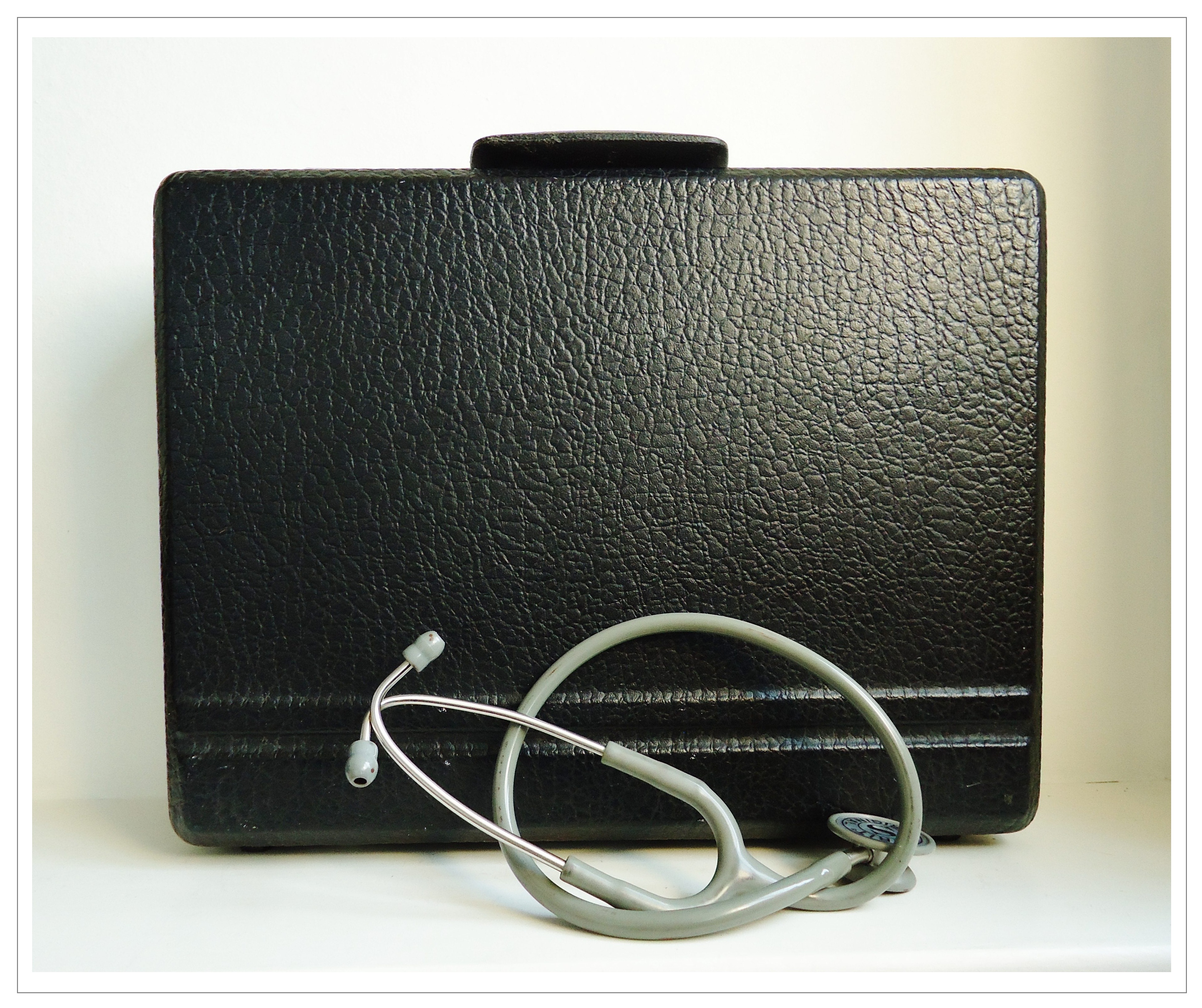
What did I do before novelling?medical bag

A lot more doctoring, for a start.  Every day, the rich pageant of life played out in the consulting-room.  Many patients shared their innermost secrets, told me their darkest fears.  Most had washed, some hadn’t.  Their socks stood up unaided. 

A lot of them talked while I listened to their chests, so I had no chance of picking up the subtle signs learnt at medical school.  Or hearing what they were saying.

Frequently a patient would promise “This won’t take a minute, doc.”  Which was true.   It usually took at least half an hour.   The ones who took longest had often brought me newspaper cuttings about the latest ‘breakthrough’.   Sometimes it was an article I’d written myself. 

These days it’s all about patient-centred medicine.  I realised how far along this road we’d gone when a patient just to ask how feather pillows should be washed.  Some patients, of course, were really ill, like the young man with meningitis who turned up thinking he’d just badly strained his back.   Despite being sent to hospital by ambulance right away, he still ended up disabled. 

doorway to patient's flatWhen I was training to be a GP, I visited a lot of housebound patients.  Finding their homes could be a challenge.  Houses with names were the bane of my life, as were those where the numbers were too small to see from the road.  It was a straight choice:  stop every so often to peer at them, or drive with two wheels on the pavement. 

There were homes so dirty you wiped your feet on the way out. 

And high-rise blocks of flat which smelled of urine and carbolic (but mostly urine).  The lifts never worked, and if they did nobody would have willingly entered them anyway. 

There were tiny bungalows where a lot of patients kept the front door key hanging on a length of string inside the door.   You fished the string out through the letter box and let yourself in. 

Often there were dogs where you least expected them.  There were two kinds: the protective type bared their teeth as soon as you touched their master, and the other kind  stayed curled up on the sofa, unnoticed till someone sat on them.  Then they yelped into life and bit you on the bum. dog

Sometimes the patient was dangerous, like the young psychotic who locked me into the dining room and threatened me with shards of broken mirror.   

It wasn’t a wealthy area.  I’d get called out to see patients with minor injuries, if they weren’t sure it was worth getting a cab to A&E.  Funny they could always afford cigarettes.

The ones that I remember most vividly were the old people, living out their lives in one-bedroomed homes, surviving on their pensions (if they turned the heating down), their memories, and not much else.  They usually had a knitted blanket on their knees, a couple of faded photos on the mantlepiece, some tacky souvenir from a seaside holiday, and maybe a china dray-horse on the window-sill.  While there I’d check the kitchen cupboards.  They were often bare apart from a huge collection of medicines. 

All of human life could be found in patient’s homes, providing insights that are rarely glimpsed 25 years on.  I still see patients, but these days it’s almost always in the consulting-room.  Even full-time GPs don’t have the nearly same volume of home visits these days.  There’s no time in today’s high-pressure, high-tech primary care.  

More Certain Than Taxes, and More Painful

In a few days I’ll be at a Cambridge University event, speaking to students who look forward to careers in the media.  But today I’m looking back at a serious topic.  My piece last month in The Sun newspaper went a bit like this…

Life is complicated, but dying is even more so.

As a doctor I’ve seen many patients whose lives are utter misery.  They’ve reached a stage where nothing can relieve their suffering and make their days bearable.   Some of them beg for death.  But assisting a suicide is against the law in England and carries a sentence of up to 14 years.

If it were the beloved family pet, the answer would be clear and compassionate.

It’s heart-breaking to have a relative who longs to die, and I really feel for the families, especially as my own mother is now suffering horribly. 

My mum’s spine is deformed and broken from severe osteoporosis.  She howls in pain, and in anticipation of pain before even being touched.  She’s incapable of doing anything now.  Every single thing the devoted team of nurses do for her hurts acutely. 

Sometimes she lies in bed yelling that she’s in agony. Or else she shouts over and over “Please help me, please help me.” Mum and me crop

No longer the person she was, she weighs 35kg and stares with blank eyes.  Everything she has been through in the past two years, including a major op that she nearly didn’t survive, has left its mark.  The pain is literally causing her mind to go, but she is still aware of how bad things are.  I sit by her hospital bed and hold her hand, and she sometimes tells me she wants to die.

Increasing the painkillers makes her more confused.  Some of the drugs make her paranoid.  I’m still hoping there’s an answer because it’s so awful to watch her suffer.

Don’t get me wrong.  I was never immune to the suffering of patients in situations like this, but when it’s one of your own you can appreciate the back-story and see the whole perspective of their lives.

Medicine has a lot to answer for.  Many people wouldn’t be alive had it not been for doctors.  On the other hand, medicine isn’t a perfect science and never will be.   I’ve been a doctor long enough to know at first hand that medicine is good at prolonging life, but not so good at sustaining its quality.   

When quality of life is appalling, or treatment too awful to bear, then the balance of pros and cons may suggest that treatment doesn’t benefit the patient.  In making that decision to withhold treatment, the relatives and patient’s wishes are vital.  If the patient can’t take part in the discussion, his previously stated wishes are taken into account.

Withholding treatment is totally different from deliberately hastening death, whether or not it’s with the patient’s consent.    

But there is what’s called the doctrine of double effect.  This makes a distinction between acting with the intention to kill, and performing an act where death is an unintended effect.

For instance large doses of pain-killers can shorten life.  But doctors give them only with the intention of relieving pain. The doctrine of double effect says that’s morally right, even though the primary effect (pain relief) comes with the risk of a harmful side-effect.  Sometimes that harm can even be foreseen, but according to the doctrine it is still OK, as it achieves the main benefit, which is relieving pain.

However the double effect isn’t often the get-out clause it appears to be.  Nowadays there is a huge range of pain-relieving drugs, and dosage changes tend to be tiny, so they rarely shorten life.

Medicine has come so far now that we need an urgent way forward on that most basic event, death.  Not all doctors are agreed on the right course of action.  If assisted dying is introduced in any form, we’d need strict safeguards against abuse, greed, negligence, incompetence, and probably a few other things as well.

Some doctors are vehemently opposed.  Personally I fear that legalising assisted suicide could change the doctor-patient relationship forever.  On the other hand, there’s also the hope that it would help medics honour Hippocrates’ order: “To cure sometimes, to relieve often, to comfort always.”

Since then, my mother has died, ending our suffering, though it continues for other families.  


Germs and Geriatrics

She is asleep with her mouth open, so Geoff sits down quietly and watches for a bit. At 92 she still has some of her own teeth but the interior of her mouth has that glazed look that comes with age, and with candida.

Geoff is a GP from the pages of One Night at the Jacaranda. He can’t help making these observations.

Grandma stirs, and soon she’s sitting up yelling for the nurse.  “I’m in agony” she’s saying as she jabs the bell repeatedly.  “I’m in agony” she repeats to the rest of the ward.   The three other old ladies appear to have heard this before. 

Today Geoff had to put on a mask and gown before entering the ward.  Some nasty germs have been isolated on the unit, but high bed occupancy means it can’t be emptied and deep cleaned.  He’d asked a nurse which germs, and got a shrug by way of reply.

agar plates

The lunch tray arrives.  It looks vile, all that sloppy food designed to slip down elderly gullets.  “Feed me” demands Granny.

She watches Geoff with beady eyes as he spoons some of the beige slurry into her mouth.  That’s probably where the germs are, he thinks.   After a couple of mouthfuls Granny has had enough.  She’s staring at his head now.  “I like your hair” she says and reaches out to touch it.

She reminds him of Davey.  She might like to see her great-grandson again, but hospitals aren’t good places for 5-year olds, unless maybe they’ve got Henoch-Schonlein purpura.

There’s a miniature Christmas tree on the bedside locker. “It’s nearly February” Geoff points out.  “And you’re Jewish.” 

“I’m 95 now” Granny replies with impeccable logic. 

A nurse comes in, switches off the call button and offers Granny tablets for pain. Which Granny refuses, saying she’s fine.  

The nurse then rearranges things at one of the beds.  Geoff notices that she hasn’t bothered with a mask, gown or gloves.  She senses his stare and says “I’m not touching the patients.”  The nurse probably wouldn’t believe it if Geoff told her that viruses and bacteria can live on call buttons, beds and bedding. 

“The priest came to see me” Granny tells Geoff.

“Why, Grandma?”

“Because I’m getting married, of course. To Marvin.”

This is news to Geoff.  “Do I know Marvin?”

Granny swats at him with a bony hand.  “Of course you know him.  He sits next to me in class.”

She’s gone downhill faster than he thought.   Only last week Geoff was thinking of testing her with the SAGE questionnaire for cognitive problems.  He hasn’t used it on patients yet but it looks a useful test, with low false positives, and no copyright issues, unlike the MMSE.  But not much point trying it on Granny any more.   Although her mental state fluctuates from day to day, she seems proper demented now.  An MRI of her brain would probably look like cheese.

Swiss cheeseNow she says “Make me comfortable.” 

The nurse has gone, so Geoff tries adjusting the hospital bed.  It has lots of buttons.  Granny develops a liking for the buttons that controls the foot end.   

No harm in that, thinks Geoff.  After she raises and lowers the foot of the bed about a dozen times, he remarks that it’s just like a see-saw.

She gives him one of her stares.  “You’re really very stupid.”

Before Geoff leaves, he asks if Marvin’s going to visit.

“Who’s Marvin?” replies Granny.

elderly hands

You may also like to read:

How are you today, Granny?

Alzheimer’s online test crashes university site

Six Characters in Search of a New Year Resolution

There’s something refreshing and renewing about making resolutions, especially as it happens only once a year.  Here’s what six characters I know have resolved to do.

Ex-con Dan lost a lot of life behind bars, so he wants to make the most of the new year.  Resolution one: he’s going to get a job.  Doesn’t matter what at this point.  Two: he’s going to learn a new word every day.  Useful words to help him go up in the world.  There are plenty of those in the dictionary he just bought.  Three: he’s going to find someone. prisonIt’s a long climb from where he is, but hey, one day at a time. One word at a time.

Her boyfriend may be perfect (he often says as much) but Harriet needs to get her own act together.  First, she’s going to hone her negotiating skills so she gets decent money for the articles she writes.  Second, she plans to break into the broadsheets.  Third, she’ll try to win her first ever journalism prize.  Hopefully this year there won’t be too many entries for the Carrot Consortium awards.  Then again, maybe she should just concentrate on resolution four: staying in the black.  She sighs and shuts her notebook.

GP Geoff is tired of New Year resolutions.  His patients never lose weight or stop smoking.  From January 1 he plans to focus on his own wellbeing. stethoscopeAs every medic knows, erectile problems are often a marker for heart disease or diabetes.  These days his dick is as limp as a lettuce, so he’s obviously on borrowed time.  Fuck it, that’s his resolution sorted.  He’s going to write a will so his ex doesn’t get it all if he snuffs it.

Laure has money, looks and brains.  Still she doesn’t feel beautiful inside, her home looks unloved, and there hasn’t been a man in her life for two years and three months (she doesn’t count Martin from the commercial property department).  The resolutions are writing themselves:

  1. Find someone special
  2. Stop being so critical of myself
  3. Make flat more welcoming.

self help booksThis may take a while.  And a few more self-help books.

Karen has big plans for the coming year.  She’s going to get out more.  Find a job (one that fits in with term-times).  Get her kids to stop fighting.  Buy from more upmarket shops (isn’t there a new Oxfam in Stanmore?).  Karen throws another Lego pirate into the box.  And meet a nice man, of course.Lego modelSanjay has whittled his resolutions down to one.  Beating cancer for another 12 months will do just fine.

If you want to know how it turns out, you can find out by reading One Night at the Jacaranda.

Have you made resolutions for 2014?   I’d love to hear what they are.

A Week to Remember in the Surgery

“An alcoholic is someone who drinks more than his doctor” thinks Geoff as he attacks the second bottle of red.  This isn’t going to help, but it’s Friday and, let’s face it, it’s been a bit of a week.  He waits for the microwave to do its thing with dinner.

Geoff is a family doctor in suburban London, or he would be if he were real.  As it is, he’s just a figment of my imagination.  At 38, he’s divorced and already worn out.

On Monday, Geoff had. expected a two-minute silence but nobody had read the memo.  “Was there a memo?” says the practice manager.  It was a mystery how the staff always take note of the senior partner’s memos though.

His colleagues in the practice think losing two minutes at 11am would be completely out of order.  Especially when Remembrance Day falls on a Monday.  Especially when there are targets to meet, hoops to jump through.

crumpled poppyThe practice nurse is wearing a poppy, now crumpled out of shape and dangling precariously from its pin.  One of the receptionists has one too. The rest don’t bother.

So at the precise moment when Geoff thought he might be standing shoulder to shoulder, if not with all those who serve, then at least with all those who work in the health centre, he’s peering at a patient with spots.

“What can I do for you today?” asks Geoff.  Every doctor knows you never ask what’s wrong today, because patients reply that’s what they came to find out. You don’t ask them what brought them, either. Not unless you want to hear about the 168 bus.

By way of reply, he unzips his flies and whips it out.  That’s where the spots are.  The patient wants antibiotics.  Geoff wants him to get checked out properly.  So he sends him to the Pox Palace, but he uses the correct name instead: sexual health clinic.

On Wednesday the computer database is down.  Turns out it’s a national outage.  “National outrage, more like” fumes Geoff.  Still, he likes idea of free-range consulting.  He can look people in the eye and do proper medicine instead of being fixated on the computer screen.  Funny how much easier it is to listen when you’re not at the mercy of stupid pop-up menus ordering you to ask if they’re depressed, check their medications, and offer a change of contraception.

But by the time the computer’s back on at 11.30am, he’s accumulated pages of illegible patient notes and 20 patients who really need to be seen again.

It’s late on Friday when Geoff finally leaves. He sees that the wall by the No Smoking sign outside the health centre has been used to stub out cigarettes. And he can guess which patients did it.  He goes and scrubs it, because nobody else will.

Now it looks like this.small dirty wall

Surely that entitles him to a bonus glass of wine or two.


Alcohol abuse is common in doctors but the expression ‘drunken sailor’ has a lot of truth in it.