Rebel with a Cause

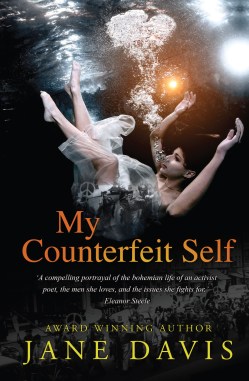
Poetry and medicine intersect in Jane Davis’s latest novel, My Counterfeit Self. I’m delighted to welcome Jane back to my blog on publication day.
JDV-MCS2016-Clays-02

The main protagonist is Lucy Forrester, a political poet and activist. Anti-establishment all her life, she’s now horrified to find herself on the New Year’s Honours list. Her inclination is to turn it down. But what if it’s an opportunity…

When researching a cause for her rebel, author Jane Davis followed a thread from the first CND march from Trafalgar Square to Aldermaston, to the plight of Britain’s forgotten Atomic Veterans. Here is what she discovered.

“It is 1958, six years after American scientists disbanded the Atomic Bomb Casualty Commission in Hiroshima, having completed their data-gathering on radiation sickness. It is a supposed time of peace. Imagine you are eighteen years old, shipped to Christmas Island on National Service. It is the furthest you have ever strayed from home.

Your job? To stand on an idyllic white sandy beach and observe as scientists detonate nuclear bombs in the Central Pacific. When the signal is given, you must turn away from the blast and cover your eyes with your hands. There is no protective clothing. As the flash goes off, you can see your veins, your skin tissue, your bones, and through it all, diamond white, a second sun. Searing heat builds inside, until you imagine that there is only one way it can end.

Around 22,000 servicemen were ordered to stand and observe. Some suffered radiation sickness immediately, and some died. For others, symptoms followed patterns seen in Hiroshima. They lost their appetites, ran high fevers, and their hair fell out in clumps. Some appeared well for decades before developing cancers and other rare diseases.

It was only over time, as dots were joined, that some veterans became convinced their illnesses and disabilities were caused by nuclear radiation. Their bid to be recognised by the European Court of Human Rights was denied in 1998, which said it had no jurisdiction in the case. Largely ignored, and dwindling in number, the veterans referred to themselves as ‘ghosts’.

Then, in 1999, researcher Sue Rabbitt Roff at the University of Dundee tracked down and surveyed 2,500 veterans and their children, reporting unusually high rates of infertility and birth defects. This was the trigger. The columnist Richard Stott (1943 – 2007) of the Sunday Mirror then launched his Justice for Nuke Vets campaign.

If I saw this reported in the news, I’m ashamed to say that I have no recollection of it. There were always more attention-grabbing headlines. But when researching my novel, it was obvious to me that this is a cause Lucy Forrester would have thrown herself behind.

The British government continued to insist on more proof. It wasn’t until 2007 that two scientific studies demonstrated clear links. They also estimated that genetic birth defects would last for 20 generations – in other words, 500 years.

As a result, 700 New Zealand and UK veterans launched a class action lawsuit against the British government claiming NZ $36 million in damages. But it had all happened 50 years ago. The Ministry of Defence countered with a statute of limitations defence.

Following a parliamentary inquiry in early 2008, the government agreed to fund new studies into veterans’ health, and to pay interim compensation of £4,000 each.

By the time I completed my research, the government had set aside £25million (£5million a year over five years) for an Aged Veterans’ Fund. But this wasn’t only for the surviving Atomic Veterans. Approximately two million veterans were qualified to apply. In addition to applications from individuals, the British Veterans’ Association (BNTVA), the premier charity representing those who have worked alongside radioactive material for the benefit of the nation, can apply for funding for projects such as respite care or counselling. Whilst any such services may benefit the families of the Atomic Veterans, once the remaining veterans die, all funding will cease. Without an admission of negligence from the MoD, there will be no help for the 20 generations.

Many Atomic Veterans are proud to have served their country. However, given that the risks of exposure to radiation were either known or reasonably foreseeable, they had every right to expect their government to take care of them if things went wrong. They couldn’t have imagined that the British government would introduce a higher burden of proof than other governments, so that their American counterparts received compensation while they did not. It should not be left to the Prime Minister of Fiji to step in and award each surviving veteran three thousand pounds, saying, ‘Fiji is not prepared to wait for Britain to do the right thing’.

With Trident firmly back in the headlines, I hope that it will rise to the surface once more.”

You can find out more about the Atomic Veterans or make a donation here

jane-facebook-profile

Jane Davis is the author of seven novels. Her debut, Half-truths and White Lies, won the Daily Mail First Novel Award, and The Bookseller featured her in their ‘One to Watch’ section. Six further novels have earned her a loyal fan base and wide-spread praise. Her 2016 novel, An Unknown Woman, won Writing Magazine’s Self-Published Book of the Year Award. Compulsion Reads describe her as ‘a phenomenal writer whose ability to create well-rounded characters that are easy to relate to feels effortless.’ Her favourite description of fiction is ‘made-up truth’.

When Jane is not writing, you may spot her disappearing up the side of a mountain with a camera in hand.

You can also find Jane Davis on Facebook, on Twitter, on Google Plus, on Pinterest, and on Goodreads, as well as on her Amazon author page

Anyone who signs up to Jane’s newsletter receives a free copy of her novel, I Stopped Time. Jane promises not to bombard subscribers with junk. She only issues a newsletter when she has something genuinely newsworthy to report.

My Counterfeit Self is published October 1, 2016, and available in paperback and ebook formats.

jd-red-tbw


What You Can Do for London’s Lungs

Take a nice deep breath. For thousands of people living in London, that’s a luxury.  

FreeImages.com/Christina Papadopoullo

With its plethora of parks, our capital may be one of the greenest cities. But it’s also one of the most polluted. For the last five years, London has been in breach of EU safety limits on NO2.

I’ve noticed it getting worse. For an instant lesson in air quality, head for the outer reaches of one of the Tube lines and see how fresh the air feels when you step outside. 

Pollution isn’t just an irritant to the throat, nose, or eyes. It’s damaging to health, increasing the risk of lung cancer and chronic lung disease, and driving up hospital admission rates for those with pre-existing lung or heart disease.

FreeImages.com/Dave Kennard

Children’s lungs are most vulnerable, yet around 330,000 London kids go to school in areas with illegal levels of pollution.

Pollution has also been linked with damage during pregnancy, including low birth weight and pre-term birth.

I’ll cut a long story short: at least 9,500 deaths a year in London are linked with air pollution.

We may not have the pea-soupers of the 1950s that smothered London in soot and sulphur dioxide for days at a time. But we have a haze of small particles, especially PM2.5s, along with the toxic gas nitrogen dioxide NO(not to be confused with laughing gas because this one isn’t funny).

FreeImages.com/Simon Gray

PM2.5s are fine particles, less than 2.5 micrometres in diameter. They come from things like motor vehicles, power plants, and wood-burning, and they’re harmful because they’re small enough to reach the deepest recesses of the lungs.

Nitrous oxide comes largely from diesel cars, lorries, and buses. It follows that pollution is worse near busy roads, which is often where less advantaged families live. But even short-term exposure to air pollution can damage.

Why am I banging on about it now?

Because on May 5, London elects a new Mayor. As a parent, a doctor, and a Londoner, I whole-heartedly support The British Lung Foundation’s #Londonlungs campaign. It calls for the next Mayor and Assembly members to prioritise lung health.

FreeImages.com/Andrew Rigby

So much could be done, from tree and hedge planting schemes to improving transport strategy and extending the ultra-low emission zone (ULEZ) eastwards – where there’s a lot of deprivation and air pollution.

You too can help by getting on board and asking all the mayoral candidates whether they pledge to protect Londoner’s lungs. You could also share the campaign on social media with the hashtag #Londonlungs.

FreeImages.com/Adam Ciesielski

What else can you do?

There are obvious individual steps to help protect the lungs and heart, like not smoking.

Driving less, for instance by sharing cars or using public transport, helps drive down vehicle emissions. If you’re buying or leasing a car, choose a low-emission model.

Take the longer route on foot or cycle via a less polluted area if you can. You may be interested in the Clean Space app

The British Lung Foundation has some great tips for when air pollution levels are very high. You can find them here


The Disease Nobody Knows About Until it’s Too Late

If you know much about sepsis, chances are the condition has affected your family.

Sepsis has a high mortality and kills 37,000 people a year in the UK, about 1,000 of them kids. So this week I’m parking the levity and using my blog to sum up what you need to know about sepsis. Photo by Jean Scheijen FreeImages.com/Jean ScheijenUnderstand what it is.

Sepsis is when the body responds to severe infection in such a way that it attacks its own organs and tissues. Without treatment, this quickly leads to organ failure and death.

Most people have heard of blood poisoning (septicaemia) which is much the same thing. But doctors now prefer the term sepsis because there isn’t always blood poisoning in this condition.  

Sepsis isn’t exactly a household name – yet. Personally I think ‘sepsis’ sounds weaker than either septicaemia or blood poisoning, but we’re stuck with the term that scientists agree on.

Know the signs.

The symptoms depend on age, but the main point is that there isn’t any one specific sign like, say a swollen jaw with mumps. A child with sepsis can have a high fever, or an abnormally low one. The younger the child, the vaguer the symptoms.

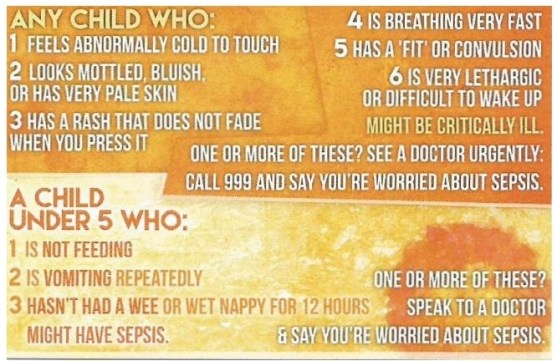
Here are some signs to look out for in children (from the UK Sepsis Trust’s Paediatric Pocket Guide):

symptoms of sepsis in children

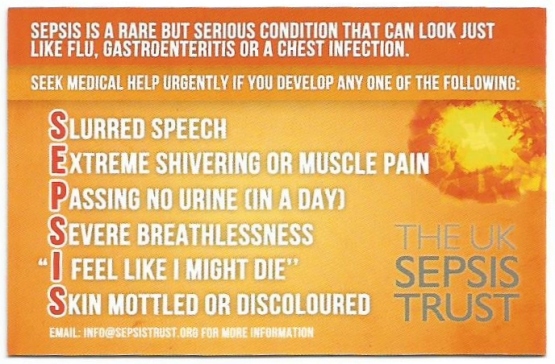
And here are some signs to watch out for in adults (from the UK Sepsis Trust’s excellent Symptom Checker card):

symptoms of sepsis in adults

If I could highlight just two consistent points about sepsis, they would be these:

You or your youngster will be more unwell than expected.

Things get rapidly worse, especially in children.

Understand who gets it.

Anyone can develop sepsis from a bacterial infection (or sometimes a virus or fungus). But some are more at risk, like the very young, very old, pregnant women, diabetics, and people on long-term steroids.

The initial infection can be a serious one like meningitis, or seemingly trivial, like a horse-fly bite.

Surgery can be linked with sepsis, especially emergency operations on those in poor health, or with peritonitis or bladder infections.

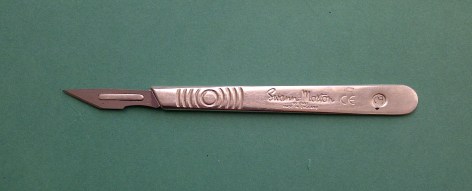
scalpel

Know what to do.

Sepsis is a medical emergency and needs urgent hospital care. Don’t waste a single moment.

Sepsis isn’t one disease, but rather a syndrome that cuts across almost every medical speciality. The first doctor you see could be a paediatrician, a gynaecologist, an orthopaedic surgeon, or your GP, and sepsis may not feature at the top of their list. That’s why it’s so important for you to mention it. When you see the doctor or nurse, make sure you say, “I’m worried about sepsis.”

Thanks for bearing with me.

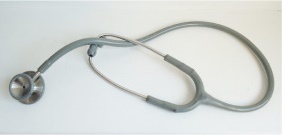
Litmann type stethoscope

Here’s a selection of further reading if you’re interested.

The UK Sepsis Trust is a charity founded to save lives and improve outcomes for survivors of sepsis by instigating political change, educating healthcare professionals, raising public awareness and providing support for those affected. For their general factsheet on sepsis, click here

Sepsis Awareness Month: Rory’s Story. One mother’s personal account.

Three and a Half Heartbeats by Amanda Prowse. A novel of love, loss, and hope about a family devastated when their child dies of sepsis. And proceeds go to UK Sepsis Trust.

Plunkett A, Tong J. Sepsis in Children.  BMJ 2015;350:h3017. A detailed medical article from the British Medical Journal.

Goodbye and Good Riddance, Dry January

If, like a sizeable proportion of the UK population, you signed up for a ‘Dry January’, you’re probably just about to grab the barman’s attention and celebrate the end of a month of abstinence.

red wineI won’t miss this January one little bit. But it’s not giving up booze that made it hard.  The bits of Dry January I can’t handle are:

1 People imagining that one month off the sauce will magically cancel out 11 months of serious abuse. The prevailing belief is that it doesn’t matter what you do to your liver before or after January. Anything goes because it gets annulled like a Catholic marriage. Yes, all you folks that didn’t have a sober half hour in the whole of December – I’m talking about you. And no, it wasn’t really that smart to finish off every single bottle in the house before New Year’s Day, just to avoid temptation.

white-wine crop

2 People seeking sponsorship for their abstinence. It’s only one month! It’s barely long enough for your liver enzymes to return to normal (if they’re seriously raised, you should be looking at 6-8 weeks or longer, like life).  Is there no such thing as self-control unless you can get some dosh out of it?  No? OK, so the next time I give up chocolate for three years, I’ll make a Just Giving page and ask everyone I know for serious money.

3 Pious facial expressions when ordering ‘just an elderflower’. Because, obviously, giving up the hard stuff for a small fraction of the year, while remaining self-indulgent on every other front, really turns someone into a saint.

IMG_2985

4 Ever-longer lists of ‘mocktails’, almost as expensive in restaurants as the alcoholic versions. Along with a hefty helping of calories, some also come with twee names like ‘Nojito’ and ‘Abstinence on the Beach’.

5 Hilarious signs about Dry January. You know the kind of thing, often found outside pubs or on Facebook. pub sign dry January

6 Intense conversations about alcohol, mostly around its history or cultural aspects, and not all of it correct:

“In the middle ages, ale was safer to drink than water.”

“Even children drank beer and it was much stronger than it is today.”

“Arabs don’t even have a word for booze.”*

So long, Dry January. Welcome, Dry February.

ooOoo

*Oh yes, they do. There are even words for wine and beer. In fact ‘alcohol’ comes from the Arabic.

More on fatty liver disease and liver enzymes: When and how to evaluate mildly elevated liver enzymes in apparently healthy patients.


How to Save a Life Using Just Your Hands

At 8am on Tuesday morning, junior hospital doctors were due to take industrial action. Just for one day, they’d only treat emergencies. 

FreeImages.com/Carlos Paes

That’s now off, pending further talks. But does the average Joe know what an emergency is? I can’t help speculating. My experience of working in A & E suggests otherwise. Yes, there are heart attacks, car crashes, and fractured femurs galore.

Alas, there’s also no shortage of folks who pitch up for a second opinion on a runny nose, or who demand to know, at 4am, why they’ve had hiccups for two years.

Tragically, the reverse is also true: “I thought she was just sleeping.”

FreeImages.com/Johan Graterol POSED BY MODEL

If it’s that hard for the man in the street to recognize an emergency for what it is, it’s even more challenging to deal with it.

Forgive me for going all serious today, but research for St John Ambulance shows that almost four fifths of parents (79%) wouldn’t know what to do if their baby was choking to death. That’s despite it being a major fear for 58% of parents. In fact no less than 40% have witnessed choking. 

So kudos to those who’ve learned what to do, like the two people who saved a tot’s life in Hampstead a few weeks ago.

As you can imagine, the toddler’s mother is incredibly grateful to the passers-by who leapt in and did CPR. They’re unusual, because most people, as the research showed, wouldn’t have a clue.

We hear a lot about defibrillators in public places. Of course they’re a great idea. But while defibrillators help save adult lives, they’re not that useful for a baby or child. That’s because most little ones have breathing emergencies, not cardiac ones.

The good news is that their lives can be saved with nothing more than your hands, once you know how.

FreeImages.com/Helmut Gevert

So I wonder why basic life support isn’t taught more in schools.  And why parents and carers don’t often bother to learn how to save their own child’s life.

About five years ago, I was involved in Tesco’s BabySafe campaign. There were free sessions around the country designed to teach parents, carers, and others the basics of dealing with common but serious emergencies like choking and burns. People left with basic skills and the confidence to use them.

You can learn to save a baby or child’s life from the British Red Cross or St John Ambulance

These organizations have online information too, but it’s so much better to do a hands-on course if you can.

FreeImages.com/Denise Docherty


How Could a Doctor Think of Going on Strike?

Best job in the world, thinks Geoff, at least when he’s not inspecting verrucas.

While Geoff is a fictional GP, he’s uncannily similar to a lot of real family doctors.

Right now he’s unwrapping a cheese sandwich and feeling grateful he’s not a hospital doctor facing life or death decisions.

Because any minute now BMA ballots will be plopping through their doors, asking whether they’d take industrial action.

Litmann type stethoscope

He’s not fond of strikes and instinct tells him doctors shouldn’t have them. If striking makes a perceptible impact, people get hurt. If it makes no impact, the strikers look stupid. Lose-lose, in Geoff’s book.

But what else can junior hospital doctors do?

By anyone’s clock, 7am to 10pm six days a week can’t be a standard working day. Geoff’s not sure how it squares with the European Working Time Directive which requires 11 hours rest a day. About 10 years ago the EWTD began to include junior hospital doctors. He recalls that opt-outs have to be voluntary. Is Jeremy Hunt aware of this?

It’s not about the money, say junior doctors. They’re not “trainee doctors”, by the way, despite the way the press describes them. They’re fully qualified members of the medical profession, ready, willing and (most of all) able, to resuscitate the dying or resect metres of gangrenous bowel as appropriate. 

Jeremy Hunt doesn’t look a bad guy.

Health Secretary Jeremy Hunt

He’s just wrong, thinks Geoff. That mortality paper in the BMJ has a lot to answer for. It showed that being admitted to hospital at weekends was linked with a significantly increased risk of in-hospital death. Lots more of them would be acutely ill, so that makes sense.

The same paper also showed that being in hospital at the weekend was associated with a reduced risk of death!

So where the fuck did people get the idea that having more doctors on duty would prevent those excess deaths? Geoff hurls his sandwich wrapper into the bin.

Being self-interested, as everyone is at heart, Geoff worries that the proposed new contract for junior hospital doctors will affect general practice too. It would imposes a drop of 40% in GP trainee salaries. Those ARE trainees, by the way. They’re doctors training to be GPs, and there aren’t enough of them as it is.

More importantly, the new contract jeopardizes patient safety because it removes the safeguards which protect doctors from working dangerously long hours.

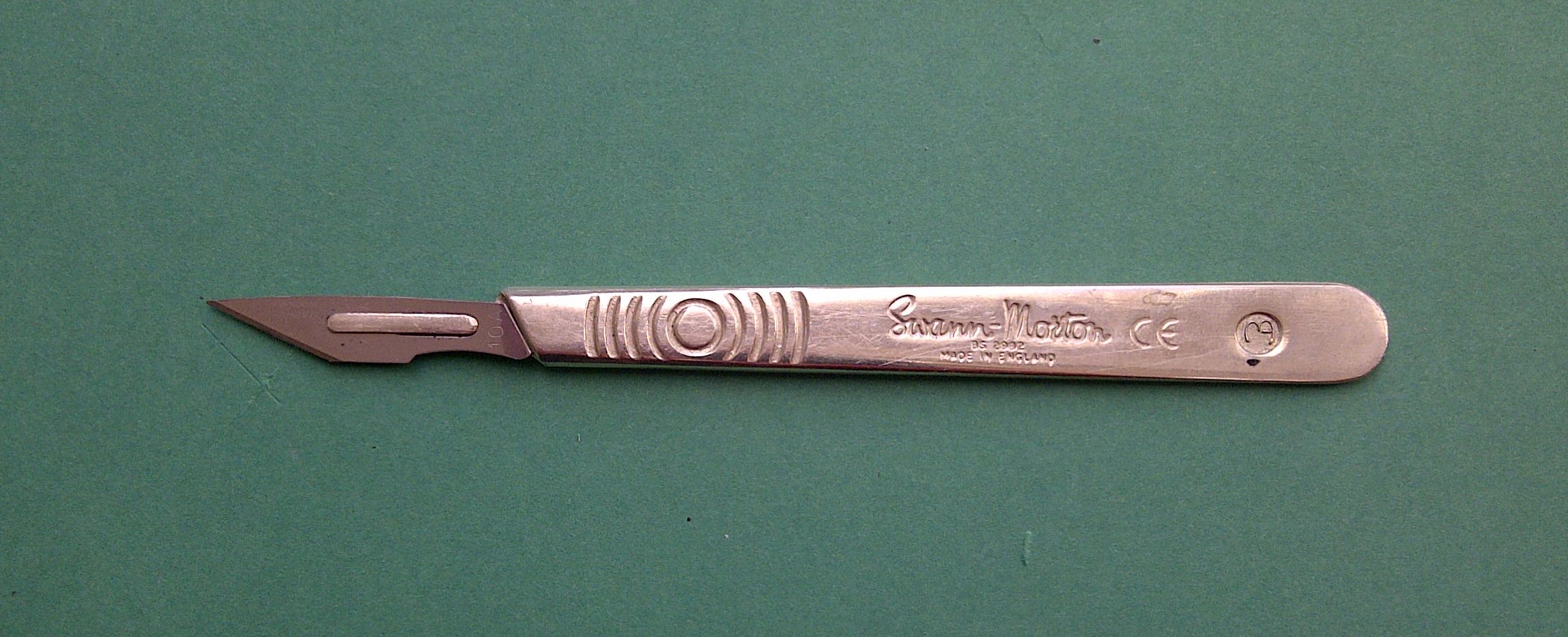
scalpel

No wonder many people believe the proposed contract puts the future of the NHS at risk.

Does all that make striking a good game plan? Doctors last took action in 1975, well before his time as he’s only been qualified 15 years.  

Recently a whopping 95% who took part in a Guardian poll answered yes to the question: Should junior doctors strike over the government’s proposed contract?  He thinks there were 28,000 or so people polled, nearly as many people as there are junior hospital doctors. But obviously he can’t find the article now, what with the winter care plan, new advice about FGM, and an avalanche of other vital information.

It’s the baby clinic this afternoon in Geoff’s practice. Britain has one of the best immunisation programmes in the world, he likes to think. Geoff heads into the waiting room, beams at the parents, and wonders how long the NHS has left to live.

tombstone

***

You may also like:

GMC advice for doctors in England considering industrial action.

The doctors’ 1975 industrial action.


Warning: A Doctor Rants

Vaccines had a bad press a few years ago, but things have changed, or so I thought. That’s why I was surprised when this week a university student refused the freshers’ dose of meningitis C vaccineFreeImages.com/Antonio Jiménez AlonsoI was even more surprised when he told me that his father, a doctor in another European country, was against vaccination.

What would you have done?  

University students are at higher risk of meningitis. One in four 15-19 year olds carries meningococcal bacteria in the back of the throat, as opposed to one in 10 of the general UK population. And, if you haven’t been a fresher for a while, imagine all that mingling with hundreds of other young people, often in crowded conditions.  

There’s lots of useful info on meningitis, and on vaccines.  Alas, I only know sites for fluent English speakers, and the lad in front of me wasn’t one of them.

I jokingly told him I wanted words with his dad. But in reality that was never going to happen. In general practice there’s barely time for a long discussion with a patient, let alone with family. Photo by Jean Scheijen FreeImages.com/Jean ScheijenConsultation rates with GPs have gone up in the last 20 years to around eight consultations per person a year. Along with that, patient expectations have risen. No bad thing in itself, but it requires more time.

Many areas are bulging with an influx of new patients. London has a particularly mobile population but it’s not the only place where there are migrants, refugees, or simply new housing. Some arrivals speak little English, so interpreters are needed, and the consultation takes twice as long as a result.

The pattern of work has shifted. As hospitals shed more care onto general practice, and send patients home sooner, GPs inevitably must do more. Around 90% of medical care now takes place in surgeries, by GPs, nurses and other members of the health team.

National Health Service logo

The structure of health care has changed with the advent of clinical commissioning groups (CCGs). In my view, that work takes a lot of good GPs away from face-to-face patient care.

Professional development makes demands too. I have to keep up to date, and these days I also have to prove it via appraisal and revalidation. People believed something had to be done post-Shipman, so now we spend time counting lots of things that don’t count. I hope that changes, but meanwhile preparing for annual appraisal takes two hours a week.

Providing good medical care is now a real struggle. GPs are retiring, and a sizeable chunk of medics are leaving the country.

Australian and UK towels on the beach

There’s nobody to replace them.

Like many GPs, I teach medical students. That time too must come out of a busy week. But here’s what really worries me about teaching.  

In the last 10 years I’ve noticed that fewer students now want to be GPs. Yet not so long ago new doctors were falling over each other to join practices.

It’s no wonder that doctors in the UK are angry and fed up. New changes imposed by government are likely to make things worse. In many areas, NHS general practice can barely provide a decent service five days a week. How can it stretch to seven days?

I’m not against change. General practice changes all the time. That’s part of its attraction as a speciality. But the developments I’ve lived through now make it almost impossible to do the job properly.

doctor's bag

You may like to read: 

Numbers of NHS doctors registering to work overseas could reach unprecedented record in the Independent, September 21, 2015

A fictional GP reflects on What They Don’t Teach at Medical School

I muse on What Happens when You Become a Doctor.

Easy tweet: What’s wrong with general practice? http://wp.me/p3uiuG-15w A #doctor rants #NHS via @DrCarolCooper

What They Don’t Teach at Medical School

Today GP Geoff gets a new group of medical students to teach. The names may change from week to week, but there’s always at least one swot from Germany or the Far East, a home-grown rugger bugger who is too big for his chair, a student in a hijab, a gay man, a babe who fiddles constantly with her iPhone, and an argumentative leftie.

HP Rapaport Sprague stethoscope, circa 1981

Geoff is a character from my novel One Night at the Jacaranda.  I made him up, but, if you know much about medicine, he seems real enough.

Education is not a vessel to be filled, Geoff muses, but a fire to be lit.  He has forgotten who said, it, but he’s pretty sure the fire should stay lit for the whole of their careers. So the students need a dose of reality.

fire in the political belly

Geoff reflects on his fifteen years of practice. The reality is that patients wangle sick notes because they don’t like their work. They get prescriptions for things they could have bought from the chemist. Well, par for the course.

They also suck you into their lives and dump their shit.  So you get involved when they tell you about their affairs that went wrong, the drugs they score on a Friday night, or how much they hate a sister or brother.

Or when they’re still driving even though they shouldn’t be.

FreeImages.com/Juan Miguel Rodriguez

Case in point: nice Mrs Thingy. Geoff is not too hot good on names, but he knows he advised her very clearly not to drive until her seizures were under control.

The snag is her three children. Geoff instantly forgets what she says her husband does, but he gets the gist. Mr Thingy has to get to Ealing Broadway station by 7am so he can’t do the school run.

“Can you walk them to school instead?” asks Geoff, ready to extol the benefits of blue skies, fresh air, exercise, autumn leaves, and the rest.

suburban street

“Doctor,” she says in a wheedling tone, “if I did that, it’d be a mile and half each way just for the boys. And Poppy is at a different school. There’s just no time. I’d run myself ragged, and that’s not good for my seizures.”

“Perhaps a neighbour can help?” suggests Geoff.

She gives a pitying look. “They’re all pensioners near us.”

“What about asking at the school? You may find a parent of a child in another class who lives near enough to you.”  Geoff is aware he’s running late now.

FreeImages.com/Vikki Hansen

“Well, I don’t know,” says Mrs Thingy.

“Why don’t you talk to the school secretary?” Geoff suggests. He may even need to involve Mr Thingy, find out if he can start work later during term-time. This is as far as one could possibly get from looking through the test results and reminding her about her smear. Geoff makes a mental note to do all this later.

Mrs T says nothing. She stares as if the GP is the baddie who makes up the laws.

Geoff continues, “If you have a seizure at the wheel… Well. It hardly bears thinking about.  Remember the Glasgow bin lorry crash last year? The driver blacked out at the wheel and killed six people.” 

“I know, I know.”  Her glance at the door shows she’d like to end the conversation as soon as possible.

Geoff leans back in the chair, which isn’t far as he has a cheaper model than his partners. “You realize, don’t you, that I’m obligated to contact the DVLA myself if you don’t.”  (For readers outside the UK, this is the Driver and Vehicle Licensing Agency.)

Her expression freezes.  “But I thought confidentiality…”

“Doesn’t extend to situations where the public is in danger.” He shakes his head slowly as he pulls a sympathetic face.

“Oh,” she says in a small voice. “Right.”

Geoff knows what he will discuss with his students today. Confidentiality.

And the knack patients have of sucking you into their lives.

***

Easy tweet: “What They Don’t Teach at Medical School http://wp.me/p3uiuG-14k via @DrCarolCooper” #medicine #students

What Happens When You Become a Doctor

Any day now and it’ll be the Killing Season, so-called. August 1 is the date when a fresh crop of newbie doctors arrives on hospital wards, bursting with enthusiasm and theoretical knowledge but woefully lacking in experience.

Jeremy's scalpel

In fact August is no longer worthy of that macabre tag. The month now begins with a sensible induction process for newly qualified doctors, with proper training in the tasks and procedures they’ll need to do in the coming months. Gone are the days of ‘See one, do one, teach one.’ The Killing Season is well and truly dead. Induction is a recent trend. I will never forget the utter panic on my first day as a doctor as I crept around in squeaky new shoes trying not to look like the rawest recruit. It was a Sunday—was there ever a more stupid day to start work?—and a patient had the misfortune of dying within 45 minutes of my arrival at the hospital. Now don’t jump to conclusions. I hadn’t even seen her before she died.

HP Rapaport Sprague stethoscope, circa 1981

HP Rapaport Sprague stethoscope, circa 1981

Wet behind the ears, I had no idea of the procedure to follow. Even scarier was the realization that I had two whole wards full of people to keep alive as long as possible. I rushed round to say hello to them all and check they were still breathing. At the same time, I said goodbye to many things: sleep, leisurely weekends, sitting on the loo without being bleeped. In short, to normal life. iv nutrition

While a lot has changed since then, including working hours, some things haven’t, as I realized from a recent blog post by Salma Aslam (by which I mean Dr Salma Aslam) Transitional state: med student to doctor It all came back to me. When you graduate from medical school, you may get a number of different reactions. 1 “Well done, but don’t go round thinking you know it all.” Don’t worry, I didn’t. And still don’t. 2 “So what?” That’s what I got from a group of arts students sitting around in the bar. They acted like they couldn’t care less about my news, but they were probably envious. 3 “Can you have a look at my verruca?”

plantar warts

Count yourself lucky. It’s much worse to be subjected to the long saga, in multiple episodes, of their entire medical history. This is when you get envious of those jobless arts graduates. 4 “The only thing that works for my migraines/arthritis/autism is kinesiology/homeopathy/acupuncture.” The implication is that allopathic medicine does nothing. Well, I’ll keep an open mind about that, only not so open that my brain falls out.

tablets

5 “You should get a job as a medical adviser on Casualty or something.” Yeah, right. Like nobody else with more experience wants to do it. 6 Perhaps the weirdest reaction was from my mother, who insisted I should now call her Dr Cooper. Why? “Because my daughter is a doctor, it’s like I’m the doctor. You may congratulate me now.” Get used to all of it. It may be a while before you hear the most welcome response of all: Thanks, doc. I feel a lot better.”

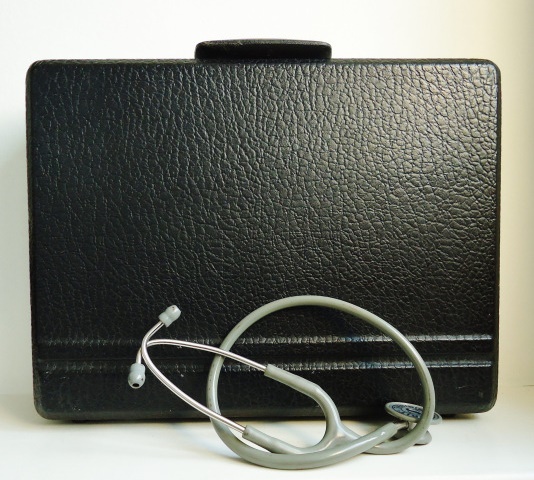
medical bag

Easy tweet: What happens when you become a #doctor? http://wp.me/p3uiuG-12N via @DrCarolCooper #medicine

Payback Time for Fat Cats

Mishmish went into the basket happily enough, probably anticipating a drive to her weekend retreat.

cat in the basket

She wasn’t purring when half a mile later we parked outside the vet’s.

The waiting-room was full of red setter. Yep, just one of him, but he was bouncing around as if he’d eaten springs for breakfast.  

red setter

We installed ourselves in the corner next to a pooch with a rhinestone collar. An elderly dachshund waddled in, rolling from side to side like a cross-channel ferry. His owner had turned-out feet and a similar gait. She heaved herself onto the bench.

I know. I look like my cat too. For a start, I’m covered in orange fur. Unlike Mishmish, however, I had a streaming cold. People recoiled visibly from me and my tissues, or would have done had there been any room.

Last time we were here, it had been for a check-up with the vet nurse, an enormously fat woman who pronounced my cat to be overweight. She calculated her BMI and promptly recommended dietary modification.  I wanted to lock the nurse into a room and give her nothing but a lettuce leaf alternate days. Preferably an expensive lettuce leaf.

lettuce leaf

Today it was for annual jabs. The vet had a Littmann stethoscope. This is the king of stethoscopes, but it didn’t impress Mishmish. We had the obligatory chat about female ginger cats being unusual, seeing as they need two x chromosomes with the relevant gene to be ginger. It’s just like haemophilia, only more desirable.

The vet looked Mishmish over and said she was a big girl.

I blew my nose and pointed out that she was big-boned.

“Are you OK?” asked the vet, his syringe poised. I didn’t tell him about my raging sore throat for fear of getting penicillin, gentamicin and a £200 bill.

Mishmish duly immunised, I paid at the desk, but the visit wasn’t over yet. I still had to pick up the prescription cat food I’d ordered.

We waited by the reception desk behind a huge slab of a man, stubbled and tattooed, with an award-winning builder’s cleavage. He’d come to collect his dog after surgery, so I heard.

“What’s the animal’s name?” asked the receptionist.

“Twinkle.”

Twinkle, it turned out, was a bichon frisé with a bandaged paw.   If you’re not familiar with the breed, it makes toy poodles look impossibly butch.

Twinkle and Macho Man left, the receptionist took a few calls, and there we still were. “I’m waiting for my prescription cat food,” I told her again, not quite as patiently as the first time. My baby could starve!

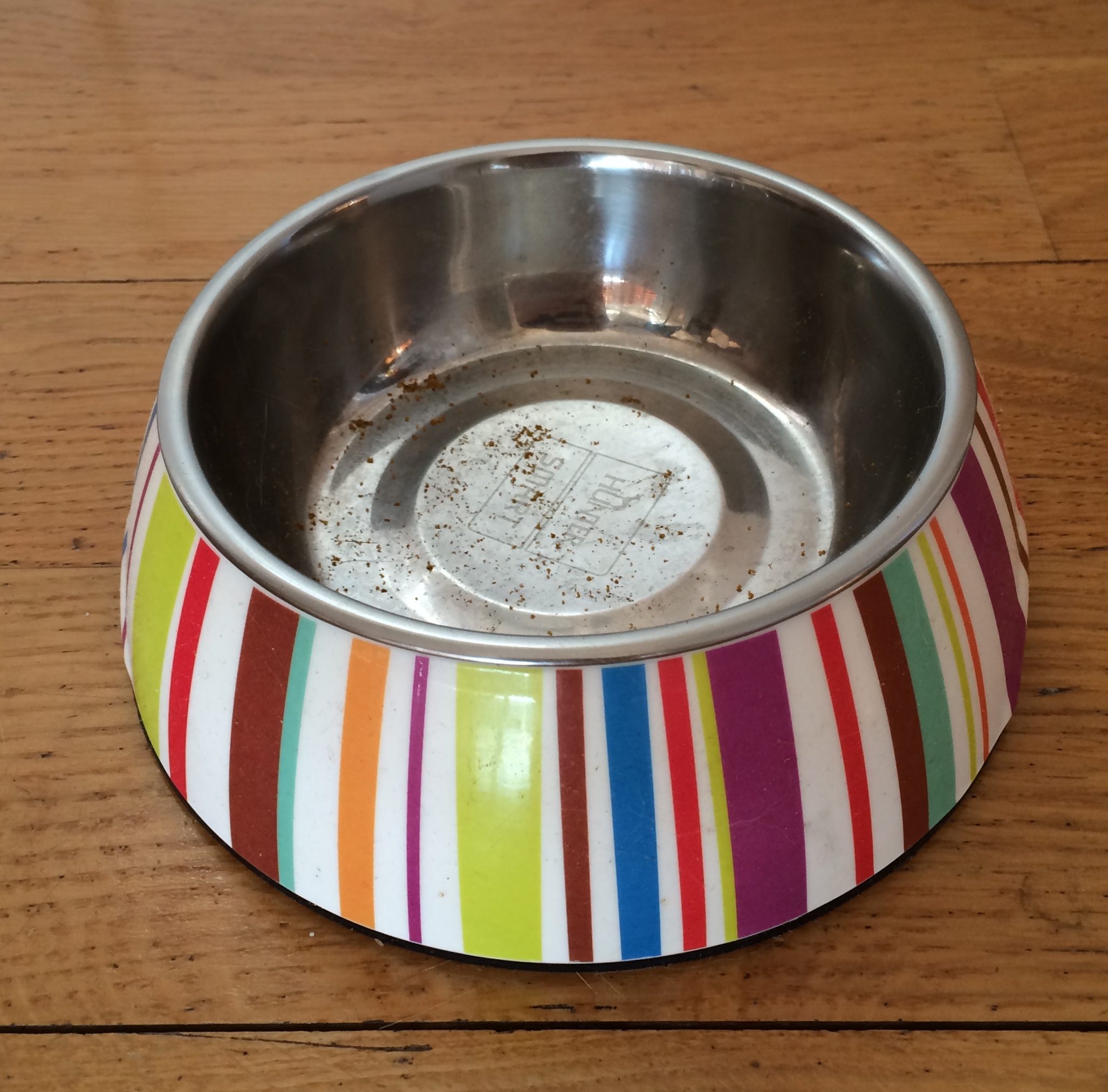
empty cat bowl

She went to look but it hadn’t been delivered, apparently. “What kind is it?”

“It’s the metabolic diet,” I said.  

The waiting room nodded collectively. Pet owners know what metabolic diet means. It screams “SLAG! YOU LET YOUR PET GET FAT.”

The woman with the dachshund fixed me with a rheumy eye. 

I felt like blaming my husband. He gives her high calorie treats, I wanted to say. But then I’d have been castigated for not controlling him as well. There’s really no excuse now that there are special diets for flabby felines and activity centre toys to exercise lazy cats, not to mention various harnesses and contraptions to stop spouses dishing out treats.

leads, harnesses and restraints

They still couldn’t find the metabolic diet. Only ordinary cat food. We’d been here about 45 minutes by then. In her basket Mishmish was getting stressed, and I had distributed viruses evenly across the waiting room.

“We’re going away for a few days and I need the food. I did order it in plenty of time, you know.” But it was no good. The other owners had already judged me. I was the kind of idiot who feeds her kid burgers through the school fence.

Didn’t they know that junk food is much cheaper than the healthy stuff? I felt a twinge of sympathy for parents of tubby children.

The receptionist gave up and a vet nurse was summoned. She couldn’t find our order either.

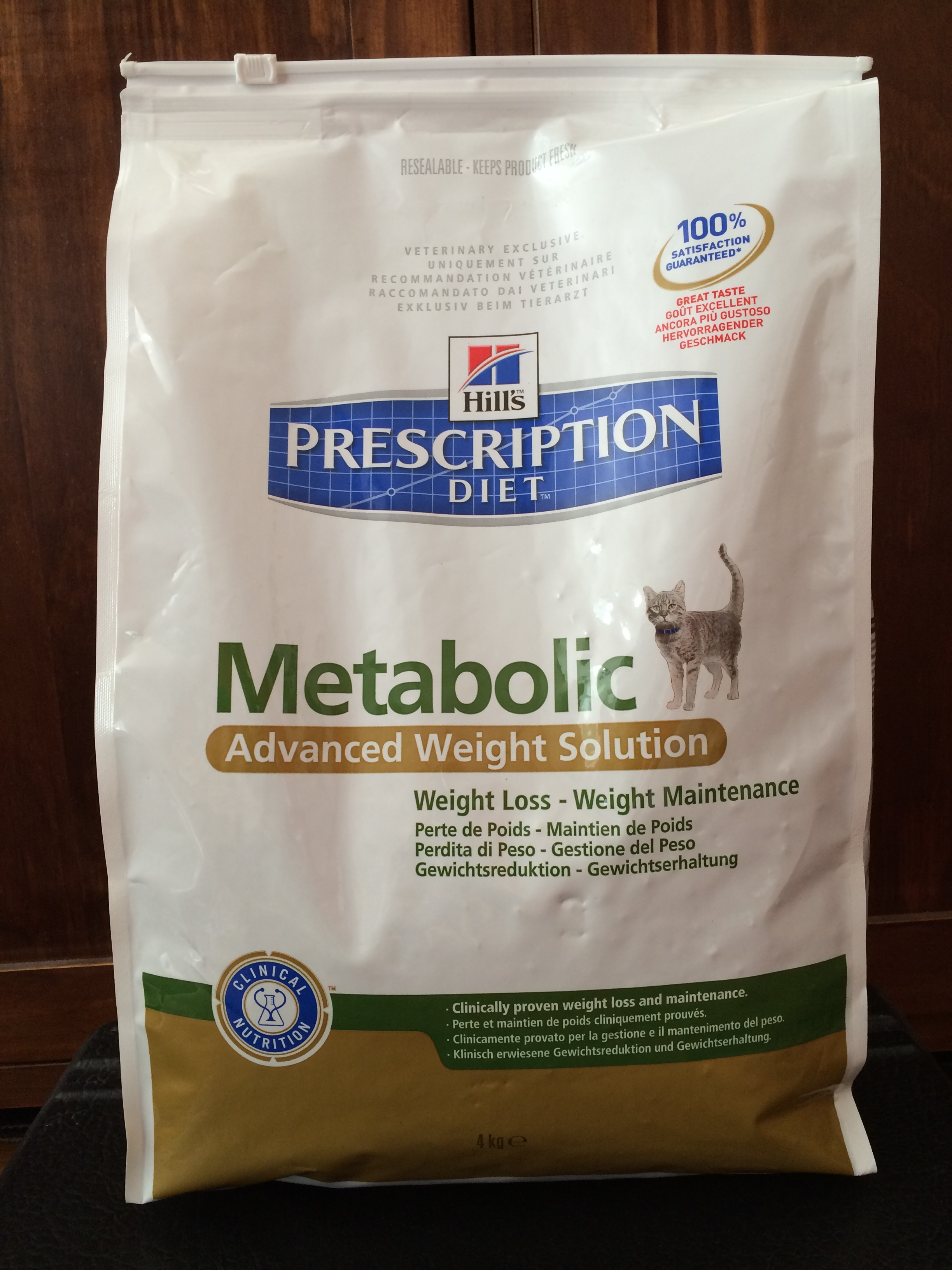
Eventually the fat nurse from last time was called in and she quickly found what we needed, our 4kg bag of Advanced Weight Solution.  

Hill's Prescription Diet Feline Metabolic Diet advanced weight solution

I’m far better disposed towards her now. She can even have a lettuce leaf every day.

***

If you have space for a cat or dog in your life, please consider getting one from a charity like the Mayhew Animal Home in NW London.