Just How Fictional is Fiction?

There’s a socking great disclaimer at the front of my novels.

“This is a work of fiction. All characters and events in this work, other than those clearly in the public domain, are entirely fictitious. Any resemblance to any persons, living or dead, is purely coincidental.”

The real bits should be obvious. All you have to do is check out Marylebone, or amble down Hampstead High Street.
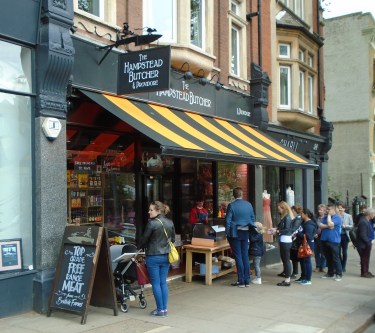
Hampstead Butcher & Providore

I’ve made up almost all the rest. Not that readers believe authors’ protestations.

Friends and family are apt to dissect published novels with an eye on ‘real life’. Even Ian Fleming, I’m told, suffered from this problem. People don’t just ask “Am I in it?” They go straight for “Which character am I?” I have half a dozen friends who believe they’re the single mother from One Night at the Jacaranda, and one who still thinks she’s the femme fatale.
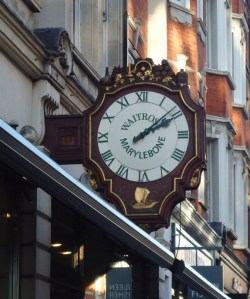
Waitrose Marylebone

“I’m Geoff,” insists my husband Jeremy. He has no discernible similarities with the doctor in my novels, though someone did once call him Geoffrey by mistake at a party.

Of course authors draw on reality when inventing their stories. Jane Davis says her favourite description of fiction is ‘made-up truth’. Her next book My Counterfeit Self was inspired by the plight of UK atomic war veterans. She even mentions many of them by name, but her book is still made up, and all the better for it, in my opinion.

Finnish author Helena Halme also uses the truth as a springboard for fiction. Her romantic series The Englishman is based on her own life story of meeting her Navy husband and moving to the UK. The prequel The Finnish Girl is now out, but, like the others in the series, reality has been fictionalized to provide the right pace and tension for a novel.

The Finnish Girl by Helena Halme

Fiction certainly benefits from an injection of fact. That’s what makes it relatable. I lost all faith in a story where the NHS doctor ‘worked shifts’. In those days, hospital doctors often worked a one-in-two rota. Going to work on Friday morning and not leaving till Monday evening was called many things, but a ‘shift’ it was not.

(I can’t help thinking a lot of non-fiction could do with a few facts too. Books on curing cancer with carrots really should move to the fantasy shelves, but that’s another story.)

A novelist invents stuff, but it needs to be right. While I can’t define ‘right’, I had to make that call with the image on the front of my forthcoming novel Hampstead Fever.  Cover designer Jessica Bell suggested adding a little red boat to the pond. The flash of red on the water seemed a delightful counterpoint to the red hat and red lipstick. But the pond in question is Hampstead Heath’s Number One Pond. Luckily one my sons, a local councillor, knows all about Hampstead’s ponds. As he explained, only the Model Boating Pond is a model boating pond. Cute as it was, my little boat had to be hauled out of the water.

Hampstead Fever

Being right is more about authenticity than fact. Being authentic, or so the Oxford dictionary puts it, includes

“Made or done in the traditional or original way, or in a way that faithfully resembles an original.”

Ain’t that the truth?
Getting an Author Photo

Soon after emerging from the editing cave, blinking in the light, came two realizations: I would need to do some publicity, and I needed a new author photo.

It’s like that advert about changing your mattress regularly every eight years, when it dawns on you that the last time was a bit longer ago than you imagined.

pic 10

No, the FotoMat won’t do (not that kind of FotoMat, anyway). It’s strictly for driving licences, passports, and the FBI wanted list.

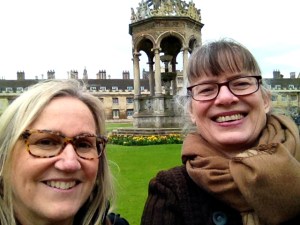
Neither will a selfie taken holding one of your own books and grinning maniacally. And definitely not the charming efforts taken with best mates in a giggly stupor.

IMG_0434 (1)

My husband declined to volunteer his skills. I didn’t need high-res images of thumbs. I needed a professional. Enter the brilliant Mat Smith Photography

Two hours with Mat and his assistant Anna taught me a lot. I have yet to study the results, but this I know:

1 There is such a thing as too much sunlight. Who the hell wears sunnies in an author photo?
FreeImages.com/Michell Botetano

2 Have lots of outfits to change into, but don’t use your entire wardrobe. Every single garment you choose for the photoshoot has to earn its keep.  No massive flowers, busy patterns, or shouty diagonal stripes. Consider the image you want to project (friendly, intellectual, offbeat?). Think too about the outfit in its own right. Or, as Mat and Anna would have it, “What does it SAY?” This is the best question I’ve ever heard about clothes, and I plan to take it with me every time I go shopping.

3 Avoid too many props. You don’t need to wear a stethoscope to convince people you’re a medic.

Hewlett Packard Rapaport Sprague stethoscope

4 Smile. It’s your natural face-lift. I base this advice on the fact that I look decades older if I keep a straight face. 

FreeImages.com/hamidreza ahmadi

5 Look into the camera rather than the distant horizon. It will make you look interested rather than aloof. Yes, this applies even if you have one dropping eyelid (most people do).

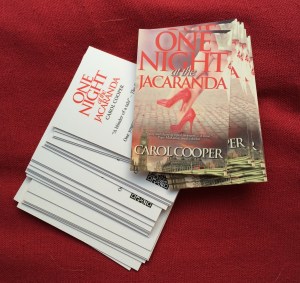
6 If you pose in the street, people will wonder whether you’re a celeb. It’s neat to have some publicity material to hand them, even if it’s from your last book.

One Night at the Jacaranda

Heading for the Political Graveyard

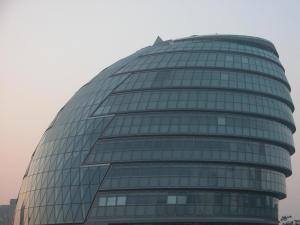
As most readers know, London will elect a new mayor on May 5. One of the candidates will end up sitting pretty in City Hall while the others could be heading for the political graveyard.

Which is all the excuse I need to show you a few cemeteries and tombstones.

First up is Grover Cleveland, best known as the only president of the USA to serve two non-consecutive terms.

Grover Cleveland, Princeton Cemetery

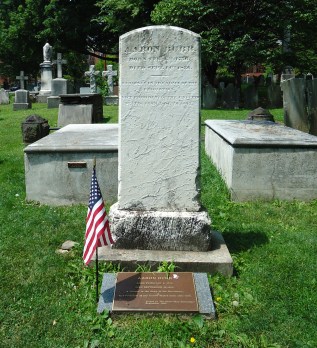
Aaron Burr, the third vice-president of the USA, served alongside Thomas Jefferson. He shot dead his opponent Alexander Hamilton in a duel.  Burr died a nearly forgotten man. He’s now in Princeton Cemetery while Hamilton is on ten-dollar bills.

Aaron Burr, Princeton Cemetery

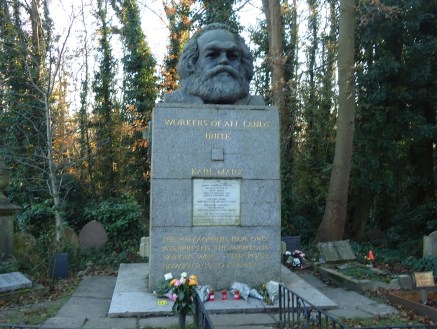
Not about to be forgotten any time soon is Karl Marx, buried in Highgate Cemetery.  Karl Marx, Highgate Cemetery

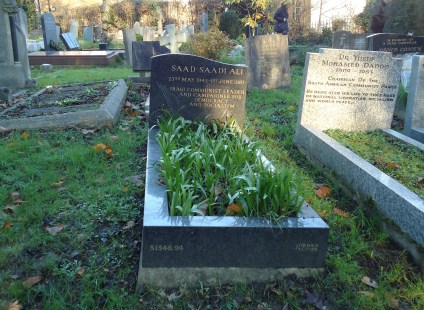
Among the other notables nearby is Saad Saadi Ali, the Iraqi Communist leader, left-leaning even in death.

Saad Saadi Ali, Highgate Cemetery

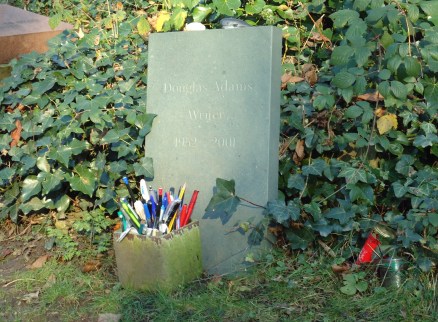
I really like this memorial to Douglas Adams, also in Highgate Cemetery.  

Douglas Adams, Highgate Cemetery

Anyone know this more obscure writer, buried in St Brelade, Jersey?

St Brelade's churchyard, Jersey

Here lies the Swiss novelist, racing driver and pioneer of the anti-vivisection movement, Hans Ruesch.

Hans Ruesch, cimetiere du Petit-Saconnex, Geneva

If you’re a Londoner, remember to vote on Thursday.  

William Foyle, Highgate Cemetery

What You Can Do for London’s Lungs

Take a nice deep breath. For thousands of people living in London, that’s a luxury.  

FreeImages.com/Christina Papadopoullo

With its plethora of parks, our capital may be one of the greenest cities. But it’s also one of the most polluted. For the last five years, London has been in breach of EU safety limits on NO2.

I’ve noticed it getting worse. For an instant lesson in air quality, head for the outer reaches of one of the Tube lines and see how fresh the air feels when you step outside. 

Pollution isn’t just an irritant to the throat, nose, or eyes. It’s damaging to health, increasing the risk of lung cancer and chronic lung disease, and driving up hospital admission rates for those with pre-existing lung or heart disease.

FreeImages.com/Dave Kennard

Children’s lungs are most vulnerable, yet around 330,000 London kids go to school in areas with illegal levels of pollution.

Pollution has also been linked with damage during pregnancy, including low birth weight and pre-term birth.

I’ll cut a long story short: at least 9,500 deaths a year in London are linked with air pollution.

We may not have the pea-soupers of the 1950s that smothered London in soot and sulphur dioxide for days at a time. But we have a haze of small particles, especially PM2.5s, along with the toxic gas nitrogen dioxide NO(not to be confused with laughing gas because this one isn’t funny).

FreeImages.com/Simon Gray

PM2.5s are fine particles, less than 2.5 micrometres in diameter. They come from things like motor vehicles, power plants, and wood-burning, and they’re harmful because they’re small enough to reach the deepest recesses of the lungs.

Nitrous oxide comes largely from diesel cars, lorries, and buses. It follows that pollution is worse near busy roads, which is often where less advantaged families live. But even short-term exposure to air pollution can damage.

Why am I banging on about it now?

Because on May 5, London elects a new Mayor. As a parent, a doctor, and a Londoner, I whole-heartedly support The British Lung Foundation’s #Londonlungs campaign. It calls for the next Mayor and Assembly members to prioritise lung health.

FreeImages.com/Andrew Rigby

So much could be done, from tree and hedge planting schemes to improving transport strategy and extending the ultra-low emission zone (ULEZ) eastwards – where there’s a lot of deprivation and air pollution.

You too can help by getting on board and asking all the mayoral candidates whether they pledge to protect Londoner’s lungs. You could also share the campaign on social media with the hashtag #Londonlungs.

FreeImages.com/Adam Ciesielski

What else can you do?

There are obvious individual steps to help protect the lungs and heart, like not smoking.

Driving less, for instance by sharing cars or using public transport, helps drive down vehicle emissions. If you’re buying or leasing a car, choose a low-emission model.

Take the longer route on foot or cycle via a less polluted area if you can. You may be interested in the Clean Space app

The British Lung Foundation has some great tips for when air pollution levels are very high. You can find them here


The London Book Fair #LBF16

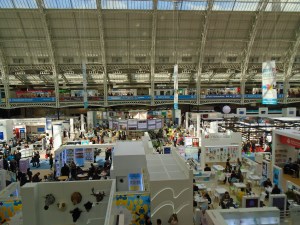
After three days of the London Book Fair, I’ve unpacked my memories and my bags of freebies. All the usual suspects were there, such as bowls of sweeties on the stands, people in unsuitable footwear, and long queues for overpriced sandwiches.

Olympia is vast, but every corner of every hall was filled.

#LBF16

Can you spot land-locked Switzerland?

Grand Hall, LBF16

Books Are My Bag grows bigger by the year.

Books Are My Bag at LBF16

The PEN Literary Salon was a popular destination, especially when the Julian Fellowes entertained with talk of Downton Abbey, his new venture Belgravia, and the eternal truths of writing (eg ‘The trick of life is to be undisappointing’).

Julian Fellowes at PEN, #LBF16

While there’s always an Author of the Day programme, authors are not the main focus of the book fair, even if publishers would find it hard to create many books without them.

Still, there was a goodly contingent of authors, including many independent authors.

Alison Morton, Helena Halme, Jessica Bell, Jane Davis, Peter Snell, Sue Moorcroft, Karen Inglis, Carol Cooper, Roz Morris,

On Tuesday, Alison Morton launched Insurrectio. If you think I missed off an N, you need to get acquainted with her Roma Nova series. 

Alison Morton launching Insurrectio at LBF16

While authors come in all shapes and sizes, there are sometimes uncanny similarities. 

3 literary sisters

Not literally sisters, but literary sisters. In the middle is Helena Halme who writes The Englishman series. Her latest title, The Finnish Girl, is out today. Children’s author Karen Inglis is on the right.

Author HQ may have been relegated to the back of the venue, but it was as packed as ever.

Audience at Author HQ, LBF16

The fair is now over, the final stragglers shepherded out by tannoy at 5pm on Thursday. But today indie authors can attend the Indie Author Fringe here.

And it’s only 11 months to go till #LBF17.

Why should I go to the London Book Fair?

As I look forward to next week’s London Book Fair, I realize I haven’t got a notebook, my comfy shoes need re-heeling, and I’ve been so busy editing that I haven’t properly checked out what’s on, let alone printed my badge. So I think fellow author Sue Moorcroft’s advice is very timely. Here it is, fresh from her blog with my thanks.

A Self-Publishing Pioneer in the Family

Authors who began self-publishing in 2010 are often called ‘early adopters‘, but one Jacqueline Cooper was at it way back in 1994, when many of today’s indie authors were still at primary school. I make no apology for blogging again about my mother, because, at 5’1” and in her seventies, she was a feisty self-publishing pioneer.

Here’s her story, adapted from the Courier magazine, September 2000.

It’s simple. All you need is a little money you can afford to lose if your book doesn’t sell, and a lot of energy to do the marketing.

When I lived in the USA, well-known publishers produced two of my books. They took 18 months to appear in bookstores, and, although there were royalties and excellent reviews, they did not make me a fortune.

Angus and the Mona Lisa

I moved to Geneva in 1990 as a retraitée (retired person), only sending the occasional story to a magazine or to the BBC. But in 1994 my old school, the English Girls’ College in Alexandria, was having its first ever reunion of Old Girls in London. What with revolutions, wars, marriages, births, we had lost touch and were scattered across the globe. One Old Girl had found us all, even the Japanese sisters we thought had perished at Hiroshima.

Here was a ready market, filled with nostalgia.

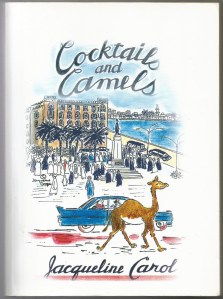
I still had vivid memories not included in my first book Cocktails and Camels. I was galvanized into action. Cocktails & Camels, by Jacqueline Cooper

I approached a printer who had done work for the American International Women’s Club of Geneva (AIWC), and asked for an estimate. If I wanted 1,000 copies with a few black and white illustrations, how much would it cost? I bargained. I was sure this book, Tales from Alexandria, would sell. And I would have no commission to pay.

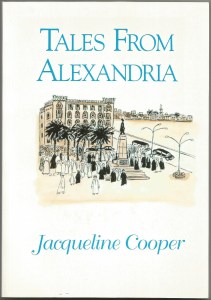
I kept track of what was going on. ‘Just passing by,’ I’d say, even though the printer was on the other side of town. I’m glad I did. Margins were uneven, illustrations either too dark, too light, or lopsided, and, when the books were finally delivered, page 66 was blank and the quotation at the top of Chapter Four was missing. I howled. The books were reprinted, the cost reduced, and the edition sold hand over fist. Tales from Alexandria by Jacqueline Cooper

At first I hadn’t planned to deal with bookstores. But why not sell Tales from Alexandria at Harrods? So I did. I then contacted two Geneva bookstores, Payot and ELM. Commission was high at 35-40%, except for ELM, our friendly bookstore.

In 1997, unable to find anything for children on Geneva’s famous Escalade of 1602, I decided to do my own book. I knew about children’s picture books, as I’d worked with the art director in New York on my Angus and the Mona Lisa. This time I went to the printer who produce the AIWC’s Courier magazine. He had no idea about picture books, but was keen to learn.

Toby and the Escalade by Jacqueline Cooper

Toby and the Escalade is a bilingual English-French book with pictures on every page. It was expensive to produce. Although I knew what a page should look like, I had little idea of page layout, so I asked a friend to help. The book sold well. We went into a second edition that still sold well many years later.

You have to wait to make a profit from self-publishing.

At first, I loved marketing. I contacted the managers of a dozen Geneva bookshops in person, and out-of-town retailers by phone and with cards I’d made of the book cover. I offered them a copy of my book. I spoke to pupils at the International School, and was interviewed on a couple of radio stations.

I made posters which I sent to bookstores along with their order.

When I walked into Payot one day, there was my Toby and the Escalade poster hanging at the top of the stairs with the phrase ‘Vient de paraître!(Just in!)

I made only two press contacts, but newspapers contacted me because the book was selling, as the Tribune de Genève put it, ‘comme des petits pains’ (hot cakes to you and me). Then Naville bookstores called me from Lausanne, asking me urgently for copies.

Two department stores, Globus and Placette, refused to stock Toby and the Escalade. Globus only took books through distributors. But Placette changed their mind two years later when the buyer changed.

The same printer produced my next two books, Cat Day and William Tell. All three books were bilingual, which probably helped sales.

William Tell by Jacqueline Cooper

But even with my good printer there were problems with the illustrations for William Tell. The pictures were anaemic and bore little resemblance to the originals.

In the end, though, it all worked out, by which time I was a nervous wreck.

When I injured my back and could no longer run all over town with books, I contacted a big distributor used by Globus. He liked Toby and the Escalade and wanted to sell it for CHF 25 instead of CHF 20. He would take 50% of sales. I agreed to a contract. But when I read it carefully, I did not like the clause that said he would distribute every book I would ever write. When I asked if that clause could be removed, he angrily broke off the contract.

Marketing is a lot of work, and so is distributing: keeping track of orders, enclosing an invoice with each consignment, packaging and mailing heavy parcels.

The post office can come and collect them, but it is very expensive. There are bills to make out, phone calls to reluctant payers, and dealing with orders that keep coming in. I got small orders for one, two, or three books, and I had to make another invoice, another parcel, another trip to the post office – and then keep an eye on everything. For me the novelty has worn off. A bookstore in Nyon has owed me the princely sum of CHF39 for over six months. The other day, Payot faxed me at 7.30am for one copy of Cat Day.

Self-publishing has been fun, and it worked for me at first. But now I’m sick of it and don’t plan to do another book.

Though, come to think of it, a brilliant idea just popped into my head…

Le Crazy Cat Saloon

Why Your Mother Was Right All Along

It’s been a while since I presented my mother with sticky home-made cards that shed macaroni and glitter. With three offspring of my own, these days Mother’s Day is more about me. From this great vantage point, I now realize my mother was right all along. What’s more, I’ll bet yours was, too.

Here are some things mothers say that are right on the money.

“Don’t sit out in the sun all day long.”

She may have droned on about getting heatstroke and prickly heat. But she was also protecting you against sunburn, skin cancer, cataracts, and premature wrinkles.

That’s what mothers do. They protect their young.

FreeImages.com/ryan shull

“Pick up your clothes.”

Your mum thought it was slovenly and untidy, but you had to learn for yourself, didn’t you? Maybe you couldn’t find your wallet, you tripped arse over tit on a pile of shirts, or the cat threw up on your best jeans. You get around to using hangers eventually. 

“You’re wearing far too much make-up.”

The stuff you applied with a trowel didn’t look nearly as good in real life as it did in your bedroom mirror. But it’s even less flattering when you’re 50. Your mum just wanted you to ditch the panda eyes before you looked totally ridiculous.

“Wash your hands.”

Hands look a lot better when they’re clean, but that’s not the real point. Washing your mitts often is the single best thing you can do to prevent common infections like colds and even flu. 

FreeImages.com/Deborah Krusemark

“Remember to say Please and Thank you.”

Kids who mind their manners reflect well on their parents, but that’s not the whole story. They also become adults that people like being around – whether it’s at work or socially – and like doing things for. 

“No TV till you finish your homework.”

That was so unfair, as no doubt you pointed out. But your mum wanted you to learn a few more important life skills, like concentration, perseverance, and becoming a completer-finisher. Polish TVMore on Belbin team roles here

“Sit up straight.”

You were determined to slouch like the archetypal sullen adolescent. But your mother hoped you’d reap the benefits of good posture:

  • Less stress on vertebrae and ligaments, so less back pain
  • Spine less likely to become fixed in the wrong position
  • Better breathing
  • Looking younger and slimmer.

There’s more info from BackCare

“Turn down that noise.”

Maybe she was just after a bit of peace and quiet, but it was the best advice for your ears too. Noise exposure is a major cause of permanent hearing loss. Noise-induced hearing loss is often gradual, and it’s cumulative. That ringing in your ears after a gig? It means the hair cells of your cochlea are already damaged. 

So go on. If you’ve got a mother, make a fuss of her on Mother’s Day, and, while you’re at it, throw in the rest of the year as well. She won’t be around forever.

mum and me

ooOoo

Note for US readers: In the UK, Mother’s Day is today, March 6, and its correct name is Mothering Sunday.  And falling arse over tit is a very common expression.

I’m taking a little break to edit my novel, so this blog will be back in a couple in a couple of weeks. See you then.

The Disease Nobody Knows About Until it’s Too Late

If you know much about sepsis, chances are the condition has affected your family.

Sepsis has a high mortality and kills 37,000 people a year in the UK, about 1,000 of them kids. So this week I’m parking the levity and using my blog to sum up what you need to know about sepsis. Photo by Jean Scheijen FreeImages.com/Jean ScheijenUnderstand what it is.

Sepsis is when the body responds to severe infection in such a way that it attacks its own organs and tissues. Without treatment, this quickly leads to organ failure and death.

Most people have heard of blood poisoning (septicaemia) which is much the same thing. But doctors now prefer the term sepsis because there isn’t always blood poisoning in this condition.  

Sepsis isn’t exactly a household name – yet. Personally I think ‘sepsis’ sounds weaker than either septicaemia or blood poisoning, but we’re stuck with the term that scientists agree on.

Know the signs.

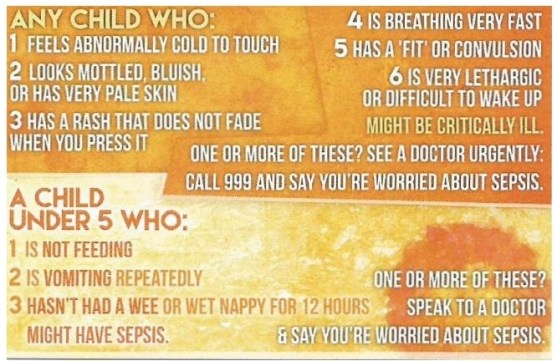
The symptoms depend on age, but the main point is that there isn’t any one specific sign like, say a swollen jaw with mumps. A child with sepsis can have a high fever, or an abnormally low one. The younger the child, the vaguer the symptoms.

Here are some signs to look out for in children (from the UK Sepsis Trust’s Paediatric Pocket Guide):

symptoms of sepsis in children

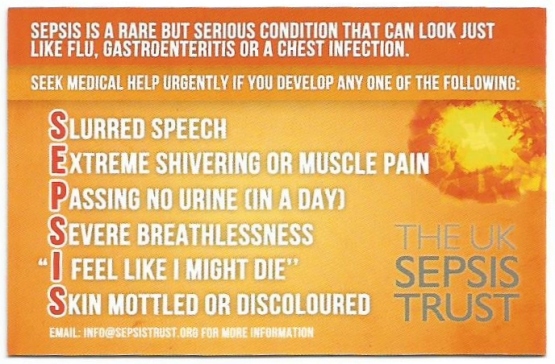
And here are some signs to watch out for in adults (from the UK Sepsis Trust’s excellent Symptom Checker card):

symptoms of sepsis in adults

If I could highlight just two consistent points about sepsis, they would be these:

You or your youngster will be more unwell than expected.

Things get rapidly worse, especially in children.

Understand who gets it.

Anyone can develop sepsis from a bacterial infection (or sometimes a virus or fungus). But some are more at risk, like the very young, very old, pregnant women, diabetics, and people on long-term steroids.

The initial infection can be a serious one like meningitis, or seemingly trivial, like a horse-fly bite.

Surgery can be linked with sepsis, especially emergency operations on those in poor health, or with peritonitis or bladder infections.

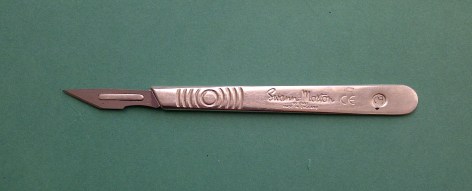
scalpel

Know what to do.

Sepsis is a medical emergency and needs urgent hospital care. Don’t waste a single moment.

Sepsis isn’t one disease, but rather a syndrome that cuts across almost every medical speciality. The first doctor you see could be a paediatrician, a gynaecologist, an orthopaedic surgeon, or your GP, and sepsis may not feature at the top of their list. That’s why it’s so important for you to mention it. When you see the doctor or nurse, make sure you say, “I’m worried about sepsis.”

Thanks for bearing with me.

Litmann type stethoscope

Here’s a selection of further reading if you’re interested.

The UK Sepsis Trust is a charity founded to save lives and improve outcomes for survivors of sepsis by instigating political change, educating healthcare professionals, raising public awareness and providing support for those affected. For their general factsheet on sepsis, click here

Sepsis Awareness Month: Rory’s Story. One mother’s personal account.

Three and a Half Heartbeats by Amanda Prowse. A novel of love, loss, and hope about a family devastated when their child dies of sepsis. And proceeds go to UK Sepsis Trust.

Plunkett A, Tong J. Sepsis in Children.  BMJ 2015;350:h3017. A detailed medical article from the British Medical Journal.

Keep it Short, Stupid

War and Peace, when it was a 1,225-page blockbuster rather than a toothsome TV adaptation, was a by-word for long and weighty.

FreeImages.com/Davide Farabegoli

At medical school, one lecturer seemed bent on following in Tolstoy’s footsteps. Using ten words when one would do, he habitually overran, but did he cram more in? Was his specialism more vital than others? No.

Sadly, many speakers drone on at length, oblivious of their audience and of those scheduled after them, their numerous PowerPoint slides an accessory to their crime of disrespect.

alarm clock

Most topics, even Brexit, could be covered more succinctly. Going too long is blatant laziness. “I didn’t have time to write a short letter, so I wrote a long one instead,” said Mark Twain. Others, including Cicero, TS Eliot, and Blaise Pascal have expressed the same sentiment.

As the cliché goes, it would be easy for journalists from The Sun newspaper to write for The Times, but not vice versa. Guido Fawkes, who has done both, agrees. 

fabric tape measure

Keeping it short leaves little scope for nuance. On the plus side, readers won’t give up in droves, as if their team is losing 6-0.

KISS. Less is [word count exceeded]

***

You may like to read: 10 Tabloid Tips to Better Writing, from Writer’s Digest and my writing colleague Dan Holloway on Why Less is More When Reading or Performing Your Work in Public.